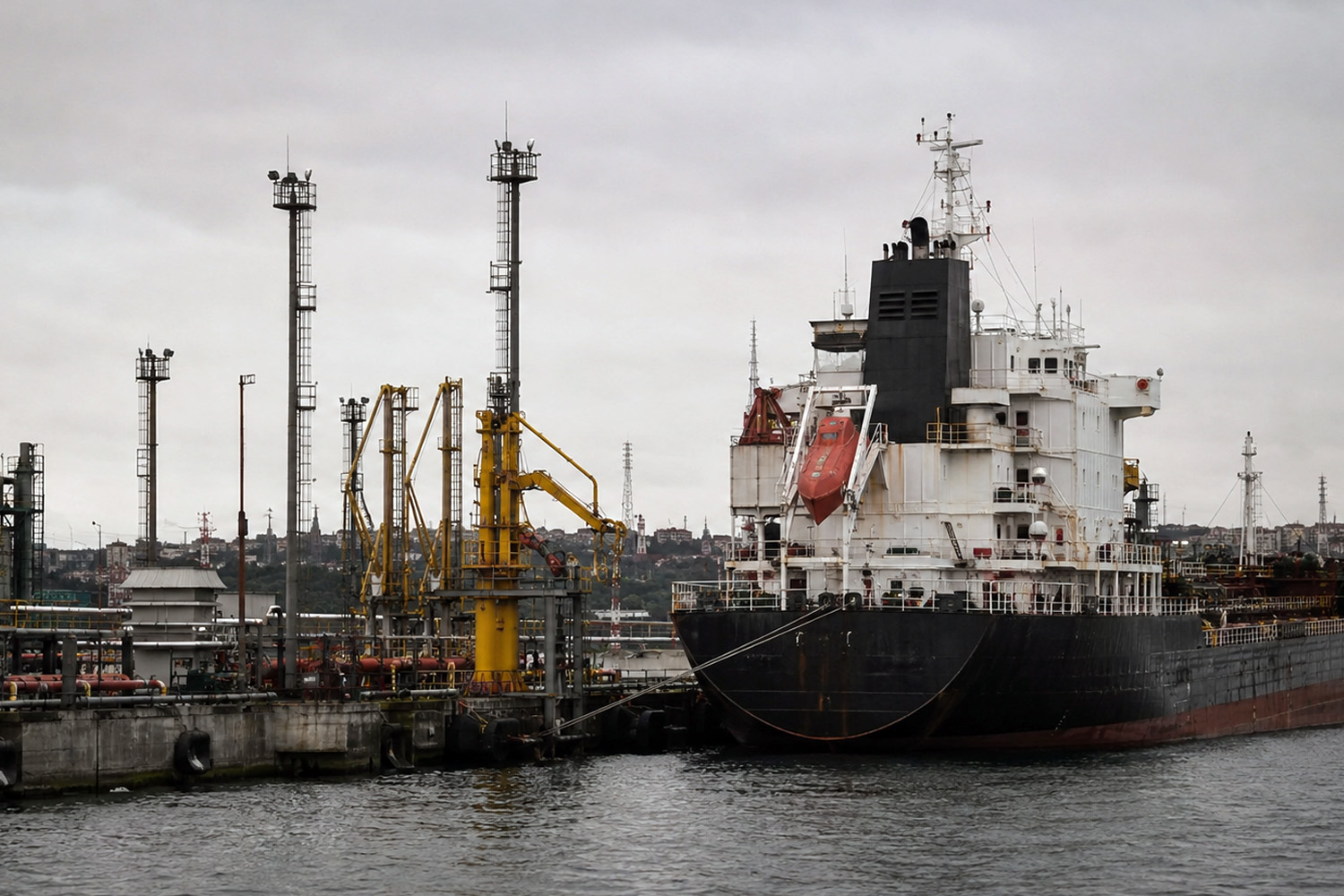
The latest gasoline shipment from Turkey to Russia is significant not because a single tanker can materially change Russia’s fuel balance, but because it illustrates how the economic geography created by sanctions is evolving.
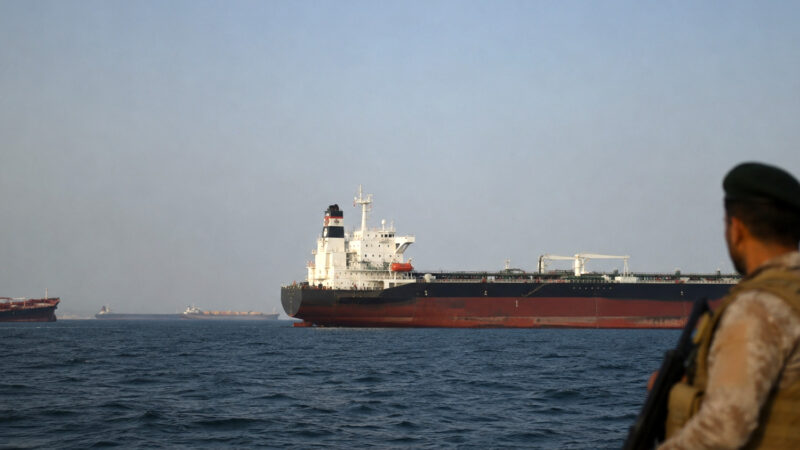
On August 24, Russia received its first identified seaborne gasoline shipment from Turkey: roughly 200,000 barrels loaded at the Turkish port of Mersin and transported by the tanker Wendrix to Russia’s Baltic port of Primorsk. S&P Global had identified the cargo as the first of its kind from Turkey and reported that it was the fifth confirmed seaborne gasoline delivery to Russia since late July.
The development comes amid an unusual reversal in Russia’s energy position. A country that has historically exported large quantities of refined petroleum products is now importing gasoline after Ukrainian attacks disrupted refinery operations and domestic supply. Reuters reported in August that shortages had spread across numerous Russian regions, prompting fuel-sale restrictions and government measures to stabilize the market.
But the broader lesson is not simply that Russia is experiencing a fuel shortage.
It is that sanctions rarely create a simple division between countries that trade with Russia and countries that do not. Instead, they alter routes, suppliers, intermediaries, financial arrangements and incentives. Turkey provides one of the clearest examples of how this more complicated system works.
Sanctions Change Trade Geography Rather Than Simply Ending Trade
The fundamental challenge of sanctions policy is straightforward: Russia remains connected to a global economy much larger than the coalition imposing restrictions on it.
The European Union has progressively reduced direct economic ties with Russia. EU-Russia goods trade fell from €257.5 billion in 2021 to €58.1 billion in 2025. Yet Russia still conducted substantial trade with the outside world, while countries outside the EU sanctions system continued to purchase Russian commodities and supply goods to Russian markets.
This creates a structural distinction between eliminating a trade relationship and redirecting it.
If a European company can no longer buy a Russian petroleum product directly, the underlying demand for energy does not necessarily disappear. The commodity may instead move toward another market. A different country may purchase it, refine it, blend it, store it or redistribute it.
The economic system therefore becomes more complicated.
And complexity is precisely what makes sanctions enforcement difficult.
The EU has recognized this problem explicitly. Its sanctions regime increasingly targets not only Russian entities but also third-country operators and infrastructure considered relevant to sanctions circumvention. The EU’s 19th sanctions package, for example, included measures directed at third-country actors and expanded restrictions involving Russia’s shadow fleet. Its 21st package continued to target energy, trade, finance and Russia’s military-industrial complex.
The evolution of sanctions therefore tells an important story about international governance: economic pressure is increasingly becoming a contest over networks rather than borders.
Turkey Occupies an Unusual Position
Turkey makes this especially visible because its geopolitical position does not fit neatly into a Western-versus-Russia framework.
It is a NATO member and has supported Ukraine in important areas, while simultaneously maintaining substantial economic relations with Russia.
That dual position is partly structural.
Turkey sits between Europe, the Black Sea, the Caucasus and the Middle East. It has major ports, energy infrastructure, refining capacity and an important role in regional shipping. Its geographic position makes it economically valuable as a transit and trading hub regardless of political tensions.
The result is a form of strategic interdependence.
Turkey does not need to align completely with Moscow to maintain commercial relations with Russia. Nor does it need to abandon its relationship with Western institutions to cooperate with Ukraine.
This distinction matters because sanctions are usually designed around national jurisdictions, while modern commodity markets operate through multi-country supply chains.
The Turkish gasoline shipment demonstrates that principle in unusually clear form.
S&P Global reported that the cargo loaded at Mersin was transported by the Wendrix, a vessel already subject to sanctions from the EU, United Kingdom, Ukraine and Switzerland. The cargo’s ultimate origin was not established in the available shipping data.
That last point is particularly important.
Loading country and origin are not necessarily the same thing.
A tanker leaving Turkey establishes where the cargo was loaded, but not automatically where the underlying petroleum was produced or how it reached that port. Determining origin requires tracing the supply chain further upstream.
This distinction is essential when analyzing potential sanctions circumvention. A Turkish shipment to Russia should not automatically be described as evidence that Turkey is deliberately helping Russia evade sanctions.
The verified fact is narrower: a cargo was loaded in Turkey and transported to Russia. Its ultimate origin requires further verification.
That is precisely why modern sanctions enforcement is so difficult.
The Fuel Crisis Adds a Second Layer
The Turkish shipment also has to be understood in the context of Russia’s domestic fuel problem.
Russia’s current gasoline shortage is not primarily a sanctions story. It is closely connected to disruptions in domestic refining capacity, including the effects of Ukrainian attacks on energy infrastructure, combined with seasonal demand and refinery maintenance.
Reuters reported that gasoline shortages had emerged across multiple regions and that Moscow introduced restrictions at some filling stations. The Russian government also imposed measures including fuel-export restrictions and began importing petroleum products.
S&P Global reported that Russian crude runs fell 28% in July and that seaborne gasoline imports since late July had exceeded 1 million barrels by the time the Turkish shipment was identified.
This changes the significance of Turkey.
Russia is not importing gasoline from Turkey because Turkey has suddenly become its preferred strategic energy supplier. It is responding to a short-term domestic supply imbalance.
That distinction matters.
The Turkish cargo is therefore best interpreted as evidence of the flexibility of international energy markets under stress rather than proof of a permanent new Russian-Turkish energy arrangement.
The Shadow Economy Is Not Necessarily Illegal
The phrase “shadow economy” can also create analytical confusion.
Not every transaction involving Russia and a third country is illegal or prohibited.
Sanctions regimes are specific legal systems. They identify particular goods, services, companies, vessels, financial institutions and transactions that are restricted or prohibited.
A country outside the sanctions coalition may legally conduct transactions that Western governments would prefer to prevent, provided those transactions do not violate applicable sanctions or other laws.
That produces an important distinction between:
sanctions evasion,
sanctions circumvention, and
legitimate trade outside the sanctions regime.
These categories should not be treated as interchangeable.
The policy challenge for the EU, UK and US is therefore not simply to determine whether Russia is trading. It is to determine which transactions undermine the objectives of sanctions and which remain legally permissible.
This is one reason sanctions regimes have become increasingly detailed.
The EU describes its restrictions as instruments intended to change harmful policies and activities rather than simply as punitive measures. Its Russia sanctions now cover energy, finance, trade, technology and military-industrial activity, while enforcement increasingly considers third-country networks.
Russia Is Adapting Through Network Diversification
The broader Russian energy trade demonstrates why the system is difficult to close.
Following the EU’s restrictions on Russian petroleum products, Russian exports increasingly shifted toward markets in Asia and the Middle East. Reuters reported that Saudi Arabia remained a major buyer of Russian fuel oil and vacuum gasoil in July 2026, while Singapore and Malaysia also received increased volumes.
At the same time, Russia’s western energy exports have faced disruption from attacks on infrastructure. Reuters reported that Russian western-port oil exports were running below planned levels in the first half of August, with disruptions at Novorossiysk affecting flows.
The result is a constantly changing network.
When one route becomes more expensive or restricted, another can become commercially attractive.
When a refinery is damaged, imports become more valuable.
When a particular vessel or company is sanctioned, alternative vessels and counterparties become more important.
This is why sanctions pressure often produces adaptation rather than immediate collapse.
The system becomes more expensive, less efficient and more fragmented, but it can continue functioning.
Turkey’s Role Is Therefore Bigger Than One Shipment
The significance of Turkey extends beyond gasoline.
Its position demonstrates how middle powers can gain strategic importance during periods of geopolitical fragmentation.
For Russia, Turkey offers geographic proximity, access to maritime routes and an important commercial relationship.
For Europe, Turkey is an important neighboring economy and NATO member.
For Ukraine, Turkey has strategic importance in the Black Sea and has maintained channels of engagement with both Kyiv and Moscow.
For Turkey itself, maintaining flexibility can preserve economic opportunities and diplomatic leverage.
That creates a classic middle-power problem: how to maximize strategic autonomy while maintaining relationships with competing blocs.
The result is not necessarily a contradiction.
A country can cooperate with one side militarily or diplomatically while maintaining economic relationships with another.
The Ukraine war has made these overlapping relationships more consequential because energy, trade, security and diplomacy are increasingly interconnected.
What This Means for Sanctions Policy
The long-term question is therefore not whether sanctions can make Russia completely disconnected from the global economy.
That is an unrealistic benchmark.
The more meaningful questions are:
- How much do sanctions increase Russia’s transaction costs?
- How much revenue do they prevent from reaching the Russian state?
- How effectively do they restrict access to technology?
- How much do they reduce Russia’s ability to finance military production?
- How difficult do they make transportation and insurance?
- How much additional cost is transferred to intermediaries?
- How effectively can enforcement distinguish legitimate third-country trade from circumvention?
The EU’s continuing expansion of sanctions suggests that policymakers increasingly view enforcement as an ongoing process rather than a one-time policy decision.
This also means that the effectiveness of sanctions should not be judged by whether Russia continues to export or import commodities.
A country can remain a major energy trader while simultaneously facing higher costs, narrower markets, reduced access to technology and greater dependence on intermediaries.
Those effects can be economically significant even when trade continues.
The Next Phase: A More Fragmented Global Economy
The deeper consequence of the Russia-Ukraine conflict may be the creation of a more fragmented international trading system.
Before the war, energy markets were heavily optimized around efficiency: producers sold to the most attractive markets, shipping routes were comparatively predictable, and financial infrastructure connected major economies.
Sanctions introduced a different priority:
resilience and political compatibility increasingly compete with economic efficiency.
That encourages countries and companies to diversify suppliers, develop alternative shipping routes, establish new financial channels and maintain multiple trading relationships.
Turkey’s position illustrates this transition particularly well.
Its role is not simply that of a country “helping Russia” or “supporting the West.” It is an example of how international actors operate within overlapping systems of security, commerce and national interest.
The Turkish gasoline shipment is therefore best understood not as an isolated transaction but as a small window into a much larger transformation.
Conclusion: The Real Battle Is Over Networks
The most important lesson from Russia’s changing trade relationships is that modern sanctions do not operate in a world of clean economic borders.
They operate through networks.
Russia can lose direct access to some European markets while developing relationships elsewhere. Petroleum products can move through different ports and intermediaries. Refining can separate the location where crude originates from the location where the final product is produced. Shipping networks can change faster than regulatory systems.
That does not make sanctions ineffective. It makes their impact more complicated to measure.
The emerging geopolitical contest is therefore not simply about who trades with Russia.
It is about how global trade is reorganizing around political risk.
Turkey is an important case study because its geographic position, NATO membership, relationship with Ukraine and continuing economic ties with Russia place it directly inside that transformation.
The gasoline shipment from Mersin to Primorsk is unlikely by itself to change the strategic balance of the war.
Its significance lies elsewhere: it shows how, under sustained geopolitical pressure, global commerce adapts faster than political borders do.