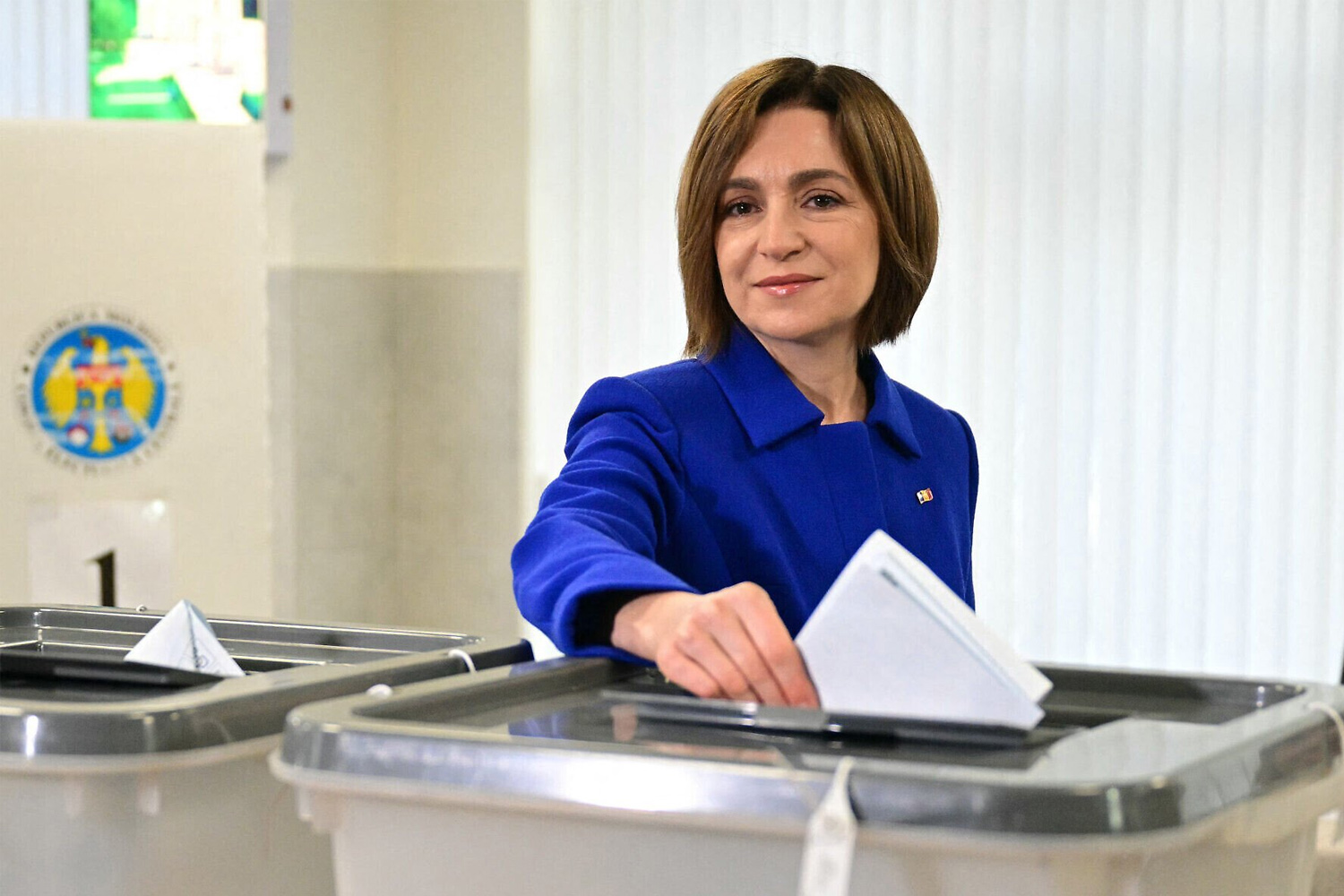
On 28 September 2025, Moldova held parliamentary elections that many observers consider among the most consequential since the country’s independence.
Key Players and Political Alignments
- The Party of Action and Solidarity (PAS), led by President Maia Sandu, is the leading pro-European party, advocating closer integration with the European Union, judicial and anti-corruption reforms, and limiting foreign influence in Moldova’s domestic affairs.
- The opposition includes the Patriotic Bloc, a coalition that is commonly described as pro-Russian or more friendly toward Moscow’s positions. Igor Dodon is a prominent figure associated with that bloc.
Electoral Results and Expectations
- Initial and near-final counts show PAS with around 45–50 % of the vote, significantly ahead of the Patriotic Bloc, which has been polling in the mid-20s.
- These results point toward an expected victory for PAS, likely enabling it to retain or secure a governing majority in Moldova’s 101-seat parliament.
Foreign Influence and Russia
Evidence and allegations of Russian influence have been prominent in the lead-up to and during these elections. Some of the key issues include:
- Disinformation campaigns: Researchers and media outlets have documented efforts to spread false or misleading content targeting President Sandu, PAS, and pro-European narratives. For example, a campaign called Matryoshka has been cited as promoting claims that Sandu misused funds or other serious allegations without supporting evidence.
- Alleged interference & destabilization attempts: Moldovan officials have accused external actors (in many cases linked to Russia) of plotting or supporting actions intended to influence the election outcome or destabilize the political environment. These include claims of cyber-attacks, fake bomb threats, mobilization efforts among pro-Russian voters, and interference via financial channels.
- Legal restrictions on some parties: Some pro-Russian or Russia-leaning political forces have been barred from participating in the elections, due in some cases to alleged violations of campaign financing laws. These exclusions have been a point of controversy.
Maia Sandu’s Role and Strategy
- Since coming to power, Sandu and PAS have made EU alignment a central component of their platform. This includes constitutional steps, reforms in the justice system, anti-corruption measures, and efforts to reduce external influence – particularly from Russia.
- In the campaigns leading to the 2025 parliamentary elections, Sandu has repeatedly warned of foreign (especially Russian) interference via disinformation, destabilization efforts, funding of opposition, etc. She has urged citizens to be alert to false narratives and has emphasized protecting Moldova’s sovereignty and democratic institutions.
Implications of the Expected Outcome
Should PAS win a majority or become the dominant force in parliament, the following are likely consequences:
- EU Integration Pace
With a strong mandate, Sandu and her party may accelerate policies and reforms required for deeper integration with the European Union. Moldova already formalized EU candidate status in previous years. - Reduced Russian Influence
A PAS victory would likely weaken the political channels through which pro-Russian forces exert influence – whether via political parties, media, disinformation, or external financial support. The government may intensify actions against what it deems foreign meddling. - Domestic Reforms and Stability
With greater parliamentary control, PAS may have more leeway to push through judicial reforms, anti-corruption efforts, and measures aimed at consolidating the rule of law. These changes could face resistance from entrenched interests. - Geopolitical Balance
Moldova’s positioning between East (Russia) and West (EU) means that its internal political outcomes have external ramifications: in trade, energy, security, and foreign policy. A PAS-led government strengthens Moldova’s tilt toward Western institutions and partnerships.
Challenges and Open Questions
- Coalition building: Even with a strong result, PAS may still need coalition partners depending on exact seat counts to govern effectively.
- Opposition reactions: Pro-Russian actors have questioned the fairness of the electoral environment; there may be disputes or legal challenges after the vote.
- Electoral integrity threats: Disinformation, foreign-funded interference, and other destabilization efforts remain concerns and will test Moldova’s institutions.
Conclusion
As of now, the evidence points toward a likely victory for Maia Sandu’s pro-European Party of Action and Solidarity in the 2025 parliamentary elections. This outcome, if realized, would signal significant continuity in Moldova’s pro-EU agenda and could reduce the influence of Russian-aligned forces domestically. However, the political environment remains polarized, and several risks-both internal and external-could affect the post-election period.