Tourism has become a competition between cities for much more than visitors. Airports, hotels, retail, restaurants, entertainment, conferences, infrastructure and international business increasingly operate as one interconnected urban economy.
That is why the world’s most influential tourist cities cannot be identified simply by counting arrivals.
Bangkok welcomed around 30.3 million international visitors in 2025, making it the world’s most visited city. Yet Paris ranked first in Euromonitor’s broader City Destinations Index, while Madrid ranked second and Tokyo third. The difference illustrates an important economic point: tourism influence is a combination of demand, infrastructure, connectivity, economic value and the ability to remain competitive as global travel patterns change.
For 2026, the following 10 cities stand out as the most strategically important urban tourism markets, using the latest comparable city-level data available.
The 10 Most Influential Tourist Cities
| Rank | City | Key 2025 Metric | Strategic Strength |
|---|---|---|---|
| 1 | Paris | 18.3M international arrivals | Global cultural and luxury hub |
| 2 | Madrid | €17.9B international tourist spending | High-value urban tourism |
| 3 | Tokyo | 3rd overall in Euromonitor | Asia-Pacific gateway |
| 4 | Rome | 4th overall in Euromonitor | Heritage and premium tourism |
| 5 | Milan | 5th overall in Euromonitor | Business, fashion and design |
| 6 | New York | $12.45B international spending in 2022 | Entertainment and business |
| 7 | Amsterdam | $13.59B international spending in 2022 | High-value European hub |
| 8 | Barcelona | $12.73B international spending in 2022 | Leisure and event tourism |
| 9 | Singapore | $10.97B international spending in 2022 | Business and premium tourism |
| 10 | Seoul | Top 10 overall in Euromonitor | Technology and cultural influence |
The ranking combines the latest Euromonitor city-destination assessment with comparable tourism-economic indicators. The spending figures for several cities come from WTTC’s city-level international traveler-spending dataset; these figures are from 2022 and should not be interpreted as 2026 spending estimates.
That distinction is important. The purpose is not to manufacture a false precision around a single “profitability” number. It is to identify cities that have demonstrated measurable influence through scale, spending power, infrastructure and global positioning.
1. Paris: The City With the Broadest Tourism Economy
Paris remains the strongest overall urban tourism destination in Euromonitor’s latest ranking, retaining the number-one position for a fifth consecutive year.
The city welcomed more than 18 million international visitors in 2025, according to Euromonitor.
But Paris’s influence is not explained by visitor volume alone.
Its economic advantage comes from the combination of cultural tourism, luxury retail, gastronomy, events, business travel and international connectivity.
This creates a diversified tourism economy.
A visitor who arrives for the Louvre or Notre-Dame can also generate spending in hotels, restaurants, luxury retail, transportation and entertainment. The same infrastructure serves business travelers and international events.
That diversification makes Paris economically different from destinations whose tourism industry depends primarily on one attraction or one category of visitor.
Paris also demonstrates why tourism influence is difficult to replicate. The city possesses a concentration of cultural assets that cannot easily be reproduced through infrastructure investment alone.
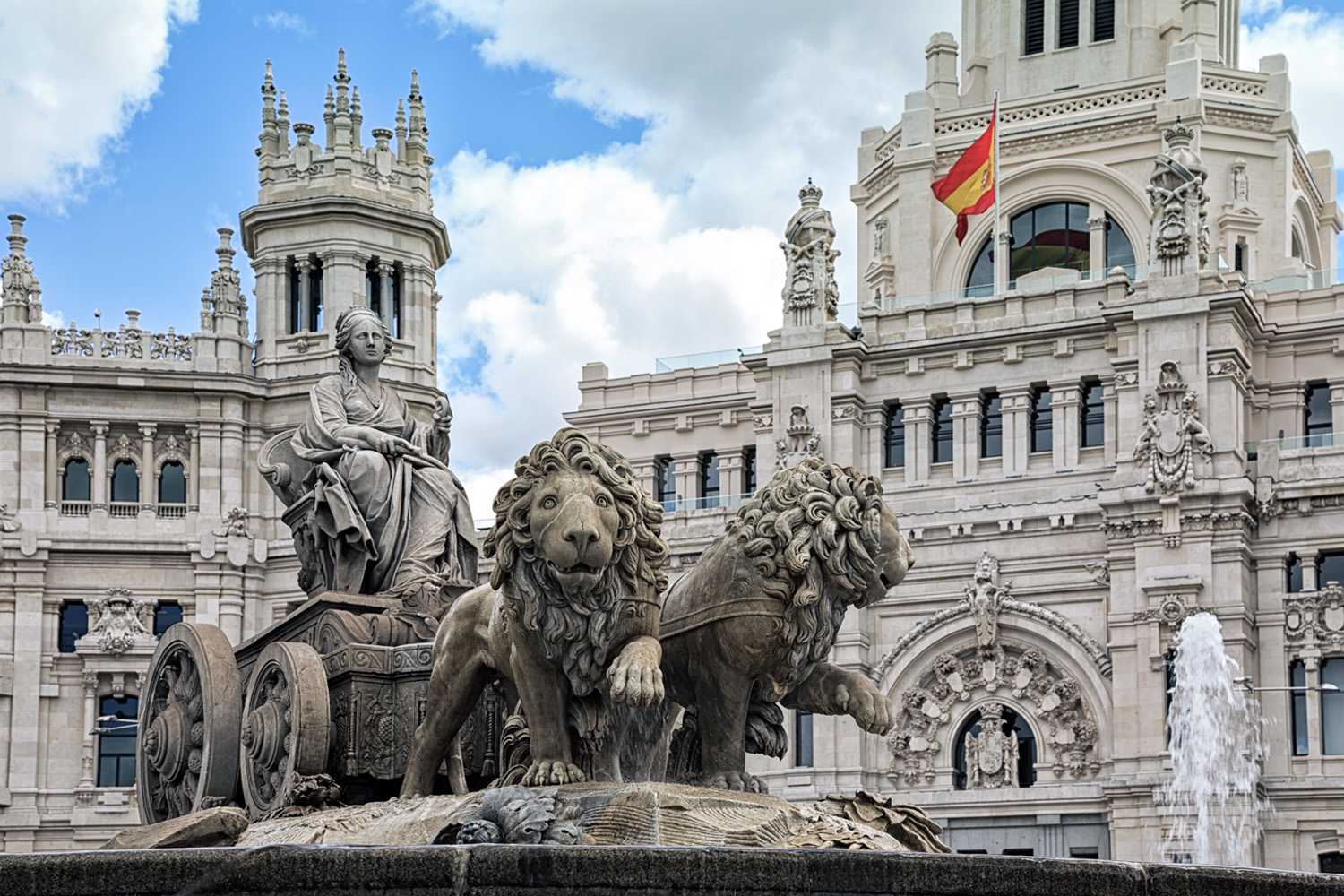
2. Madrid: The Fast-Rising High-Value Model
Madrid is perhaps the most interesting business case in the ranking.
In 2025, international tourists generated €17.896 billion in spending, up 11% from 2024 and 71% from 2019. The city recorded 11.24 million visitors and 23.83 million overnight stays.
The critical number is not simply €17.9 billion.
It is the relationship between spending and visitor growth.
International visitors represented 59% of all visitors but 66% of overnight stays, while average spending reached €1,964 per visitor. Average daily spending was reported at approximately €305.
That suggests a tourism model increasingly based on value per visitor rather than maximum visitor volume.
Madrid’s airport handled 68.1 million passengers in 2025, with 447 routes, 217 destinations and 90 airlines.
This connectivity is strategically important because it allows Madrid to capture long-haul demand from North America and Latin America while functioning as a European gateway.
The result is a powerful economic combination: moderate visitor volume compared with Bangkok, but very high tourism spending.
Madrid is therefore one of the clearest examples of the next phase of urban tourism competition: higher yield rather than simply higher traffic.
3. Tokyo: Asia’s High-Value Urban Gateway
Tokyo ranked third in Euromonitor’s overall City Destinations Index and remained the leading Asian city in that ranking.
Its importance extends well beyond tourism.
Tokyo combines one of the world’s largest metropolitan economies with technology, manufacturing, finance, entertainment, gastronomy and cultural tourism.
That creates a particularly valuable form of visitor diversification.
A business traveler, leisure traveler and event attendee are all entering the same economic ecosystem.
Tokyo is also part of a larger Asia-Pacific tourism expansion. Euromonitor reported that international arrivals to the Asia-Pacific region grew 10% in 2025, the strongest regional increase in its analysis.
That gives Tokyo a structural advantage: it sits inside the world’s fastest-growing major tourism region while possessing an established global brand.
4. Rome: Heritage as an Economic Asset
Rome ranked fourth in Euromonitor’s 2025 City Destinations Index. The ranking highlighted the city’s luxury hotel expansion and airport development as important factors supporting its tourism position.
Rome demonstrates an unusual economic model.
Its principal competitive advantage is an irreplaceable stock of historical and cultural assets.
Unlike a conventional industry, the city’s core tourism product does not need to be invented every year. The Colosseum, Vatican, Roman Forum and broader historical environment create persistent international demand.
But infrastructure determines how effectively that demand becomes economic output.
Hotel investment, airport capacity, transportation and visitor management therefore act as the conversion mechanism between cultural assets and tourism revenue.
Rome’s challenge is consequently not generating demand. It is managing the economic and physical pressure created by demand.
5. Milan: Tourism Meets Business
Milan ranked fifth overall in Euromonitor’s city-destination ranking. Its position reflects something particularly important for business readers: tourism and corporate activity increasingly overlap.
Milan’s competitive position is built around fashion, design, finance, business travel and events as much as traditional sightseeing.
That makes its tourism economy structurally different from a pure leisure destination.
Business travelers tend to generate spending across hotels, restaurants, transport, conferences and retail. Major events can also temporarily increase demand for accommodation and premium services.
The lesson is that cities do not need to choose between tourism and business.
The strongest urban markets increasingly monetize both through the same infrastructure.
6. New York: The Tourism Economy Built on Diversification
New York’s strength comes from the breadth of its economic ecosystem.
WTTC’s city-level data placed international traveler spending in New York at $12.45 billion in 2022. Its 2032 projection was $21.73 billion, illustrating the scale of long-term spending potential identified in that dataset.
New York does not depend on one tourism product.
Broadway, museums, restaurants, retail, sporting events, business travel, conventions and finance all contribute to visitor demand.
This produces an important competitive advantage: tourism spending can be captured across multiple industries.
That reduces the city’s dependence on hotel revenue alone and increases the economic multiplier generated by each visitor.
7. Amsterdam: High Spending From a Smaller Physical Market
Amsterdam provides the opposite lesson from Bangkok.
WTTC recorded $13.59 billion in international traveler spending in 2022, placing the city fifth among the listed destinations in that dataset.
The city’s importance therefore cannot be explained simply by scale.
Amsterdam’s tourism economy benefits from strong international connectivity, cultural attractions, business travel and premium hospitality.
But the city also illustrates the problem with unlimited tourism growth.
When the physical size of a destination is constrained, additional visitors can create disproportionately high pressure on infrastructure and residents.
That makes Amsterdam an important example of why the future of tourism may increasingly be measured through economic output per visitor rather than visitor totals.
8. Barcelona: Tourism as an Urban Export Industry
Barcelona generated $12.73 billion in international traveler spending in 2022, according to WTTC’s city comparison.
Its tourism economy combines beaches, architecture, food, culture, cruises, events and international business.
The city therefore benefits from multiple demand channels.
But Barcelona also demonstrates the downside of tourism concentration.
When visitor numbers become too concentrated geographically or seasonally, infrastructure costs rise and the economic benefit can become politically difficult to sustain.
For businesses, this creates an important strategic issue: the most valuable tourism markets are increasingly those capable of distributing demand across time, geography and visitor categories.
9. Singapore: Small Geography, Large Economic Reach
Singapore’s position is unusual because its physical scale is much smaller than that of Paris, Tokyo or New York.
Yet WTTC recorded $10.97 billion in international traveler spending in 2022, placing Singapore among the world’s leading city tourism markets.
The reason is economic density.
Tourism is integrated with aviation, finance, conferences, luxury retail, hospitality and business travel.
This produces a high-value tourism model in which a relatively compact urban area can generate substantial visitor spending.
Singapore demonstrates that tourism competitiveness is not necessarily proportional to geographic size.
What matters is the density of economic services available to each visitor.
10. Seoul: The New Cultural-Economic Hybrid
Seoul entered Euromonitor’s 2025 top 10 city-destination ranking, reflecting the growing influence of Asian cultural and technology hubs.
Its competitive model is particularly relevant to the next decade.
Seoul combines technology, entertainment, food, fashion, shopping and popular culture.
That creates an economic model in which cultural influence becomes a tourism acquisition mechanism.
The significance extends beyond visitor arrivals. Cultural exports can create tourism demand before a traveler ever books a flight.
This is a major change in destination marketing: cities increasingly compete through global cultural visibility, not just physical attractions.
The Numbers Reveal a Bigger Shift
The most important statistic in the global tourism market may be the aggregate figure.
Euromonitor estimates that the world’s top 100 city destinations accounted for 702 million international trips in 2025, representing 46% of global inbound tourism. Their combined arrivals increased by approximately 8%, compared with 4% global growth.
That means cities are capturing tourism growth faster than the global market overall.
The implication for businesses is substantial.
Tourism investment is becoming increasingly concentrated in urban ecosystems that already possess airports, hotels, public transportation, cultural infrastructure and international recognition.
Capital therefore tends to reinforce existing hubs.
Volume Is No Longer the Only Measure of Success
Bangkok demonstrates the power of scale.
It attracted approximately 30.3 million international visitors in 2025, the highest figure among global cities.
But Madrid demonstrates a different model: €17.9 billion of international spending from 11.2 million visitors.
These two cities reveal why arrival rankings alone are inadequate for business analysis.
Bangkok has enormous visitor volume.
Madrid generates unusually high value relative to its visitor base.
Both are successful, but their economic models are different.
The strategic question for cities is increasingly not:
“How many tourists can we attract?”
It is:
“How much economic value can each visitor generate without creating disproportionate infrastructure costs?”
The Competitive Battle Is Moving Toward Tourism Yield
This shift is already influencing city policy.
Euromonitor identifies infrastructure, sustainability, digitalization and AI readiness as increasingly important elements of destination competitiveness.
That changes the investment equation.
Airports are no longer simply transportation infrastructure. They determine how easily high-value international travelers can enter a market.
Hotels are not merely accommodation providers. They determine the city’s ability to capture premium spending.
Events are not just entertainment. They can shift demand into periods when hotels and restaurants would otherwise have lower occupancy.
Digital systems can help distribute visitors geographically and manage transportation demand.
The tourism economy is therefore becoming more sophisticated and more capital intensive.
Short-Term Market Impact
In the near term, the strongest urban tourism markets are likely to continue benefiting from international travel growth.
But the largest opportunity will not necessarily be additional mass tourism.
Businesses will increasingly target higher-spending travelers, longer stays, business events, luxury hospitality, cultural experiences and year-round demand.
Madrid’s 2025 figures provide a clear example: international spending rose 11%, while overnight stays increased only 2.5%.
That divergence is economically significant.
It shows that tourism revenue can expand substantially without equivalent growth in physical visitor volume.
Long-Term Structural Outlook
The global tourism industry is moving toward a model in which cities compete on three dimensions simultaneously:
Scale: How many international visitors can the city attract?
Yield: How much does each visitor spend?
Capacity: How much tourism can the urban system absorb without generating excessive costs?
The cities best positioned for the next decade will be those capable of optimizing all three.
Bangkok has extraordinary scale.
Paris has extraordinary cultural and economic depth.
Dubai has demonstrated the power of infrastructure and premium tourism.
Singapore has exceptional economic density.
Madrid is increasingly demonstrating that a city can generate substantial tourism value without being one of the world’s largest visitor-volume markets.
That is why the future hierarchy of tourist cities will not simply be a ranking of arrivals.
It will increasingly be a ranking of economic productivity per visitor and the ability to convert global mobility into sustainable urban economic value.
Conclusion: Influence Is Bigger Than Visitor Numbers
The world’s most influential tourist cities in 2026 are not necessarily the cities with the most tourists.
They are cities capable of turning tourism into a broader economic platform.
The numbers make that distinction clear. Bangkok attracted roughly 30.3 million international visitors, while Madrid generated €17.9 billion in international tourist spending from 11.2 million visitors. The top 100 global city destinations collectively accounted for 702 million international trips, or 46% of worldwide inbound tourism.
The competitive advantage is therefore shifting from simple popularity to economic conversion.
Cities that combine connectivity, infrastructure, cultural assets, business activity and high visitor spending will capture a disproportionate share of global tourism investment.
And for companies, that is the more important story: the next phase of tourism competition will be fought not for the largest crowds, but for the highest-value urban demand.