Infrastructure Investment: Where Capital Is Moving
Infrastructure investment has entered a phase of accelerated expansion, driven by structural economic shifts rather than cyclical recovery. What distinguishes the current cycle is not just the scale of capital deployment, but its concentration in specific sectors-energy transition, digital systems, and resilient logistics.
The numbers illustrate the magnitude of this transformation. According to the International Energy Agency, global energy investment reached over $3 trillion annually, with approximately two-thirds now directed toward clean energy technologies. Meanwhile, the Global Infrastructure Hub estimates that $15 trillion in infrastructure investment is required globally by 2040, with an additional $3–4 trillion gap if countries are to meet climate and sustainability targets.
These figures point to a fundamental shift: infrastructure is no longer neutral capital expenditure-it is the primary channel through which economic transformation is financed.
Energy Transition: The Largest Capital Reallocation in Decades
The most significant concentration of infrastructure capital is occurring in the energy sector, where investment patterns have changed rapidly over the past decade.
According to the International Energy Agency:
- Clean energy investment exceeds $2 trillion annually
- Solar investment alone surpasses $500 billion per year
- Spending on fossil fuel supply has stabilized at roughly $1 trillion annually, significantly lower than pre-2015 levels when adjusted for inflation
This marks a historic inversion. A decade ago, fossil fuel investment dominated global energy spending. Today, capital is flowing predominantly toward renewables, electrification, and energy efficiency.
Grid infrastructure is emerging as a critical constraint. The IEA estimates that annual grid investment needs to rise from roughly $300 billion today to over $600 billion by 2030 to support electrification and renewable integration. Without this expansion, energy transition projects risk delays and reduced returns.
Electrification trends reinforce this shift. Global electric vehicle (EV) infrastructure investment continues to scale rapidly, with millions of public charging points required worldwide by 2030, compared to significantly lower installed bases today. This creates a secondary infrastructure wave tied directly to transport electrification.
Transport Infrastructure: Scale Remains, Priorities Shift
Transport infrastructure continues to attract substantial capital, but the composition of investment is changing.
Global transport infrastructure spending is estimated at $2–3 trillion annually, encompassing roads, rail, ports, and airports. However, the allocation of this capital reflects evolving priorities:
- Urban transit systems are expanding in major cities, with metro and rail investments often exceeding tens of billions of dollars per project
- High-speed rail networks in Asia and Europe continue to grow, with individual national programs valued at $100 billion+ over multi-year periods
- Port and logistics investments have increased significantly following supply chain disruptions, with major ports investing billions in automation and capacity expansion
Maintenance is another major cost driver. In developed economies, over 50% of infrastructure spending is directed toward repairing or upgrading existing assets, rather than building new ones. This reflects aging infrastructure systems and the high cost of deferred maintenance.
From a capital allocation perspective, transport investment is becoming more targeted-focused on efficiency, resilience, and decarbonization rather than expansion alone.
Digital Infrastructure: A Rapidly Expanding Asset Class
Digital infrastructure has emerged as one of the fastest-growing segments of global investment.
Key indicators highlight the scale:
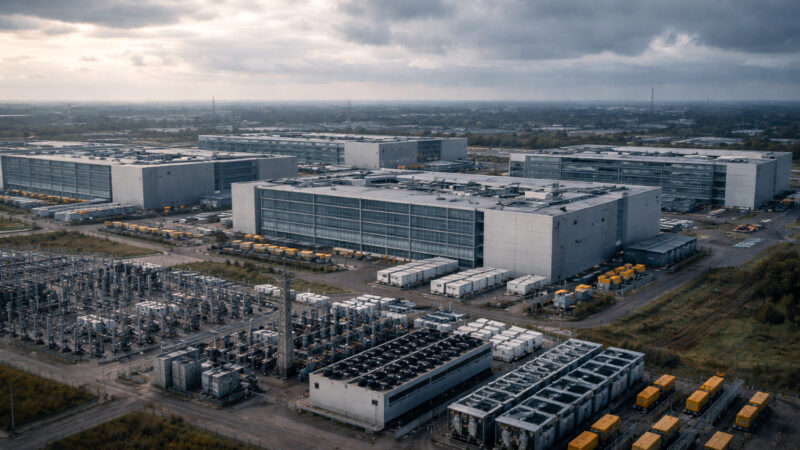
- Global data center investment exceeds $200–300 billion annually, driven by cloud computing and AI workloads
- Hyperscale data centers can require $1–10 billion per facility, depending on size and location
- 5G infrastructure deployment is projected to involve hundreds of billions in cumulative capital expenditure globally
Telecommunications infrastructure is also expanding rapidly. Fiber network deployment and wireless connectivity upgrades are essential to support digital economies, particularly in emerging markets where penetration remains uneven.
A critical factor is energy demand. Data centers are highly energy-intensive, and their growth is increasingly linked to energy infrastructure investment. In some regions, large-scale data center projects require dedicated power generation capacity, further integrating digital and energy capital flows.
Institutional investors-including pension funds and sovereign wealth funds-are allocating more capital to digital infrastructure due to its:
- Stable, long-term cash flows
- High demand growth
- Inflation-linked revenue structures
This has led to increased competition and rising valuations, reinforcing digital infrastructure as a core asset class alongside traditional utilities.
Public vs Private Capital: The Financing Structure
The scale of infrastructure needs exceeds public funding capacity, making private capital essential.
Globally:
- Governments account for roughly 60–70% of infrastructure investment
- Private sector participation-primarily through public-private partnerships (PPPs)-covers the remaining 30–40%, though this share varies widely by region
In emerging markets, PPPs are particularly important, as fiscal constraints limit public spending. However, private investment tends to concentrate in sectors with predictable revenue streams, such as energy and telecommunications, rather than socially oriented infrastructure like water or education.
Infrastructure funds have grown significantly in size:
- Global infrastructure assets under management exceed $1 trillion
- Annual fundraising for infrastructure-focused funds regularly reaches $100–150 billion
This expansion reflects strong investor demand for long-term, stable returns, particularly in an environment where traditional fixed-income assets face volatility.
Regional Capital Flows: Divergence and Concentration
Infrastructure investment is not evenly distributed globally. Capital flows are concentrated in specific regions based on economic size, policy frameworks, and investment climate.
- Asia accounts for the largest share of global infrastructure investment, driven by urbanization and industrial expansion
- North America and Europe focus heavily on energy transition and digital infrastructure, supported by policy incentives and regulatory frameworks
- Emerging markets face an annual infrastructure financing gap estimated at hundreds of billions of dollars, limiting growth potential
Cross-border investment plays a significant role, but geopolitical considerations increasingly influence capital allocation. Strategic sectors such as energy and digital networks are often subject to national security reviews, affecting foreign investment flows.
Interest Rates, Inflation, and Returns
Macroeconomic conditions are reshaping infrastructure investment strategies.
Rising interest rates increase financing costs, particularly for capital-intensive projects with long payback periods. For example:
- A 1–2 percentage point increase in borrowing costs can significantly reduce project viability for large-scale infrastructure investments
- Debt financing, which often accounts for 50–70% of project capital structures, becomes more expensive in higher-rate environments
At the same time, infrastructure assets often provide inflation-linked returns through regulated pricing or long-term contracts. This makes them attractive during periods of elevated inflation.
The result is a selective investment environment:
- Core infrastructure assets (e.g., regulated utilities) remain highly attractive
- Higher-risk or early-stage projects face greater scrutiny and potential delays
Why It Matters: Structural Economic Impact
The redirection of infrastructure capital has far-reaching implications.
First, it is reshaping industrial structures. Energy transition investment alone is creating new supply chains, from battery manufacturing to renewable energy equipment. These industries require large-scale infrastructure support, reinforcing the cycle of capital allocation.
Second, it is influencing productivity. Infrastructure investment improves efficiency across the economy-reducing transport costs, increasing energy reliability, and enabling digital services.
Third, it is driving geopolitical competition. Control over infrastructure-particularly energy and digital systems-has become a strategic priority for governments.
Finally, it affects financial markets. Infrastructure assets are increasingly integrated into global portfolios, influencing capital flows, valuations, and risk management strategies.
Conclusion
The global infrastructure landscape is undergoing a profound transformation, defined by scale, sector concentration, and strategic importance.
The numbers make the trend clear:
- $3 trillion annually in energy investment
- $15 trillion needed globally by 2040
- Hundreds of billions flowing into digital and transport systems each year
These are not incremental changes-they represent a structural reallocation of capital toward the systems that will define future economic growth.
Understanding where capital is moving-and the data behind those flows-is essential for interpreting the direction of global markets. Infrastructure is no longer a passive investment category; it is the foundation of economic transformation in the 21st century.
Related Analysis:
Global Investment Shift: Europe on the Rise
Energy Transition Investments: Companies Leading in Renewables