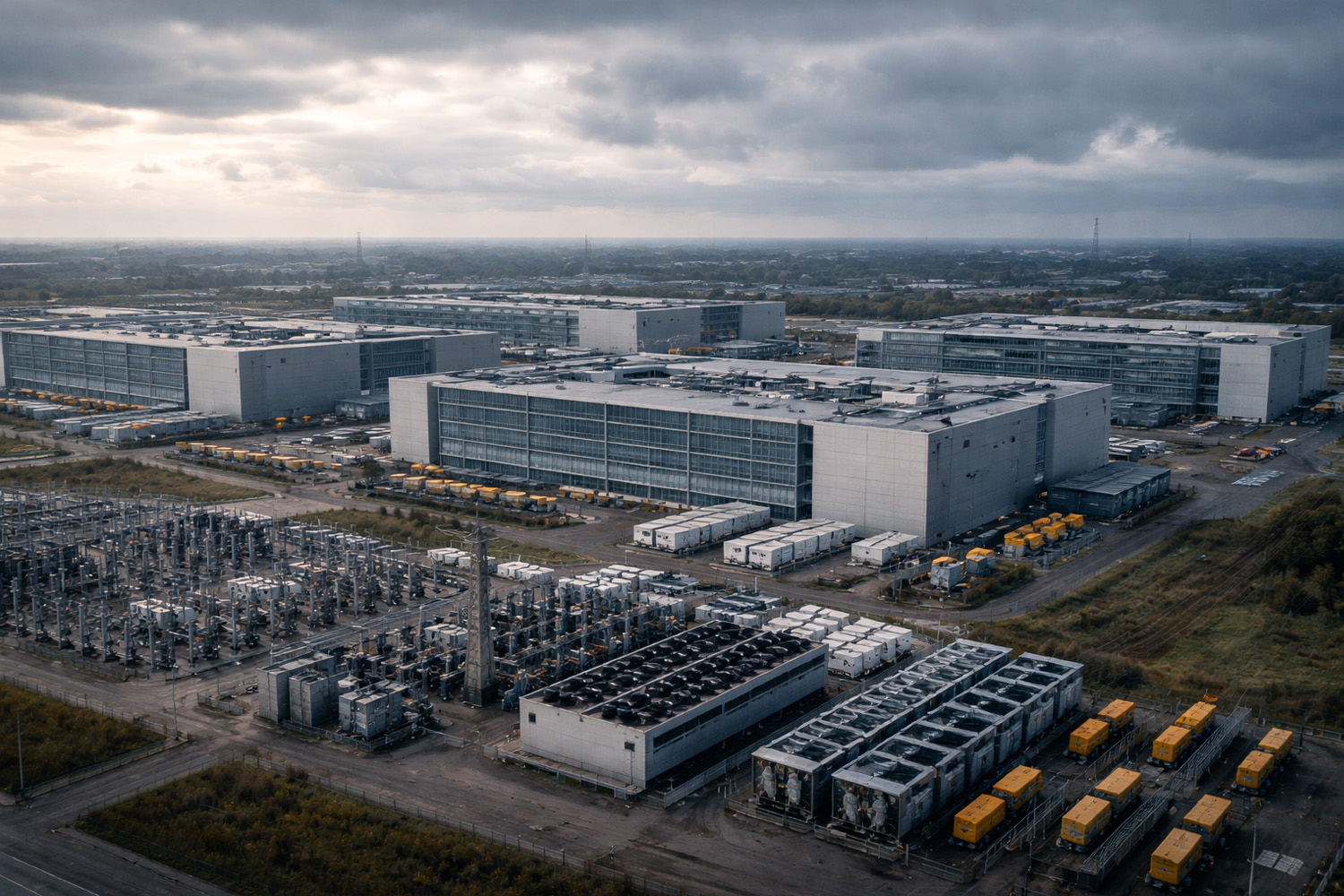
Europe has emerged as one of the most strategically important regions in the global race to build hyperscale digital infrastructure. Over the past decade, major technology companies-including Amazon, Microsoft, Google, and Meta Platforms-have invested tens of billions of euros into large-scale data centers across the continent. These facilities form the backbone of cloud computing, artificial intelligence (AI), and digital services used by businesses and consumers alike.
What distinguishes Europe’s data center expansion is not just its scale, but its strategic context: regulatory sovereignty, energy transition policies, and geopolitical shifts in data governance. The result is a rapidly evolving infrastructure landscape where economic, technological, and political priorities intersect.
The Largest Data Center Investments in Europe
Ireland: Europe’s Hyperscale Gateway
Ireland has become Europe’s primary hub for hyperscale data centers, particularly around Dublin.
- Company: Amazon Web Services
- Investment: Over €30 billion (cumulative across multiple facilities)
- Timeline: Expansion ongoing since 2007
- Construction cycles: Typically 18–36 months per facility
- Function: Cloud infrastructure supporting AWS services globally
Similarly, Microsoft Azure and Google Cloud have established large campuses in Ireland, each investing several billion euros.
Strategic Benefit for Ireland:
- Significant foreign direct investment (FDI) inflows
- High-skilled job creation (engineering, operations)
- Strengthened position as Europe’s digital gateway
However, Ireland also illustrates the trade-offs: data centers now consume a substantial share of national electricity, raising sustainability concerns and prompting regulatory scrutiny.
Sweden: Sustainable Hyperscale Infrastructure
Sweden has attracted major data center investments due to its renewable energy capacity and cold climate.
- Company: Meta Platforms (Luleå Data Center)
- Investment: Estimated €1–2 billion
- Built: Initial phase completed in 2013; expanded multiple times
- Construction time: ~18–24 months per phase
- Function: Supports Facebook, Instagram, and AI workloads
- Company: Microsoft
- Investment: €3–4 billion in Swedish cloud regions (announced 2021)
Strategic Benefit for Sweden:
- Utilization of abundant hydropower and wind energy
- Regional development in northern areas
- Positioning as a “green data hub”
Sweden’s model highlights a broader European trend: aligning digital infrastructure with climate goals.
Denmark: Renewable Integration at Scale
Denmark has also positioned itself as a sustainable data center destination.
- Company: Meta Platforms (Odense Data Center)
- Investment: Approximately €1 billion+
- Built: 2017–2020 (initial phase)
- Function: Social media and AI processing infrastructure
- Company: Apple
- Investment: Around €850 million for Viborg data center
- Built: Operational since 2020
Strategic Benefit for Denmark:
- Integration with wind energy infrastructure
- Local economic development and tax revenues
- Strengthened role in Europe’s digital ecosystem
Netherlands: Connectivity Hub Under Pressure
The Netherlands, particularly Amsterdam, has long been a central European data hub.
- Key players: Microsoft, Google, Amazon
- Typical investment per hyperscale campus: €1–3 billion
- Build time: 2–3 years
Strategic Benefit:
- Exceptional connectivity (AMS-IX internet exchange)
- Gateway between Europe and global data traffic
However, the Netherlands has imposed restrictions on new data centers due to land use and energy constraints, signaling a shift from expansion to regulation.
Germany: Industrial Data Backbone
Germany’s data center ecosystem is centered around Frankfurt.
- Hub: Frankfurt Internet Exchange
- Companies: Google, Microsoft, Amazon
- Investment scale: Multi-billion euro cumulative investments
Strategic Benefit:
- Supports Europe’s largest economy
- Enables industrial cloud and enterprise services
- Reinforces Germany’s role in financial and data flows
Germany’s approach emphasizes reliability, compliance, and enterprise-grade infrastructure.
Economics of Data Center Construction
Large-scale hyperscale data centers typically involve:
- Cost per facility: €500 million to €2+ billion
- Construction timeline: 18–36 months
- Operational lifespan: 15–25 years
- Primary cost drivers:
- Land acquisition
- Power infrastructure (often the largest component)
- Cooling systems
- Server hardware
Energy consumption is a defining factor. A single hyperscale data center can consume as much electricity as a medium-sized city, making access to stable, low-cost, and increasingly renewable energy a decisive factor in site selection.
Why This Matters: Strategic Implications
1. Data Sovereignty and Regulation
European regulations-especially GDPR-have driven companies to localize data storage. This has led to the rapid expansion of regional data centers to ensure compliance and reduce reliance on non-European jurisdictions.
This trend is also geopolitical. By hosting data locally, Europe reduces dependence on external infrastructure and strengthens digital sovereignty.
2. AI and the Infrastructure Race
The rise of AI has significantly increased demand for computing power. Training large models requires vast data processing capabilities, pushing companies to expand data center capacity rapidly.
Europe risks falling behind the United States and China in AI infrastructure unless investment continues at scale. Data centers are no longer just storage facilities-they are strategic assets in technological competition.
3. Energy and Sustainability Tensions
Data centers sit at the intersection of digital growth and climate policy.
- They drive demand for renewable energy
- They accelerate investment in energy infrastructure
- But they also strain national grids
Countries like Sweden and Denmark demonstrate how alignment with renewable energy can turn this challenge into an advantage.
4. Local Economic Impact
Data centers bring:
- Capital investment
- Construction jobs
- Long-term technical employment
However, their direct employment impact is relatively limited compared to their capital intensity. The broader benefit lies in enabling digital ecosystems-startups, cloud services, and AI industries.
Future Pipeline: Who Is Building Next?
The next wave of investment is already underway.
- TikTok (owned by ByteDance)
- Planned €1 billion data center in Finland
- Objective: Localize European user data
- Timeline: Expected within a short construction cycle
- Microsoft
- Expanding cloud regions across Europe
- Focus on AI-ready infrastructure
- Google
- Continued expansion in Nordic countries
- Emphasis on carbon-free energy
- Amazon Web Services
- Ongoing investments in Germany, Spain, and Italy
- Oracle and IBM
- Expanding enterprise cloud regions
This expansion reflects a broader shift: Europe is no longer a secondary market but a core battleground for digital infrastructure.
Global Context: Europe in the Data Center Race
Globally, the United States remains the largest data center market, followed by China. However, Europe’s growth rate is among the fastest.
Key differentiators for Europe:
- Strong regulatory framework
- High demand for secure, compliant cloud services
- Leadership in renewable energy integration
At the same time, constraints-especially energy and land-are forcing a more strategic approach to expansion compared to the relatively unconstrained growth seen in earlier phases in the U.S.
Infrastructure as Strategy
The expansion of data centers in Europe is not merely a technological trend-it is a structural transformation of the digital economy. These facilities underpin cloud computing, AI, and data governance, making them critical assets in both economic and geopolitical terms.
For host countries, the benefits extend beyond immediate investment. Data centers anchor long-term digital ecosystems, attract further innovation, and enhance strategic autonomy. However, they also introduce new challenges, particularly around energy consumption and environmental impact.
As new players enter the market and existing ones expand, Europe’s role in the global digital infrastructure landscape will continue to grow. The central question is no longer whether data centers matter, but how countries can balance their economic advantages with sustainability and strategic control in an increasingly data-driven world.
Related Analysis:
Google to Invest €5.5 Billion in Germany’s Digital Infrastructure