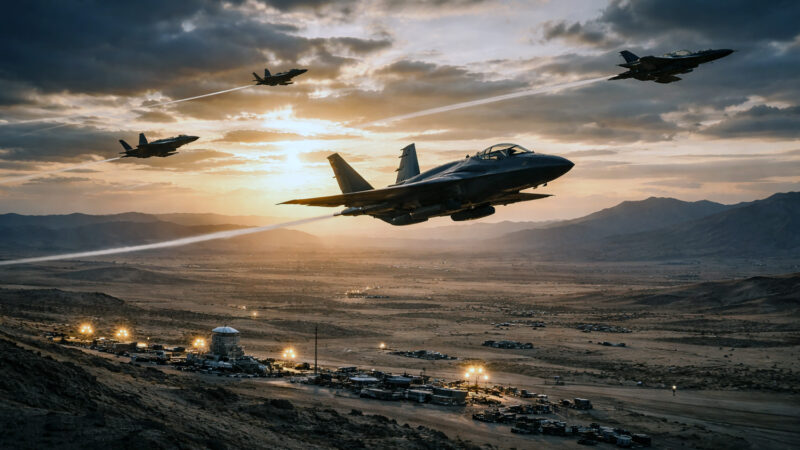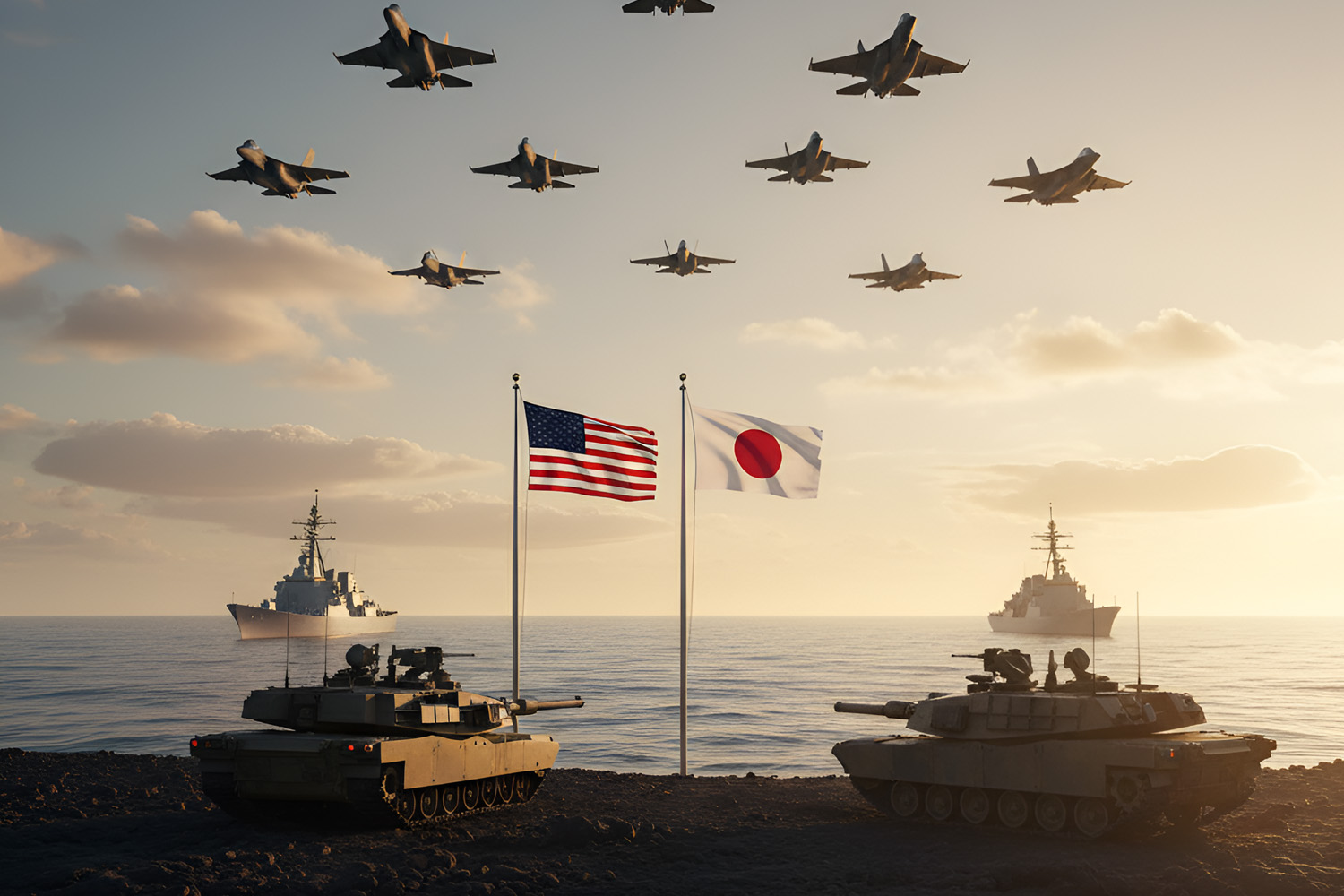
The bilateral security relationship between the United States and Japan remains a foundational element of stability in the Indo-Pacific region. According to the U.S. Department of State, “the approximately 55 000 U.S. military personnel stationed in Japan are evidence of Washington’s strong commitment to the alliance.”
These American forces are embedded across Japanese territory, operating major air, land and sea platforms, including forward-deployed naval assets and advanced tactical aircraft. Together with the Japan Self‑Defense Forces (JSDF), the two nations conduct regular joint exercises, share intelligence, develop co-production programmes and coordinate strategic deterrence architecture.
Why Japan Hosts the Largest U.S. Troop Presence Outside the U.S.
- Japan’s strategic location-close to Korea, China, Russia and the Taiwan Strait-makes it an essential hub for U.S. power projection and regional deterrence.
- The U.S.–Japan alliance is anchored in the Treaty of Mutual Cooperation and Security between the United States and Japan (1960). Japan allows U.S. forces to be based on its territory in return for a U.S. security guarantee.
- The U.S. presence supports a forward-deployed aircraft carrier strike group, F-35 fighter squadrons, and a robust logistics and command infrastructure that underpins the alliance’s regional role.
Key Components of the Cooperation
- Troop presence & basing: The figure of ~55 000 U.S. troops in Japan comes from official State Department data.
- Naval and air assets: Japan hosts major U.S. naval facilities (e.g., at Yokosuka) as well as U.S. air bases hosting modern fighters like the F-35. These enhance combined strike and defence capabilities in the Indo-Pacific.
- Joint exercises & readiness: The U.S. and Japan regularly hold bilateral drills and trilateral exercises with other partners to enhance interoperability and readiness for contingencies across the region.
- Shared development & strategic coordination: The two countries are deepening cooperation in missile defence, joint production of defence equipment, intelligence sharing and command-and-control integration. For example, recent statements highlight upgrades to U.S. forces’ command in Japan to better align with Japanese defence structures.
Regional Implications & Strategic Significance
- In the face of rising Chinese military activity, North Korea’s nuclear advances and broader shifts in the Indo-Pacific security environment, the U.S.–Japan military partnership is increasingly central. The allies describe China’s assertiveness as a major strategic challenge.
- For the United States, Japan serves not only as a host for troops and bases, but as a collaborative partner in shaping regional defence architecture – including missile defence, naval logistics and rapid response capabilities.
- For Japan, the alliance enables extended deterrence (including the U.S. nuclear umbrella) and helps Tokyo bolster its conventional defence posture in a changing security environment while remaining consistent with its constitutional self-defence framework.
Challenges & Considerations
- Cost-sharing and burden: Japan provides significant support for hosting U.S. forces (including financial contributions and infrastructure), and the broader question of cost-sharing remains politically sensitive in both countries.
- Public opinion and base issues: Local opposition to U.S. bases (especially in Okinawa) remains a perennial domestic issue in Japan that complicates base expansion and troop presence decisions.
- Operational integration: Enhancing joint command and control, logistics coordination and information sharing remains a work in progress. The upgrade of U.S. command structures in Japan is one such step.
- Regional escalation risk: A larger or more forward U.S. posture may provoke responses from regional actors, requiring careful diplomatic as well as military calibration.
Conclusion
In sum, the U.S.–Japan military partnership stands as one of the most important alliances in the Indo-Pacific region. The presence of roughly 55 000 U.S. personnel in Japan, the deployment of advanced naval and air capabilities, and deepening joint planning mark an alliance that is evolving to meet 21st-century challenges. But success will depend not just on numbers, but on sustained cooperation, domestic support in both countries and strategic clarity about the alliance’s role in a shifting global order.