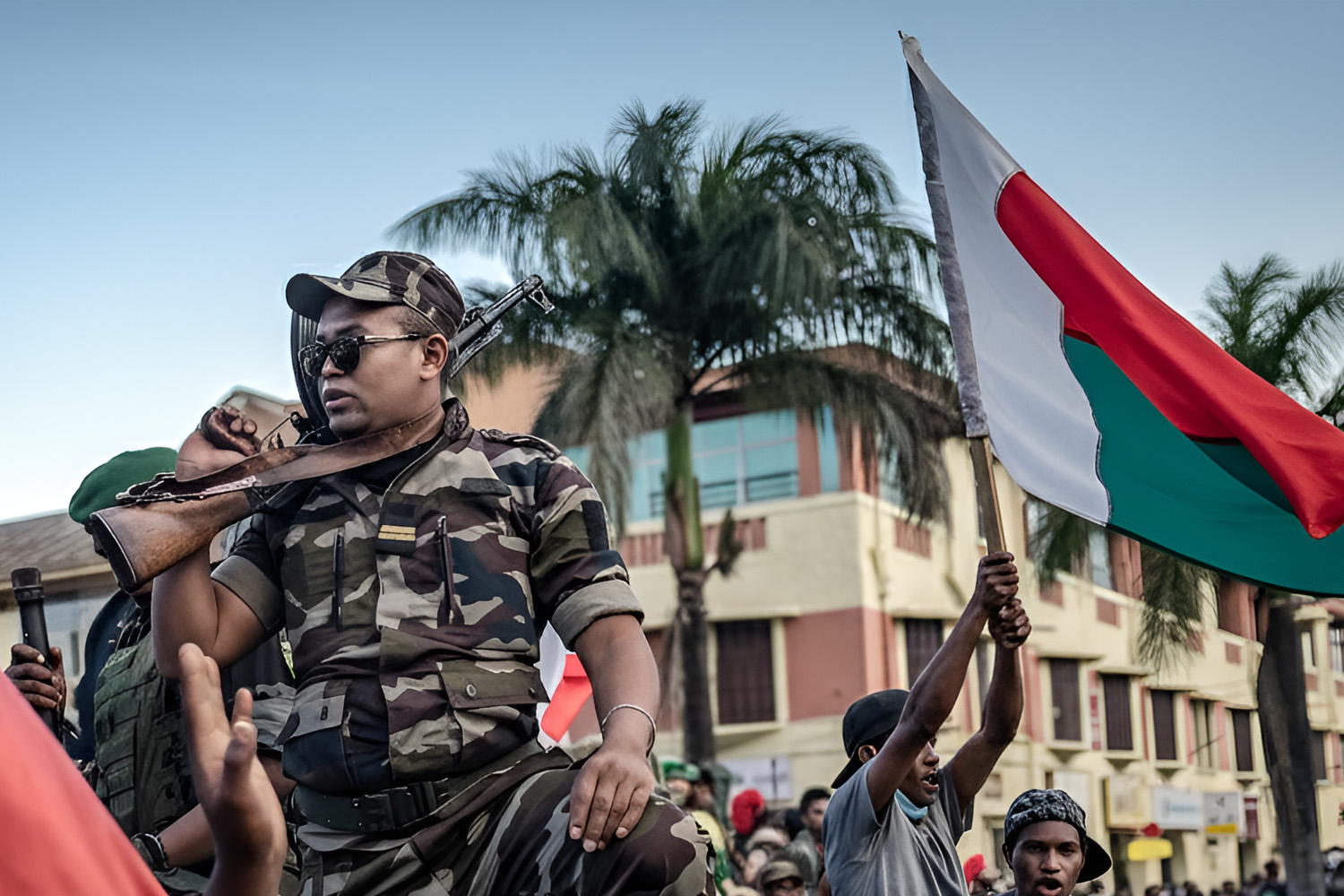
A serious political crisis is unfolding in Madagascar after President Andry Rajoelina reported what he called an “illegal and forceful” coup attempt led by elements of the military, particularly the elite Capsat unit. The incident comes amid weeks of protests over economic hardship, rising food and fuel shortages, and public discontent with the government’s handling of the crisis.
Coup Attempt and Military Split
According to reports from The Guardian and local media, the Capsat (Corps d’Armée pour la Sécurité et la Protection du Territoire) unit – historically influential in Madagascar’s political landscape – declared that it was seizing control of the army. The move was backed by a faction of officers who accused the government of corruption and failing to address the growing social unrest.
In response, President Rajoelina condemned the action as a direct threat to constitutional order, calling on loyalist forces to defend democratic institutions. “We will not allow a return to instability,” he stated in a national address, warning that those involved in the attempted coup would face legal consequences.
Defense Minister Leon Jean Rakotonirina confirmed that the government was working to restore full control of the armed forces and emphasized that the situation remained “fluid but under observation.”
Background: Rising Tensions and Economic Strain
The coup attempt comes at a time of widespread public frustration over economic stagnation, inflation, and shortages of essential goods. Madagascar – one of the world’s poorest nations – has been struggling with the long-term effects of drought, reduced agricultural output, and disruptions to global trade.
Protests in the capital, Antananarivo, have intensified over the past month, with demonstrators demanding government accountability and new elections. Human rights groups have reported instances of excessive force by security personnel during earlier demonstrations.
International Reaction
The African Union (AU) and the United Nations have both condemned the attempted power grab, calling for calm and urging all parties to respect constitutional processes. The European Union and France, Madagascar’s former colonial power, also expressed concern and reiterated support for democratic governance.
Analysts warn that any prolonged instability could threaten the country’s fragile recovery and deter much-needed foreign investment. Madagascar’s history of political upheavals – including coups in 2009 and 2010 – has often led to economic isolation and sanctions.
Conclusion
The attempted coup in Madagascar underscores the fragility of the nation’s democratic institutions and the ongoing challenges facing President Rajoelina’s government. With economic hardship fueling unrest and divisions within the military, the coming days will be critical in determining whether Madagascar can restore stability or slip once again into political turmoil.