The electric-vehicle market spent much of the past decade moving in one conspicuous direction: upward in size. Battery-electric vehicles became increasingly associated with crossovers, SUVs and larger premium models, while many traditional small cars disappeared from manufacturers’ portfolios.
The return of the smart #2 points in the opposite direction.
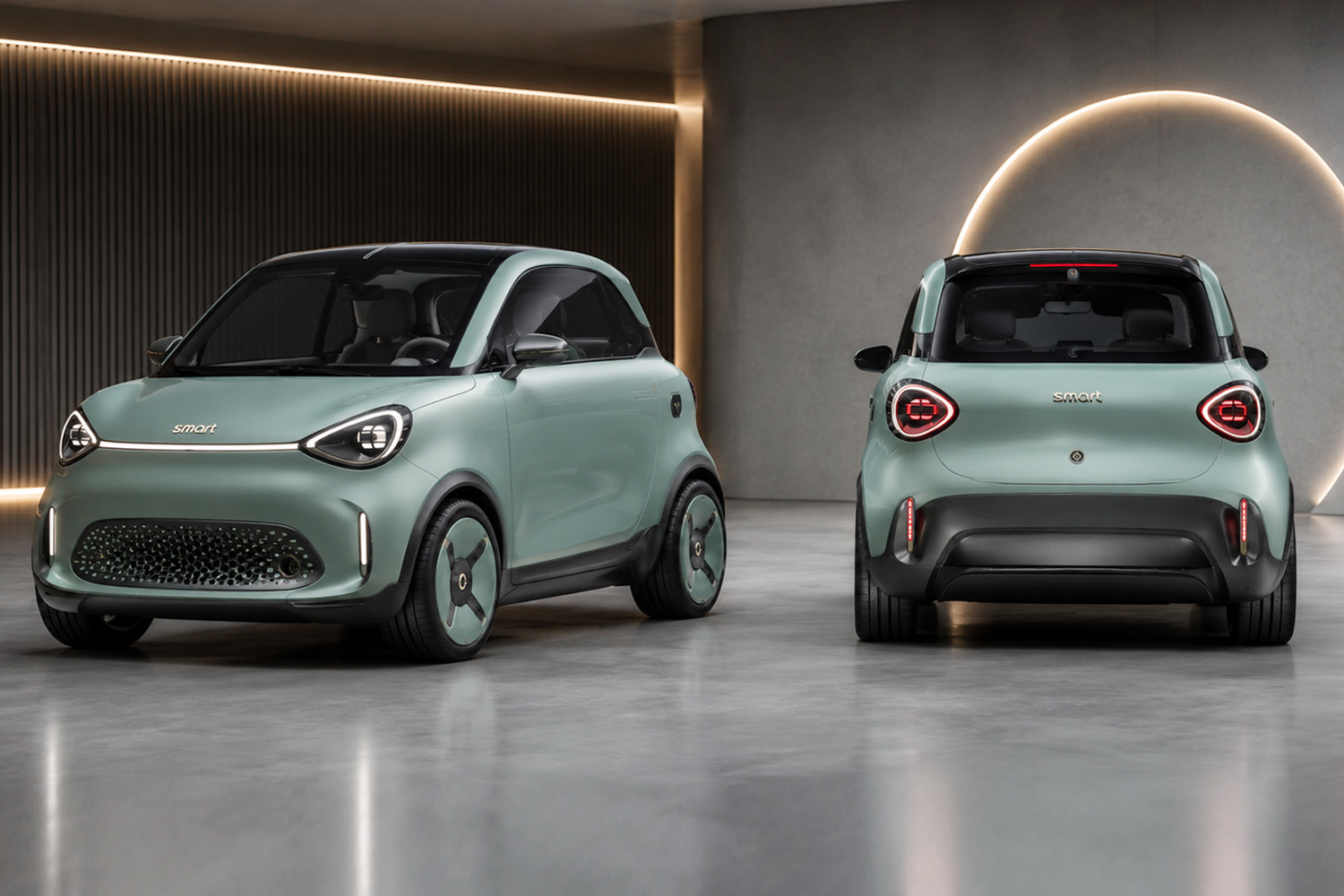
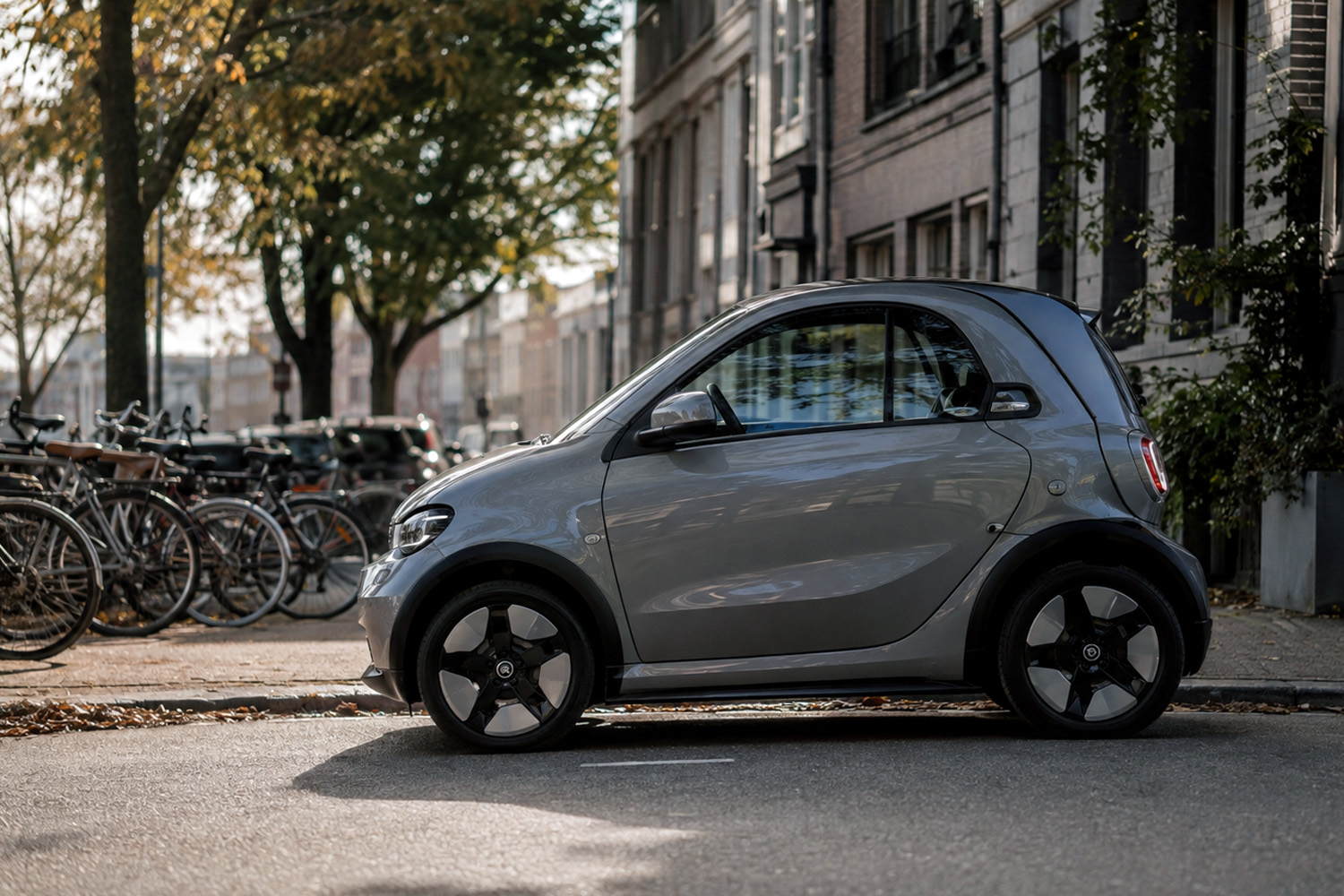
The production successor to the original two-seat smart fortwo is undergoing global testing ahead of its scheduled world premiere at the Paris Motor Show in October 2026. Smart says the new model is being validated for urban agility, stability, noise, vibration and harshness, durability and safety.
That makes the #2 more significant than simply another new EV. It represents a strategic question confronting the automotive industry: does the next phase of electrification really require larger vehicles, or can better engineering make small electric cars commercially viable again?
From tiny city car to electric SUV brand – and back again
The smart brand has undergone a remarkable transformation.
Smart was originally built around an extremely compact proposition: a two-seat car designed primarily for dense urban environments. But after Mercedes-Benz and Geely established their joint venture in 2019, the brand was repositioned as a premium electric-vehicle manufacturer. Its range expanded into larger vehicles, including the #1, #3 and eventually the mid-size #5 SUV.
Smart itself describes the transformation as a renewal of the brand into a contemporary premium EV business, with a presence in more than 40 countries and regions. The #5 represents how far the company moved from its original concept: it is a substantially larger electric SUV designed to compete in a very different part of the market.
The #2 reverses that trajectory.
The upcoming model is a two-seater again, with Smart deliberately returning to the packaging philosophy that defined the fortwo. The company’s new Electric Compact Architecture, or ECA, has been developed specifically for the compact model. Smart’s concept version targeted an overall length of about 2.79 metres, a turning circle of 6.95 metres and an electric range of roughly 300 kilometres, with DC charging from 10% to 80% in under 20 minutes.
The important development is therefore not simply that Smart is building a small car again.
It is that electrification is making a different approach to vehicle architecture possible.
Why small EVs became difficult to build
Small cars have traditionally been among the most cost-sensitive products in the automotive industry.
A compact vehicle has less space in which to distribute expensive components, while many safety, electronics, infotainment and regulatory requirements cost roughly the same regardless of vehicle size.
An electric drivetrain changes some of that equation but does not eliminate it.
The battery remains one of the most expensive components of an EV, and a small vehicle cannot simply absorb a large battery pack into a higher selling price as easily as a premium SUV can. At the same time, customers increasingly expect small cars to contain sophisticated driver-assistance systems, connectivity, cameras, displays and safety equipment.
This created a difficult business case.
For manufacturers, a small internal-combustion car could be relatively inexpensive because the powertrain was mature, production volumes were high and component costs had been optimized over decades. Electric vehicles initially required expensive batteries and new manufacturing systems.
The result was a market in which electrification often appeared first in larger, more expensive vehicles.
That equation is gradually changing.
Battery technology is changing the economics of vehicle size
The engineering objective for a small EV is fundamentally different from that of a large electric SUV.
A large EV can justify a large battery because customers may expect long-distance capability, high performance, towing capacity or substantial passenger and cargo space.
A city car does not need to solve all of those problems.
If most journeys are relatively short, engineers can prioritize low mass, low aerodynamic drag and efficient packaging rather than simply adding battery capacity.
That creates a potentially powerful feedback loop.
A smaller battery reduces vehicle mass. Lower mass reduces the energy required to move the vehicle. Lower energy consumption can reduce the amount of battery required to achieve a useful range. A smaller battery can then further reduce weight and cost.
This is one of the most important principles behind the renewed interest in compact EVs.
The goal is not to make a small vehicle behave like a large EV.
It is to design the vehicle around the actual requirements of urban mobility.
Smart’s Concept #2 illustrates this philosophy. The company designed the vehicle around its proprietary ECA architecture and retained the “wheels-at-the-corners” layout that maximizes interior packaging relative to the car’s external footprint.
That is an architectural advantage, not merely a styling decision.
The city itself is becoming a constraint on vehicle size
Vehicle size has become an increasingly important urban issue.
European cities contain narrow streets, limited parking space and increasingly congested road networks. A vehicle that is several hundred kilograms lighter and substantially shorter does not solve congestion by itself, but it can reduce the physical space required for individual trips and parking.
The economics of parking also matter.
In dense urban areas, the cost and availability of parking can influence vehicle choice almost as much as fuel or electricity consumption. A compact vehicle can therefore provide a practical advantage that cannot easily be replicated by simply making a conventional crossover more efficient.
This helps explain why several European manufacturers are again exploring small electric vehicles.
The broader trend includes models such as the Renault Twingo E-Tech and other compact EV projects, while manufacturers are attempting to reduce production complexity and battery requirements to make smaller vehicles economically viable.
Smart’s return therefore coincides with a broader reconsideration of the small-car segment rather than occurring in isolation.
The engineering challenge is not range – it is efficiency
One of the biggest misconceptions surrounding EV development is that progress automatically means increasing range.
For a large family vehicle, long range can be important. For a city-focused vehicle, however, maximizing efficiency can be more valuable than maximizing battery capacity.
This changes the engineering priorities.
Manufacturers can focus on:
- reducing vehicle mass;
- minimizing aerodynamic losses;
- optimizing electric-motor efficiency;
- reducing rolling resistance;
- improving thermal management;
- integrating battery and chassis architecture;
- improving regenerative braking;
- shortening charging times.
Smart says the #2 is being tested not only for driving performance but also for refinement and safety. Its validation program includes proving grounds, wind tunnels, acoustic chambers, temperature-controlled testing and public-road testing.
That matters because making a small car is not necessarily difficult.
Making a small car that feels like a modern car is.
Customers still expect acceptable noise insulation, crash protection, stability at higher speeds, modern electronics and predictable handling. The #2’s development program reflects the engineering challenge of delivering those characteristics within a much smaller package.
The Chinese-European connection is central to the story
There is another important industrial dimension.
Smart is no longer the standalone European city-car company of the 1990s. It is a joint venture between Mercedes-Benz and Geely, combining Mercedes-Benz design responsibilities with Geely’s engineering and manufacturing ecosystem.
That structure is particularly relevant for small EVs.
China has developed enormous scale in batteries, electric motors, power electronics and EV manufacturing. European manufacturers, meanwhile, retain significant strengths in design, safety engineering, vehicle dynamics, brand management and regulatory expertise.
The compact EV therefore becomes a useful test case for this new industrial division of labor.
The question is no longer simply whether a European automaker can design a small electric car.
It is whether a European brand can use global supply chains and Chinese manufacturing capabilities to build one at a cost that makes sense in Europe, while maintaining the engineering and safety standards expected by European customers.
That competition will become increasingly important.
Small EVs could also challenge the SUV-first strategy
For years, manufacturers have had a strong financial incentive to sell larger vehicles.
SUVs generally provide more interior space, higher seating positions and greater opportunities for premium features. Their larger dimensions also make it easier to absorb expensive technology and batteries.
But the strategy has consequences.
Large vehicles consume more material, generally require more energy to move and occupy more physical space. They also make affordability more difficult as vehicle prices rise.
A compact EV offers the opposite proposition.
Instead of asking consumers to pay for capabilities they rarely use, manufacturers can focus on the specific needs of urban travel.
That does not mean SUVs are disappearing. Far from it.
It means the industry may be moving toward a more differentiated EV market, in which large vehicles coexist with genuinely compact models rather than dominating the entire electric lineup.
Regulation could reinforce the shift
European environmental policy is another structural factor.
The European Union’s long-term emissions framework continues to push manufacturers toward lower-emission vehicles, while cities increasingly use measures such as low-emission zones and restrictions on vehicle access.
Electrification helps manufacturers meet these requirements, but the environmental benefits of an EV also depend on how much material and energy are required to build and operate it.
A smaller EV can potentially reduce resource requirements compared with a much larger battery-electric vehicle.
That does not make every small EV automatically sustainable, but it strengthens the argument for matching vehicle size to actual transportation needs.
The broader European vehicle fleet also shows why the transition will take time. ACEA reported that the EU had approximately 256 million passenger cars on its roads in 2024, while electrically chargeable cars accounted for only 3.7% of the fleet.
The industry’s challenge is therefore not merely replacing new-car sales with EVs. It is gradually transforming an enormous installed vehicle base.
The real test will be economics
The biggest question surrounding the smart #2 is not whether engineers can build it.
They clearly can.
The more difficult question is whether consumers will pay enough for a highly specialized two-seat EV to make the business sustainable.
Small cars traditionally operate under severe cost pressure. A premium positioning can help, but it can also undermine the central advantage of compact mobility if the vehicle becomes too expensive.
This is where Smart’s strategy will face its strongest test.
The company is effectively trying to combine three characteristics that have historically been difficult to reconcile:
small size, premium positioning and electric technology.
The new ECA architecture is an attempt to solve that problem through dedicated engineering rather than simply shrinking a larger vehicle platform. Smart’s development of the #2 therefore has significance beyond one model.
If dedicated compact EV architectures can lower costs while maintaining safety, performance and acceptable range, other manufacturers have a stronger reason to return to the segment.
The next phase of EV competition may be about doing more with less
The smart #2 arrives at an important moment for the automotive industry.
The first phase of EV competition was dominated by questions about battery range, charging speed and power. The second phase is becoming more complicated.
Manufacturers now have to make EVs affordable, efficient, profitable, technologically sophisticated and appropriately sized for different forms of mobility.
That changes the definition of innovation.
A 1,000-kilometre EV may demonstrate what battery technology can achieve. But a lightweight urban EV that uses substantially less energy for everyday transportation may represent an equally important engineering achievement.
The smart #2 is therefore best understood not as a nostalgic return to the fortwo, but as an experiment in right-sizing the electric automobile.
Its world premiere is scheduled for the Paris Motor Show in October 2026, following the current global testing program.
Whether the model succeeds commercially remains to be demonstrated.
But the industrial question it raises is already important: after years of making electric vehicles larger, more powerful and more expensive, can the automotive industry make the EV smaller, lighter and more efficient again?
If the answer is yes, the future of electric mobility may not be defined only by bigger batteries and bigger vehicles.
It may also be defined by cars that recognize that, in many cities, less car can be more useful.