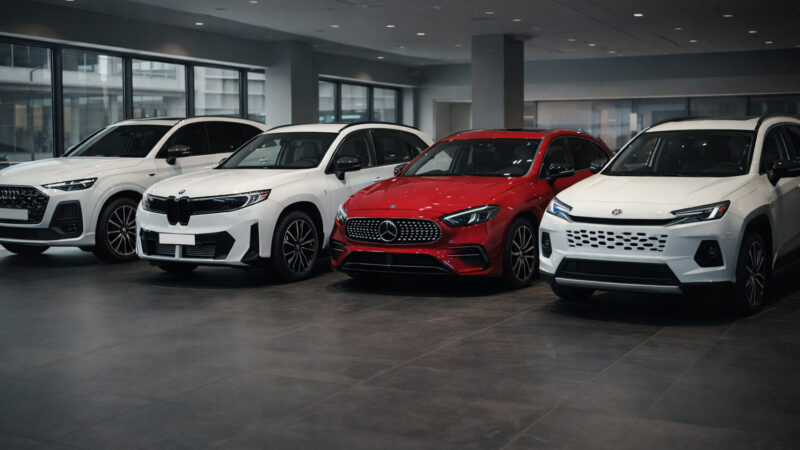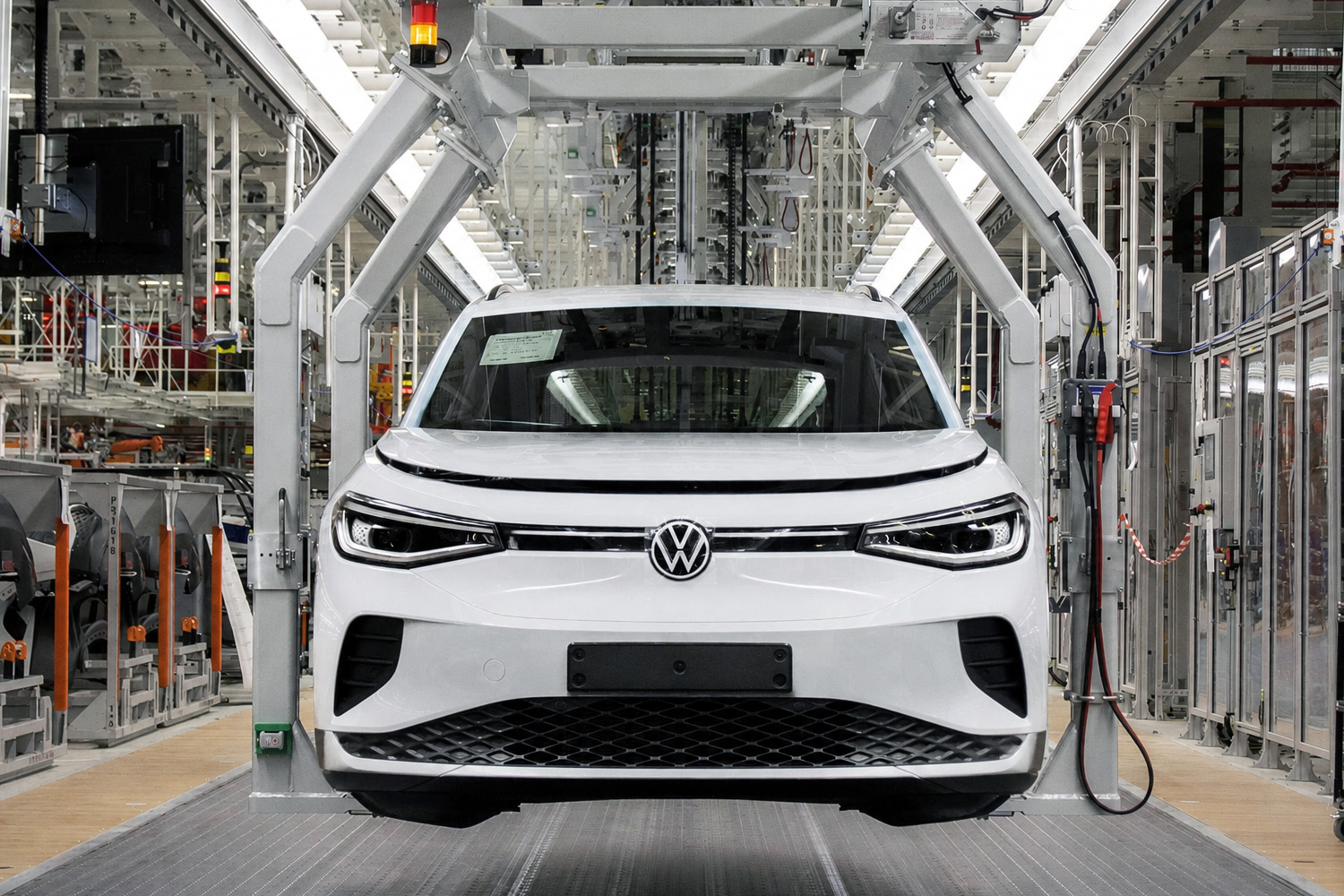
For decades, Volkswagen Group represented the benchmark for industrial-scale automotive manufacturing. With brands spanning the mass market, premium vehicles, luxury sports cars and commercial transportation, it became one of the largest automakers in history, selling nearly 10 million vehicles annually and employing more than 670,000 people worldwide.
Today, however, Volkswagen finds itself at the center of one of the automotive industry’s most significant transformations. The company’s challenges extend far beyond declining vehicle sales or temporary economic weakness. They reflect structural changes reshaping the global automotive landscape: the rapid rise of Chinese manufacturers, the transition to software-defined electric vehicles, intensifying cost pressures, and a fundamental shift in consumer expectations.
Recent reports that Volkswagen may eliminate up to 50,000 additional jobs over the coming years are not simply another round of corporate cost-cutting. They illustrate the scale of change required for one of the world’s largest industrial companies to remain competitive in a rapidly evolving mobility market.
At the same time, Volkswagen continues investing heavily in electric vehicles, software platforms and regional partnerships, demonstrating that the company is restructuring for a very different automotive future rather than retreating from it.
Volkswagen’s Current Financial Position
Despite growing headlines about restructuring, Volkswagen remains financially one of the strongest automotive manufacturers in the world.
In 2025, Volkswagen Group generated annual revenue of more than €320 billion, maintaining its position among the largest industrial companies globally. Although profitability has declined from historical highs, the company continues to generate substantial operating cash flow while maintaining significant liquidity to finance its long-term transition.
The group’s broad portfolio remains a major strength. Alongside the Volkswagen passenger-car brand, the company owns Audi, Porsche, Škoda, SEAT/Cupra, Bentley, Lamborghini, Ducati, MAN and Scania, providing diversification across multiple market segments.
Nevertheless, profitability has come under increasing pressure due to several structural factors:
- declining sales volumes in China;
- slower-than-expected EV demand in parts of Europe;
- rising development costs for software-defined vehicles;
- higher labor and energy costs;
- geopolitical uncertainty affecting global supply chains.
Unlike many smaller manufacturers, Volkswagen is not facing a liquidity crisis. Instead, it faces a profitability challenge: generating sufficient returns while investing tens of billions of euros in next-generation vehicle technologies.
China: From Growth Engine to Competitive Battlefield
No market better illustrates Volkswagen’s current challenges than China.
For nearly four decades, China served as Volkswagen’s most profitable market. Through joint ventures with SAIC and FAW, Volkswagen established one of the country’s strongest automotive networks and became synonymous with reliable family transportation.
That competitive advantage has eroded rapidly.
Chinese manufacturers such as BYD, Geely, Chery, Li Auto, XPeng and Xiaomi now lead many segments of the domestic market, particularly in electric vehicles and software-enabled mobility.
Consumers increasingly prioritize:
- intelligent cockpit systems;
- AI-powered voice assistants;
- advanced driver assistance;
- over-the-air software updates;
- integrated digital ecosystems.
In many of these areas, local manufacturers iterate faster than traditional global automakers.
Volkswagen’s second-quarter 2026 sales decline of more than 36% in China underscores how quickly the market has shifted. Rather than simply replacing internal combustion vehicles with electric models, Chinese consumers increasingly evaluate cars as connected digital products.
This requires a fundamentally different product development philosophy.
The Role of Jetta in Volkswagen’s China Strategy
One example of Volkswagen’s regional adaptation is the Jetta brand, developed through the FAW-Volkswagen joint venture.
Originally launched as an affordable brand for value-conscious Chinese consumers, Jetta targets buyers seeking dependable transportation at lower price points than mainstream Volkswagen models.
The brand is now preparing to introduce its first fully electric sedan.
Although Volkswagen already sells several battery-electric vehicles in China through its ID. lineup and other joint ventures, Jetta’s upcoming model appears intended for a different market segment.
Rather than competing directly with premium EVs, the new vehicle is expected to target the increasingly competitive entry-level electric market, where manufacturers such as BYD have demonstrated that affordability can coexist with modern digital features.
For Volkswagen, this reflects an important strategic adjustment.
Instead of assuming that one global EV portfolio can satisfy every market, the company is increasingly tailoring products to regional consumer preferences, pricing realities and competitive dynamics.
Restructuring Beyond Job Cuts
The reported possibility of eliminating another 50,000 jobs has attracted significant attention, but workforce reductions represent only one element of Volkswagen’s transformation.
The company is simultaneously attempting to simplify its industrial structure.
Key priorities include:
- reducing manufacturing complexity;
- improving software development efficiency;
- accelerating product development cycles;
- lowering battery production costs;
- increasing platform sharing across brands.
Historically, Volkswagen’s engineering philosophy emphasized mechanical excellence supported by incremental innovation.
Today’s automotive industry increasingly rewards software integration, computing capability and rapid feature deployment.
This requires organizational changes that extend far beyond factory operations.
Software engineers, AI specialists, cybersecurity experts and semiconductor specialists now play increasingly central roles in automotive development.
Technology as the New Competitive Battlefield
The automotive industry’s competitive advantage has shifted from mechanical engineering toward digital architecture.
Volkswagen’s investments increasingly focus on:
- software-defined vehicle platforms;
- centralized computing systems;
- advanced driver assistance;
- AI-enabled vehicle interfaces;
- next-generation battery technology;
- automated manufacturing.
The company’s collaboration with Rivian illustrates this transition.
Rather than developing every software component independently, Volkswagen is partnering to accelerate next-generation vehicle electronics and software architectures.
This reflects a broader industry trend.
Traditional automakers increasingly recognize that technological partnerships may deliver innovation more efficiently than entirely in-house development.
Global Market Position
Despite current challenges, Volkswagen remains one of the world’s largest vehicle manufacturers.
Its strengths include:
- one of the industry’s broadest brand portfolios;
- global manufacturing capacity;
- extensive dealer networks;
- strong commercial vehicle operations;
- premium and luxury market exposure;
- significant engineering expertise.
However, market leadership no longer guarantees future competitiveness.
Tesla demonstrated that software integration can disrupt established manufacturers.
Chinese automakers have shown that rapid development cycles, localized engineering and vertically integrated battery supply chains can significantly reduce costs while accelerating innovation.
Volkswagen now finds itself competing simultaneously against established global rivals and highly agile technology-driven manufacturers.
Consumer Expectations Are Changing
Consumer priorities have evolved considerably over the past decade.
Price and reliability remain important, but buyers increasingly evaluate vehicles based on digital functionality.
Modern consumers expect:
- smartphone-like software experiences;
- intuitive user interfaces;
- continuous feature improvements;
- seamless connectivity;
- intelligent navigation;
- AI-assisted interaction.
Younger buyers often compare automotive software with consumer electronics rather than traditional vehicles.
This represents one of the industry’s most profound cultural shifts.
Automakers now compete not only on horsepower, efficiency or handling, but increasingly on computing capability and user experience.
Regulation Continues to Shape Strategy
Volkswagen’s transformation is also driven by regulation.
Europe continues tightening fleet-emissions standards while encouraging electrification and battery production.
China promotes domestic innovation through industrial policy and local supply chains.
Meanwhile, the United States is increasingly emphasizing domestic manufacturing, critical minerals and technology security.
As a result, Volkswagen must adapt to three distinct regulatory environments simultaneously.
Future competitiveness depends not only on engineering excellence but also on manufacturing flexibility and regional supply-chain resilience.
Looking Ahead
Volkswagen’s current restructuring should not be interpreted as evidence of industrial decline.
Rather, it illustrates the enormous scale of transformation facing legacy automotive manufacturers.
The company’s financial position remains solid, its engineering capabilities remain among the strongest in the industry, and its global brand portfolio continues to provide significant competitive advantages.
However, future success will depend less on production volume than on software capabilities, battery economics, regional adaptation and organizational agility.
The introduction of an affordable electric model under the Jetta brand demonstrates that Volkswagen increasingly recognizes the importance of localized strategies, particularly in China, where competition is evolving faster than anywhere else in the world.
The broader lesson extends well beyond Volkswagen.
The automotive industry is entering an era in which vehicles function as intelligent digital platforms rather than purely mechanical machines. Manufacturers that can combine efficient manufacturing with software innovation, AI integration and competitive battery technology will define the next generation of global mobility.
Volkswagen remains one of the companies most capable of making that transition-but its future leadership will depend on how effectively it reinvents itself rather than how successfully it preserves the business model that made it an automotive giant in the twentieth century.