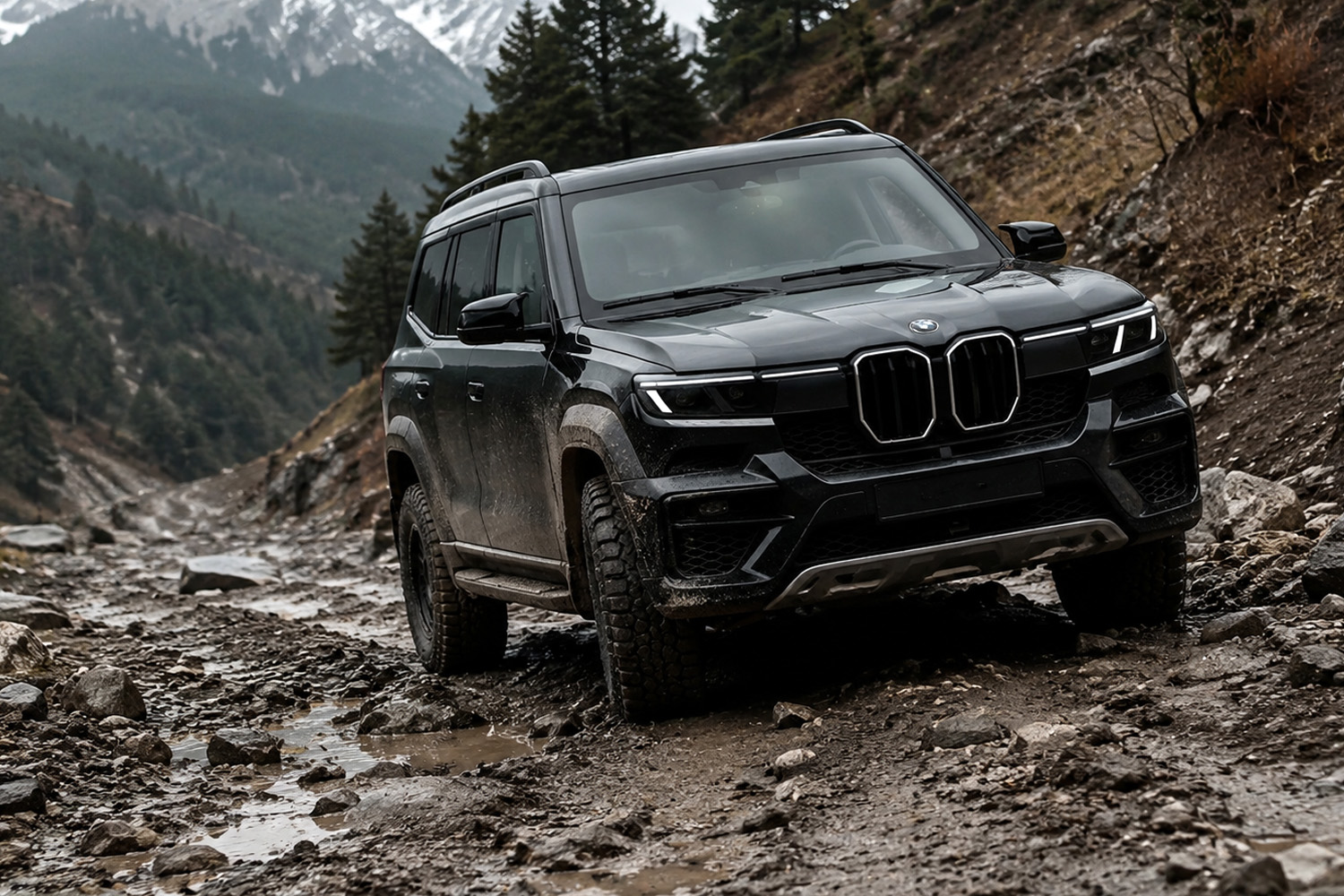
The Strategic Logic Behind BMW and Audi’s Absence from the Hardcore Off-Road Segment
Germany’s premium automotive market is often described as one of the most competitive industries in the world. Mercedes-Benz, BMW, and Audi have spent decades matching one another almost model for model, whether in compact hatchbacks, executive sedans, performance coupes, luxury limousines, or high-performance SUVs. Consumers have become accustomed to seeing a BMW alternative to nearly every Mercedes, and an Audi competitor to nearly every BMW.
Yet one notable exception has existed for more than four decades: the Mercedes-Benz G-Class.
Since its civilian launch in 1979, the G-Class has occupied a unique position in the automotive landscape. Despite its extraordinary profitability and global popularity, neither BMW nor Audi has ever introduced a direct body-on-frame luxury off-roader capable of matching the G-Class in purpose and engineering philosophy.
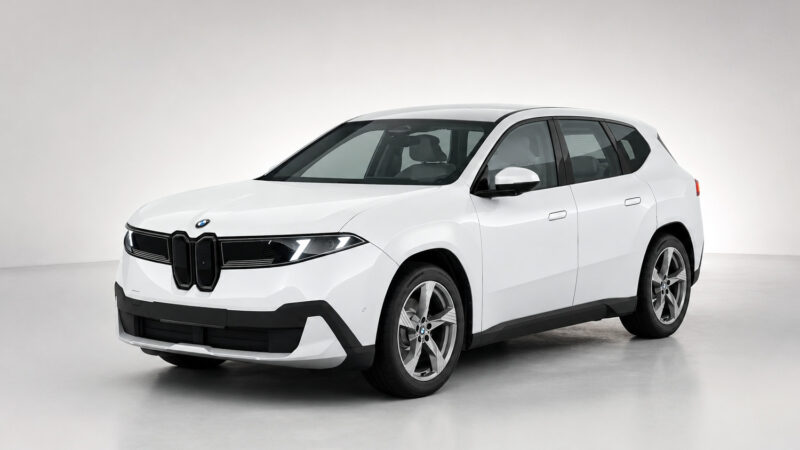
Recent industry rumors have once again fueled speculation that BMW may eventually enter this niche. While unofficial renderings imagining such a vehicle have generated enthusiasm, BMW has made no official announcement regarding a production model. More importantly, the real question extends far beyond whether a competitor may eventually appear.
The more interesting question is why Germany’s other premium manufacturers deliberately stayed away from this segment for decades.
The answer reveals much about automotive engineering, platform economics, changing consumer behavior, and the transformation currently reshaping the global automotive industry.
A Market Dominated by Crossovers, Not Off-Roaders
To understand BMW and Audi’s strategy, it is important to distinguish between two very different categories of SUVs.
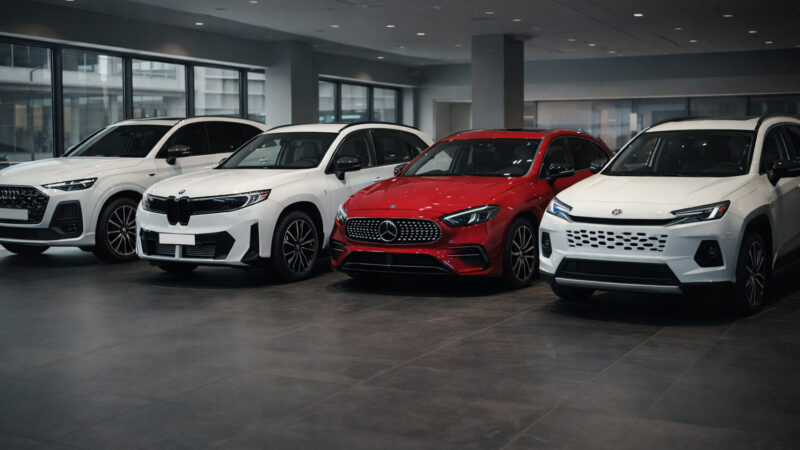
Modern luxury SUVs-including the BMW X5, BMW X7, Audi Q7, Audi Q8, and Mercedes-Benz GLE-are primarily crossovers. They use monocoque (unibody) construction similar to passenger cars.
Their priorities include:
- Comfort
- High-speed stability
- Interior refinement
- Crash safety
- Fuel efficiency
- On-road handling
By contrast, the G-Class remains a genuine off-road vehicle.
It continues to employ:
- Body-on-frame construction
- Three locking differentials
- Solid rear axle
- Exceptional suspension articulation
- High ground clearance
- Outstanding approach and departure angles
These engineering decisions dramatically improve off-road capability but compromise ride comfort, weight, efficiency, and manufacturing costs.
For most manufacturers, building such a vehicle simply does not make commercial sense.
Platform Economics Drive Automotive Decisions
One of the most significant transformations in the automotive industry during the past two decades has been platform consolidation.
Instead of developing unique architectures for every model, manufacturers increasingly rely on flexible modular platforms capable of underpinning multiple vehicles.
BMW’s CLAR architecture, for example, supports everything from luxury sedans to SUVs.
Audi relies heavily on the Volkswagen Group’s MLB and PPE architectures.
These shared platforms dramatically reduce:
- development costs
- manufacturing complexity
- supplier logistics
- software integration expenses
A dedicated ladder-frame chassis, however, cannot easily be shared with conventional passenger vehicles.
It requires unique engineering, separate production tooling, specialized suspension components, and different crash structures.
Unless annual production volumes are substantial, the economics become extremely difficult to justify.
Mercedes-Benz can spread these costs because the G-Class has evolved into one of its most profitable products, commanding exceptionally high transaction prices and strong global demand.
BMW and Audi never had an equivalent legacy platform to build upon.
BMW Built Its Brand Around Driving Dynamics
Another major reason lies in brand identity.
BMW has historically defined itself through sporty handling and dynamic performance.
Even its SUVs-marketed as Sports Activity Vehicles (SAVs)-prioritize road behavior over extreme off-road capability.
Vehicles such as the X5 helped redefine the luxury SUV by emphasizing:
- precise steering
- balanced chassis dynamics
- powerful engines
- highway refinement
Developing a heavy ladder-frame off-roader would have conflicted with decades of BMW engineering philosophy.
The company instead invested heavily in technologies that improve on-road performance:
- adaptive suspension
- rear-wheel steering
- intelligent xDrive all-wheel drive
- lightweight materials
- electrified powertrains
These investments aligned more closely with customer expectations than creating a niche off-road specialist.
Audi Followed a Different Technology Path
Audi approached SUVs from an entirely different perspective.
Rather than focusing on mechanical off-road hardware, Audi concentrated on technological sophistication.
Its competitive strengths became:
- quattro all-wheel drive
- advanced electronic chassis systems
- digital interiors
- lightweight aluminum construction
- increasingly software-defined vehicle architecture
Although quattro offers excellent traction in adverse weather, it was never designed to replace the mechanical robustness of locking differentials and ladder-frame construction.
Audi customers historically sought luxury, technology, and all-weather confidence rather than expedition-grade capability.
Consequently, Audi’s investment priorities naturally shifted toward electrification, connectivity, and autonomous driving technologies instead of traditional off-road engineering.
The G-Class Is an Exception, Not the Rule
Although many consumers view the G-Class as a luxury status symbol today, its origins explain why it survived while competitors never emerged.
The vehicle was originally developed for military and government applications before becoming a civilian model.
This heritage gave Mercedes-Benz decades of accumulated engineering experience and an established production ecosystem.
Over time, customer demand shifted dramatically.
Many G-Class buyers rarely drive off-road.
Instead, they purchase the vehicle because it communicates:
- exclusivity
- durability
- heritage
- prestige
- distinctive design
Ironically, the G-Class has become more successful as a luxury icon than as an off-road vehicle.
This unique market positioning is extremely difficult to replicate.
Electrification Changes the Competitive Landscape
The automotive industry is now undergoing its largest technological transition in more than a century.
Electrification fundamentally changes how off-road vehicles can be engineered.
Electric motors provide:
- instant torque
- highly precise wheel control
- simplified drivetrain layouts
- advanced torque vectoring
Software increasingly replaces mechanical complexity.
Instead of relying solely on locking differentials, electric vehicles can distribute power individually to each wheel using sophisticated traction algorithms.
Manufacturers such as Rivian have demonstrated that software-controlled electric drivetrains can deliver remarkable off-road performance without many traditional mechanical systems.
This evolution lowers the engineering barrier for newcomers entering the premium off-road segment.
Software Is Becoming the New Competitive Advantage
Across the automotive industry, competitive differentiation is increasingly shifting away from mechanical hardware toward software.
Luxury vehicles are becoming software-defined platforms featuring:
- AI-assisted driver assistance
- over-the-air updates
- predictive maintenance
- intelligent suspension control
- cloud connectivity
- advanced battery management
These technologies influence purchasing decisions more than traditional drivetrain layouts for many consumers.
BMW, Audi, Mercedes-Benz, Tesla, and emerging Chinese manufacturers now compete as much in software development as in mechanical engineering.
Developing an entirely new ladder-frame architecture therefore competes internally for resources against investments in autonomous driving, battery technology, artificial intelligence, and digital ecosystems.
For many manufacturers, software offers significantly higher long-term strategic value.
Consumer Preferences Have Also Shifted
Global SUV demand continues to grow, but customer expectations have evolved.
Most premium SUV buyers now prioritize:
- comfort
- interior technology
- efficiency
- safety
- driver assistance
- connectivity
Only a relatively small percentage require serious off-road capability.
This explains why luxury crossovers vastly outsell traditional body-on-frame SUVs.
From a business perspective, investing billions of dollars in a specialized off-road vehicle becomes increasingly difficult unless it generates exceptionally high profit margins.
Mercedes-Benz has already established that formula with the G-Class.
Replicating it would require more than simply building a capable vehicle-it would require creating decades of brand heritage almost overnight.
Regulation Adds Another Layer of Complexity
Environmental regulations have also influenced manufacturer priorities.
Body-on-frame vehicles generally:
- weigh more
- consume more energy
- produce higher lifecycle emissions
- present greater fleet-average efficiency challenges
Although electrification reduces tailpipe emissions, battery-powered off-road vehicles require large battery packs to compensate for their weight and aerodynamic disadvantages.
At the same time, governments worldwide continue tightening emissions standards while encouraging electrification and software-enabled efficiency improvements.
Manufacturers therefore face increasing pressure to allocate engineering resources toward technologies that improve fleet-wide sustainability rather than niche vehicle architectures.
Could BMW Eventually Build a True Rival?
Industry speculation periodically suggests BMW has explored a dedicated off-road vehicle, but there is currently no official confirmation that such a model is in development. If BMW were ever to enter this segment, it would likely do so only after determining that customer demand, profitability, and long-term platform economics justify the investment.
If such a vehicle eventually emerges, it would almost certainly reflect today’s technological priorities rather than merely imitating the G-Class. A future BMW off-roader would likely emphasize electrified powertrains, software-controlled traction systems, advanced driver-assistance features, and digital vehicle architecture alongside robust mechanical capability.
Rather than recreating a 1970s engineering formula, it would need to define what a premium off-road vehicle looks like in the era of software-defined mobility.
Conclusion
The absence of a direct BMW or Audi competitor to the Mercedes-Benz G-Class is not the result of engineering limitations. Instead, it reflects decades of deliberate strategic decisions shaped by platform economics, brand identity, consumer demand, and evolving technology priorities.
BMW chose to build its reputation around driving dynamics, while Audi focused on all-weather performance and digital innovation. Both companies invested heavily in scalable crossover platforms that served far larger customer bases than a niche body-on-frame off-roader ever could.
Today, however, electrification, software-defined vehicles, and AI-powered traction systems are beginning to blur the historical distinction between rugged mechanical hardware and intelligent electronic control. As the automotive industry enters this new phase, the barriers that once discouraged premium manufacturers from entering the luxury off-road segment are gradually diminishing.
Whether BMW or another premium automaker ultimately challenges the G-Class remains uncertain. What is clear is that any future rival will compete not only through mechanical engineering, but also through software, electrification, and digital capabilities that are redefining the modern automobile.