The second quarter of 2026 marked one of the most profitable periods for the global oil industry in recent history. Between April and June, the world’s eight largest oil companies-Saudi Aramco, ExxonMobil, Chevron, Shell, BP, TotalEnergies, Eni, and Equinor-generated approximately $93 billion in combined net profit, according to their financial results and industry analyses. That amounts to more than $1 billion in profit every day, roughly $39 million every hour, or about $700,000 every minute.
The earnings surge came during a quarter defined by geopolitical tension. Military conflict involving Israel, Iran, and the United States pushed international oil prices sharply higher, with Brent crude briefly reaching around $126 per barrel as markets reacted to concerns over potential disruptions to Middle Eastern energy supplies. Although the feared large-scale interruption to global exports did not materialize, the possibility alone was enough to significantly increase crude prices and, in turn, corporate earnings.
Compared with the same period a year earlier-when the eight companies earned less than $50 billion collectively-the latest results represent a dramatic increase in profitability. Their combined market capitalization also expanded by approximately $600 billion, surpassing $3 trillion during the quarter.
These figures are significant not simply because they demonstrate exceptional corporate earnings. They illustrate how the modern oil industry has evolved into a business where geopolitical risk, disciplined financial management, and operational scale increasingly determine profitability.
Record Earnings Were Driven More by Risk Than by Production
One of the most important lessons from the latest earnings season is that oil prices increasingly reflect geopolitical uncertainty rather than actual supply losses.
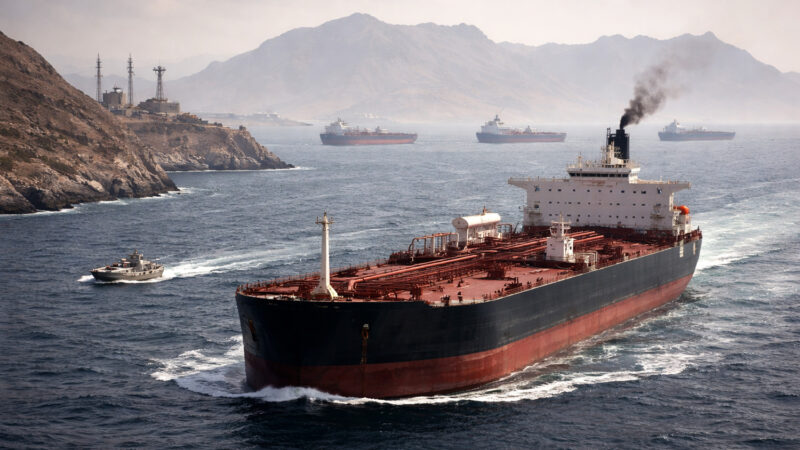
Commodity markets price both current conditions and future risks. During the second quarter, traders responded rapidly to concerns that military escalation in the Middle East could disrupt production facilities or interrupt shipping routes critical to global crude exports. Those concerns alone were enough to lift oil prices significantly.
For oil producers, this distinction matters enormously.
The cost of extracting a barrel of oil generally does not increase at the same pace as its market price. Consequently, when benchmark prices rise sharply over a short period, much of the additional revenue can translate into higher operating profits, particularly for companies with large existing production.
The latest quarter demonstrates how geopolitical events can rapidly improve financial performance even without major increases in production volumes.
The Financial Results Show the Industry’s Growing Concentration
The combined $93 billion profit was not evenly distributed across the sector. Instead, it was concentrated among a handful of integrated energy companies with extensive global operations.
The reported second-quarter earnings included:
| Company | Q2 2026 Net Profit |
|---|---|
| Saudi Aramco | More than $33 billion |
| ExxonMobil | $14.5 billion |
| Chevron | $12.2 billion |
| Shell | $9.84 billion |
| BP | $5.73 billion |
| Equinor | $3.2 billion |
Several results stand out.
Saudi Aramco remained the world’s most profitable oil company, increasing quarterly net income by 34% to more than $33 billion, despite attacks on parts of its regional infrastructure.
ExxonMobil earned $14.5 billion, more than doubling its profit from the same period last year.
Chevron reported $12.2 billion, approximately five times higher than a year earlier.
Shell delivered $9.84 billion, representing the company’s second-highest quarterly profit on record, even though conflict-related damage temporarily reduced gas production from its Qatari operations.
BP’s quarterly profit rose to $5.73 billion, compared with $2.5 billion in the previous quarter, while Norway’s Equinor increased earnings from $1.8 billion to $3.2 billion year over year.
The concentration of these earnings demonstrates the financial advantage enjoyed by large integrated producers over smaller competitors.
Scale Has Become the Industry’s Strongest Competitive Advantage
The latest earnings also reinforce a structural trend that has become increasingly evident over the past decade: scale matters more than ever.
The largest oil companies combine upstream production, refining, petrochemicals, liquefied natural gas (LNG), trading operations, and global logistics within a single organization. This diversification enables them to offset weakness in one part of the business with strength in another.
For example, reduced production at one facility does not necessarily translate into lower overall earnings if higher refining margins, stronger trading revenues, or increased crude prices compensate elsewhere.
This integrated business model makes the largest producers substantially more resilient during periods of market volatility.
It also creates significant barriers to entry. Building comparable global operations requires decades of investment, access to strategic reserves, and extensive infrastructure, making it difficult for smaller competitors to challenge established market leaders.
Capital Discipline Has Replaced the Expansion Strategy
Perhaps the most important strategic shift visible in these earnings is how oil companies are using their profits.
Previous commodity booms often encouraged aggressive investment in expanding production capacity. Today’s environment looks very different.
Rather than maximizing output, many major producers have focused on maintaining capital discipline by directing cash toward shareholder dividends, share repurchases, debt reduction, and selectively investing in projects expected to deliver strong financial returns.
This strategy reflects changing investor priorities.
After years of volatile oil prices and inconsistent returns from large-scale expansion projects, investors have increasingly rewarded companies that generate stable free cash flow and return excess capital to shareholders.
The latest earnings reinforce this approach. Strong profitability is no longer viewed simply as an opportunity to increase production but also as a means of strengthening balance sheets and improving shareholder returns.
Geopolitical Stability Has Become an Economic Asset
The earnings also illustrate how energy security has become increasingly valuable.
Since the disruptions to global energy markets in recent years, governments have placed greater emphasis on securing reliable long-term supplies rather than focusing exclusively on price.
This shift benefits diversified international oil companies capable of maintaining production across multiple regions.
Reliability has become a competitive advantage alongside production efficiency.
Companies with geographically diversified operations are generally better positioned to continue supplying energy even when individual regions experience political or military instability.
This changing definition of competitiveness helps explain why investors continue assigning premium valuations to many large integrated energy companies.
Climate Policy and Corporate Profitability Continue to Collide
The quarter’s financial success also coincided with another reality confronting the energy industry.
Many countries experienced severe heat waves during the same period, while governments continued pursuing long-term decarbonization policies aimed at reducing greenhouse gas emissions.
This contrast highlights one of the defining tensions facing the global economy.
Oil companies remain highly profitable because hydrocarbons continue to play a central role in transportation, manufacturing, aviation, shipping, and industrial production. At the same time, governments are investing heavily in renewable energy, electrification, and lower-carbon technologies to reduce dependence on fossil fuels over the coming decades.
For energy companies, these parallel trends require balancing near-term profitability with long-term portfolio diversification.
Several European producers, including Shell, BP, TotalEnergies, and Equinor, continue investing in renewable energy, hydrogen, carbon capture, and low-carbon fuels while maintaining significant oil and gas operations.
What the Numbers Mean for Investors and Global Markets
The latest earnings demonstrate that today’s oil market is increasingly shaped by structural resilience rather than production growth alone.
Companies with diversified global operations, disciplined financial management, and strong balance sheets are better positioned to benefit from periods of geopolitical uncertainty.
For investors, these characteristics reduce financial risk while supporting substantial shareholder distributions.
For governments, however, the concentration of profits raises broader policy questions surrounding energy affordability, taxation, and long-term investment priorities.
Meanwhile, industries that depend heavily on energy-including manufacturing, chemicals, aviation, logistics, and transportation-remain exposed to higher operating costs whenever geopolitical events drive commodity prices upward.
The impact therefore extends well beyond the oil sector itself.
Conclusion
The combined $93 billion earned by the world’s eight largest oil companies during the second quarter of 2026 is more than a remarkable financial statistic. It reflects a broader transformation in how global energy markets operate.
Temporary geopolitical shocks can rapidly generate extraordinary profits for companies with diversified operations, while disciplined capital allocation allows those firms to convert higher prices into stronger shareholder returns instead of simply expanding production.
At the same time, the industry’s growing concentration, rising market valuations, and continued strategic importance reinforce the central role that integrated oil companies continue to play in the global economy.
The latest earnings season therefore offers a clear lesson: in today’s energy market, competitive advantage depends less on producing the most oil and more on managing risk, allocating capital efficiently, and maintaining operational resilience in an increasingly uncertain geopolitical environment.