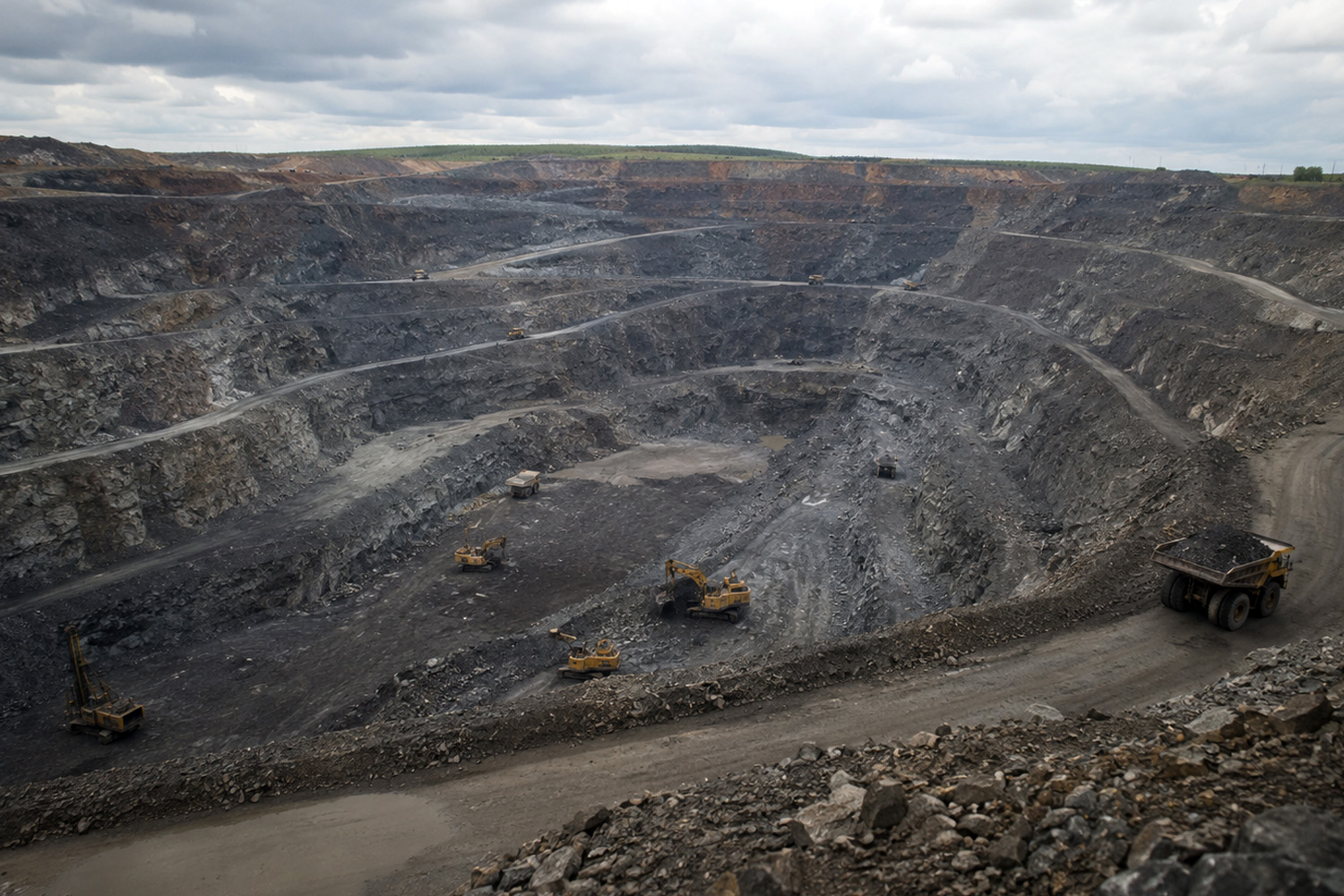
Modern civilization is built on an assumption that rarely receives serious scrutiny: industrial society depends on a relatively narrow set of physical materials extracted from the Earth at ever-increasing scale.
From iron ore used in megacities to helium required for semiconductor manufacturing, from lithium powering electric vehicles to palladium used in advanced electronics, global economic growth increasingly depends not merely on innovation but on access to strategic resources.
The dominant public narrative often frames resource depletion as a question of eventual scarcity. In reality, the business problem is more immediate and structurally important: the world rarely runs out of critical resources outright. Instead, economies face supply bottlenecks, rising extraction costs, geopolitical concentration, and pricing volatility long before physical exhaustion becomes relevant.
The central question is therefore not simply how much remains, but how resource availability reshapes global business power.
Why “Years Left” Is a Misleading but Useful Metric
The most common method for estimating resource longevity is the reserve-to-production ratio (R/P ratio): proven reserves divided by annual extraction or consumption.
This provides a conservative estimate of how long currently known and economically recoverable reserves might last if production rates remain unchanged.
However, businesses and investors understand an important caveat: proven reserves are not fixed geological limits.
Reserves are economic categories. When commodity prices rise, lower-grade deposits become commercially viable. Technological advances improve extraction efficiency, while new exploration often expands known reserves.
Oil offers the clearest example. Despite decades of warnings about depletion, global proven reserves have repeatedly increased because high prices justified deeper drilling, unconventional extraction, and offshore development.
Yet the R/P ratio remains valuable because it reveals something markets care deeply about: supply vulnerability.
Resources with geographically concentrated reserves or difficult substitution tend to produce stronger pricing power and geopolitical leverage.
The Real Scarcity Problem: Concentration, Not Exhaustion
The defining trend in resource markets is not universal depletion but strategic concentration.
Many of the materials required for semiconductors, batteries, aerospace systems, and industrial manufacturing are controlled by a surprisingly small number of countries.
Lithium reserves are concentrated heavily in South America and Australia. Cobalt remains strongly tied to the Democratic Republic of Congo. Rare earth processing capacity is dominated by China. Platinum-group metals are concentrated in South Africa and Russia.
This concentration creates structural asymmetry.
Countries and corporations controlling critical supply chains gain disproportionate pricing leverage, especially during periods of industrial transition.
The semiconductor industry demonstrates this dynamic clearly. Chips require highly specialized materials-neon, xenon, palladium, silicon wafers, and ultra-pure gases. Even when absolute global reserves appear sufficient, disruptions in one region can create cascading shortages across electronics, automotive manufacturing, cloud infrastructure, and defense systems.
The result is a shift in corporate strategy: companies increasingly prioritize resource security over cost minimization.
Long-term supply agreements, direct mining investments, and vertical integration are becoming more common across technology, automotive, and energy sectors.
Energy Resources: Abundance with Rising Complexity
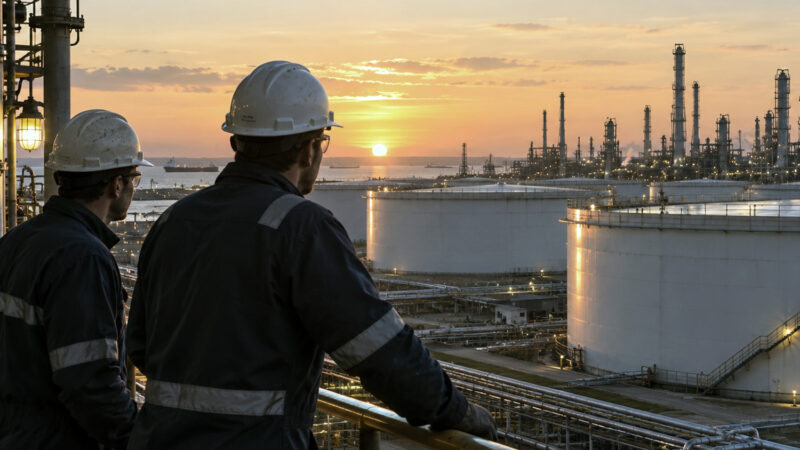
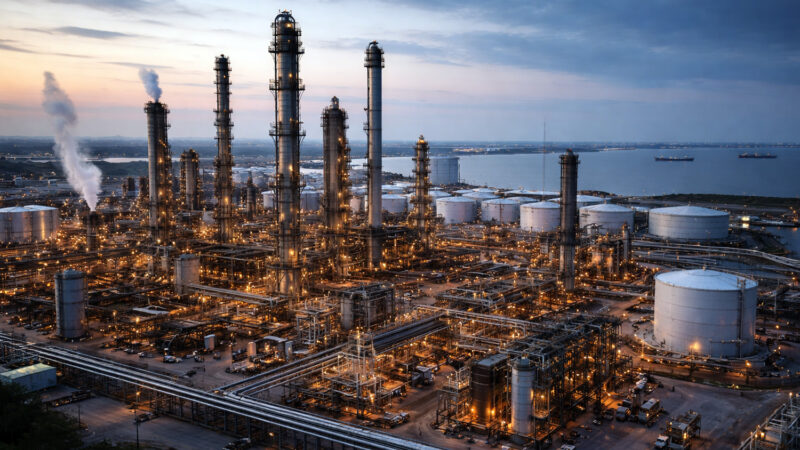
Oil and natural gas remain foundational to the global economy despite energy transition narratives.
Current proven oil reserves suggest roughly five decades of supply at present production rates. Natural gas appears somewhat more durable, while coal reserves remain abundant enough to last more than a century.
Yet abundance does not eliminate business risk.
The oil industry increasingly faces higher extraction costs. Easy-to-access reserves have largely been developed, pushing companies toward offshore drilling, shale formations, and technically complex extraction.
This changes capital allocation.
Energy firms must commit larger investment budgets simply to maintain production levels. Meanwhile, investors increasingly pressure producers for shareholder returns rather than aggressive exploration spending.
Paradoxically, fears of future decarbonization may reduce fossil fuel investment faster than demand declines, increasing the risk of future supply tightness.
In commodity markets, underinvestment often matters more than scarcity.
Battery Metals and the New Industrial Competition
The rise of electrification fundamentally altered resource economics.
Lithium, nickel, cobalt, manganese, graphite, and silicon have transitioned from industrial materials into strategic assets.
The electric vehicle supply chain requires significantly larger quantities of minerals than internal combustion manufacturing.
This creates a structural market shift.
Historically, oil exporters dominated transport energy markets. In an electrified economy, mining jurisdictions and battery-processing ecosystems gain strategic influence.
Yet not all battery materials face equal scarcity.
Lithium reserves remain relatively abundant, though processing capacity remains constrained. Graphite is plentiful but geographically concentrated. Nickel faces increasing demand pressure due to higher-energy battery chemistries.
Cobalt illustrates an especially important business tension.
Automakers increasingly seek cobalt-light battery chemistries not because reserves are insufficient, but because geopolitical concentration creates supply risk.
This demonstrates a recurring market principle: substitution usually emerges before depletion.
Semiconductor Minerals: The Hidden Fragility of Digital Infrastructure
Few industries depend on resource precision as intensely as semiconductor manufacturing.
Chip production requires extraordinary material purity. Silicon itself remains abundant because quartz sand is widespread, but semiconductor-grade silicon requires advanced purification processes.
More vulnerable are specialty materials.
Gallium and germanium-critical for advanced electronics, photovoltaics, and communications systems-are largely byproducts of aluminum and zinc refining. Their supply therefore depends indirectly on unrelated industrial activity.
This creates hidden fragility.
Markets cannot rapidly expand production of byproduct minerals because supply is tied to other commodity economics.
Similarly, neon, krypton, and xenon-essential industrial gases used in chipmaking-are often derived from steel production and air separation infrastructure.
The lesson is structural: digital infrastructure increasingly depends on physical commodity ecosystems.
The cloud economy is not weightless.
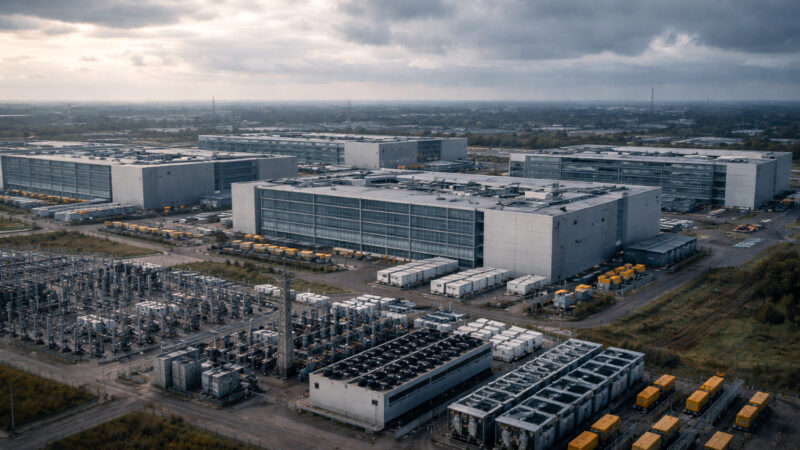
AI data centers, semiconductor fabrication, and advanced computing depend on extensive material chains that remain vulnerable to geopolitical shocks.
Helium: The Quiet Strategic Resource
Among the least appreciated industrial resources is helium.
Unlike oil or copper, helium cannot be manufactured economically at scale. Once released into the atmosphere, it escapes Earth permanently.
Helium plays a critical role in semiconductor manufacturing, scientific research, medical imaging, and aerospace engineering.
While proven reserves suggest several decades of supply, helium markets remain highly vulnerable because production is concentrated geographically and tied closely to natural gas extraction.
This creates a recurring business challenge: periodic supply shortages despite apparently sufficient reserves.
In strategic industries, reliability matters as much as abundance.
What Companies Are Really Competing For
The next decade of industrial competition may increasingly revolve around access rather than ownership.
Technology firms, automakers, industrial conglomerates, and governments increasingly compete for:
- Long-term mineral contracts
- Refining capacity
- Processing infrastructure
- Strategic geographic partnerships
- Domestic supply resilience
This explains why governments increasingly subsidize mining, battery production, and semiconductor manufacturing.
The objective is not merely industrial growth-it is reducing dependence on fragile external supply chains.
In effect, critical resources are evolving into geopolitical infrastructure.
Conclusion
Humanity is unlikely to suddenly “run out” of most critical resources. Iron, aluminum, silicon, coal, and many industrial materials remain abundant under current reserve assumptions.
The greater challenge is structural concentration.
The resources most essential to digital infrastructure, electrification, and advanced manufacturing are often geographically concentrated, difficult to substitute, or dependent on fragile supply chains.
Markets rarely collapse because resources disappear. They destabilize because supply becomes expensive, concentrated, politically constrained, or operationally fragile.
For businesses, this changes the strategic question entirely.
The future competitive advantage may belong not to companies with the best technology alone, but to those that secure the physical foundations required to sustain it.
Resource Table
| Resource | Estimated Proven Reserves | Annual Production | Approx. Years Remaining | Largest Reserve Countries | Main Use | Supply Risk |
|---|---|---|---|---|---|---|
| Iron Ore | ~180B tons | ~2.6B tons | ~70 years | Australia, Brazil, Russia | Steel production | Low |
| Copper | ~1B tons | ~22M tons | ~45 years | Chile, Peru, Australia | Electronics, grids | Medium |
| Aluminum (Bauxite) | ~30B tons | ~400M tons | ~75 years | Guinea, Australia, Vietnam | Transport, packaging | Low |
| Gold | ~60,000 tons | ~3,600 tons | ~17 years | Australia, Russia, South Africa | Finance, electronics | Medium |
| Silver | ~560,000 tons | ~26,000 tons | ~21 years | Peru, Australia, Russia | Solar, electronics | Medium |
| Oil | ~1.7T barrels | ~36B barrels | ~47 years | Venezuela, Saudi Arabia, Canada | Energy, petrochemicals | High |
| Natural Gas | ~200T cubic meters | ~4T cubic meters | ~50 years | Russia, Iran, Qatar | Energy, fertilizer | High |
| Lithium | ~26M tons | ~180,000 tons | ~140 years | Chile, Australia, Argentina | EV batteries | High |
| Cobalt | ~11M tons | ~230,000 tons | ~48 years | DR Congo, Australia, Indonesia | Batteries | High |
| Nickel | ~130M tons | ~3.6M tons | ~36 years | Indonesia, Australia, Brazil | Steel, batteries | Medium |
| Graphite | ~320M tons | ~1.7M tons | ~188 years | Turkey, China, Brazil | Battery anodes | Medium |
| Gallium | ~Recoverable via bauxite | ~600 tons | ~100+ years | China, Germany, Kazakhstan | Chips, LEDs | High |
| Germanium | ~Indirect reserves | ~140 tons | ~40+ years | China, Russia, Canada | Fiber optics | High |
| Indium | ~16,000 tons | ~1,000 tons | ~16 years | China, Peru, Canada | Displays, semiconductors | High |
| Palladium | ~100,000 tons | ~210 tons | ~475 years | Russia, South Africa | Electronics, catalysts | High |
| Platinum | ~70,000 tons | ~180 tons | ~390 years | South Africa, Russia | Catalysts, chips | High |
| Helium | ~50B cubic meters | ~180M cubic meters | ~280 years | USA, Qatar, Algeria | Semiconductors, MRI | High |
| Neon | Air-derived | Industrial byproduct | N/A | Ukraine, China, USA | Chip lithography | High |
| Rare Earths | ~120M tons | ~350,000 tons | ~340 years | China, Vietnam, Brazil | Magnets, electronics | High |