A Year of Market Repricing
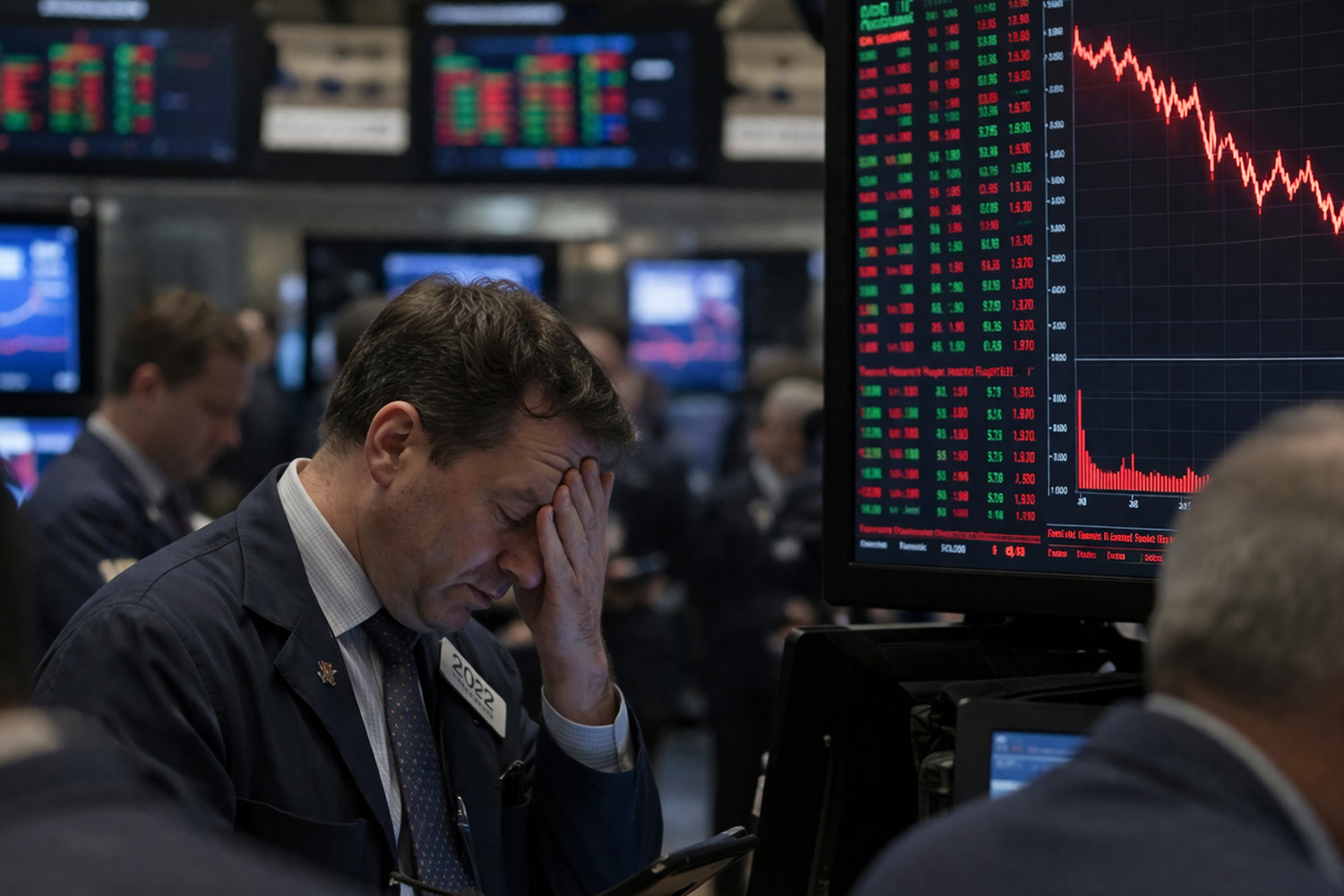
The global equity landscape in 2026 has been marked by sharp corrections across several high-profile companies. While market volatility is not unusual, the scale and concentration of declines among major corporations suggest a deeper structural shift rather than isolated underperformance.
Companies across sectors-including consumer goods, technology, and e-commerce-have experienced significant valuation resets. These declines reflect a combination of macroeconomic pressures, changing consumer behavior, and strategic misalignment at the corporate level.
Key Companies Experiencing Significant Declines
Nike
Among the most notable cases is Nike, which has reportedly experienced a substantial drop in its share price during 2026.
- Previous valuation context: Historically valued as a premium global brand with strong margins
- Recent trend: Sharp decline in share price (reported in some analyses as severe, though exact percentage figures vary across sources)
- Market value: Remains significant due to brand strength, but notably reduced compared to prior peaks
Key drivers:
- Weakening global consumer demand in discretionary spending
- Increased competition from emerging sportswear brands
- Supply chain inefficiencies and inventory imbalances
Tesla
The electric vehicle sector has also faced pressure, with Tesla experiencing a notable decline.
- Previous valuation: One of the most highly valued automakers globally
- Current trend: Share price volatility with a downward bias
- Market value: Still large but reduced relative to earlier highs
Key drivers:
- Slowing growth in EV demand in certain markets
- Intensifying competition from global automakers
- Margin pressure due to pricing adjustments
Alibaba Group
China’s technology sector continues to face structural challenges, reflected in the performance of Alibaba Group.
- Previous valuation: Among the largest global tech companies
- Current trend: Prolonged decline from earlier peaks
- Market value: Significantly below historical highs
Key drivers:
- Regulatory pressures in China
- Slower domestic economic growth
- Increased competition in e-commerce and cloud services
Intel
The semiconductor industry has not been immune, with Intel facing challenges.
- Previous valuation: Established leader in chip manufacturing
- Current trend: Declining investor confidence
- Market value: Under pressure compared to competitors
Key drivers:
- Technological lag relative to competitors
- High capital expenditure requirements
- Market share erosion in key segments
PayPal
Fintech has also undergone correction, with PayPal seeing a decline.
- Previous valuation: Benefited from pandemic-driven digital adoption
- Current trend: Reversal of growth expectations
- Market value: Adjusted downward
Key drivers:
- Slowing transaction growth
- Increased competition from alternative payment platforms
- Margin compression
Common Drivers Behind the Declines
While each company faces unique circumstances, several common factors explain the broader trend.
1. Macroeconomic Tightening
Higher interest rates globally have reduced liquidity and increased the cost of capital. This has led to:
- Lower valuations for growth-oriented companies
- Increased scrutiny of profitability over expansion
2. Demand Normalization
Post-pandemic consumption patterns have shifted:
- Reduced demand for certain goods and services
- Rebalancing of spending priorities
Companies that expanded aggressively during high-demand periods now face excess capacity or inventory.
3. Competitive Intensification
Across industries, competition has increased:
- New entrants leveraging digital models
- Established players adapting more quickly
This has compressed margins and reduced pricing power.
4. Strategic Misalignment
In several cases, companies have struggled to align strategy with changing market conditions:
- Overinvestment in specific segments
- Delayed response to industry shifts
- Inefficient cost structures
5. Geopolitical and Regulatory Pressures
Global businesses are increasingly affected by:
- Trade tensions
- Regulatory interventions
- Regional economic fragmentation
These factors introduce uncertainty and limit growth potential.
Market Valuation Shifts: From Growth to Resilience
A critical underlying theme is the shift in investor priorities.
From Growth Premium to Profitability Focus
Previously, high-growth companies commanded premium valuations based on future potential. In 2026:
- Investors prioritize stable cash flows
- Profitability and efficiency are key metrics
Repricing of Risk
Markets are reassessing:
- Exposure to geopolitical risk
- Dependence on specific regions
- Sensitivity to economic cycles
This has led to a broad repricing across sectors.
Global Implications: What This Means for Markets
1. End of the “Easy Growth” Era
The environment of abundant capital and rapid expansion is giving way to:
- More disciplined investment strategies
- Slower but more sustainable growth
2. Sector Rotation
Capital is shifting toward:
- Defensive industries
- Companies with strong balance sheets
This reflects a broader change in risk appetite.
3. Increased Volatility
Market corrections of this scale contribute to:
- Short-term uncertainty
- Greater sensitivity to economic data
However, they also create opportunities for long-term investors.
Structural Reset Rather Than Temporary Decline
The significant stock declines observed in 2026 are not merely cyclical fluctuations. They represent a structural reset in how markets evaluate companies.
For firms like Nike, Tesla, and Alibaba Group, the challenge is not only to recover lost valuation but to adapt to a new economic environment.
The broader lesson for the market is clear:
- Growth must be sustainable
- Strategy must be adaptable
- Resilience is becoming as important as innovation
In this context, the declines of 2026 may ultimately serve as a recalibration-aligning market expectations with economic realities.