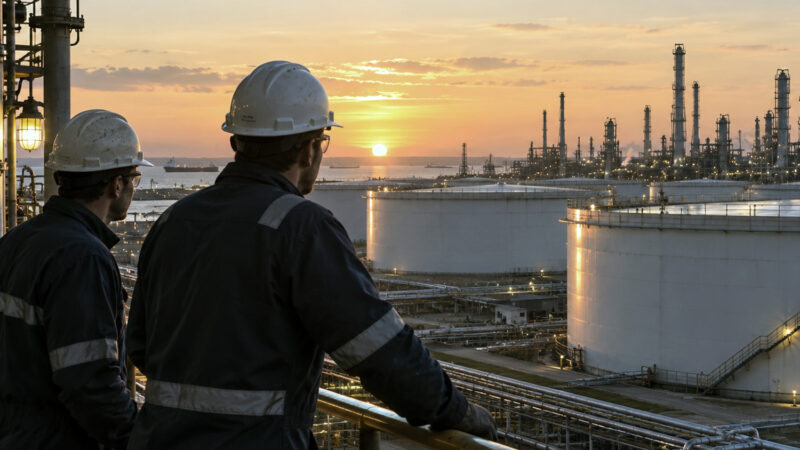
The global oil market has entered a period of extreme volatility following the escalation of military conflict in the Middle East. Energy markets are reacting not only to the direct disruption of supply but also to the broader geopolitical uncertainty surrounding one of the world’s most strategically important energy-producing regions.
Since the outbreak of hostilities at the beginning of March 2026, oil prices have experienced one of the fastest upward movements in recent years. What initially appeared to be a temporary geopolitical shock has rapidly evolved into a structural risk for the global energy system. The sharp price swings observed in recent days reflect a market attempting to price in the potential for prolonged disruptions in oil production and transportation across the Gulf region.
From $70 to Above $110: The Speed of the Price Shock
Before the escalation of the conflict, crude oil prices had been relatively stable, trading near $70 per barrel in early March. However, once military operations began and concerns about supply disruptions intensified, the market reacted immediately.
Within days, both major benchmarks surged sharply. West Texas Intermediate (WTI) crude rose to about $89 per barrel, marking a significant jump from the beginning of the week.
At the same time, the international benchmark Brent crude climbed above $90 for the first time in months as geopolitical tensions escalated and shipping risks increased.
The rally accelerated further as the conflict expanded. By March 9, Brent crude surged past $114 per barrel, the highest level since 2022, while U.S. crude approached similar levels.
In intraday trading during the most intense phase of the crisis, prices briefly approached $120 per barrel before retreating somewhat as markets reacted to diplomatic signals and expectations of possible de-escalation.
The speed of this increase is notable. Oil prices climbed roughly 60% within about a month, illustrating how quickly geopolitical shocks can reshape commodity markets when supply security is threatened.
Supply Shock in the Persian Gulf
The fundamental driver of the price spike is the perceived risk to global oil supply originating in the Persian Gulf. The region accounts for a significant share of global energy production, and even temporary disruptions can have disproportionate effects on prices.
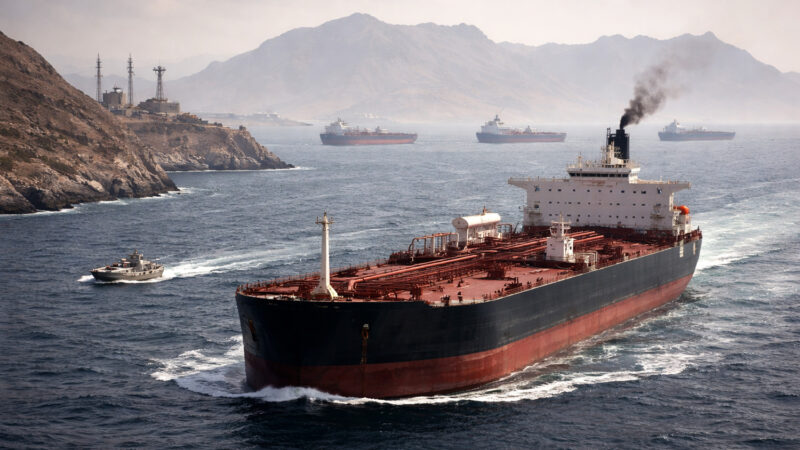
The key strategic chokepoint is the Strait of Hormuz, a narrow waterway through which roughly 20% of the world’s daily oil supply passes.
During the current conflict, tanker traffic has been disrupted, insurers have raised premiums for vessels traveling through the region, and several shipping companies have suspended operations entirely due to security risks.
In addition to transportation risks, production itself has been affected. Attacks on energy infrastructure and precautionary shutdowns have forced several producers to reduce output. Reports indicate that oil production cuts and operational disruptions in countries such as Iraq and Kuwait have already tightened global supply.
When large oil-exporting states declare force majeure-essentially suspending contractual obligations due to extraordinary circumstances-the market interprets it as a signal that supply disruptions may last longer than initially expected. This type of disruption amplifies volatility because it reduces the predictability of global oil flows.
Why Wall Street Is Discussing the $200 Scenario
Under normal circumstances, oil price fluctuations of $10–20 per barrel are common in commodity markets. However, geopolitical crises introduce a different type of risk: the possibility of a systemic supply shock.
Investment banks and energy analysts have therefore begun evaluating extreme price scenarios. Some projections suggest that if the conflict significantly disrupts Gulf production or shipping for an extended period, oil prices could potentially surpass historical peaks.
Previous geopolitical crises demonstrate how quickly such scenarios can unfold. During past energy shocks-including the 1970s oil embargo and the early-2022 supply disruptions following Russia’s invasion of Ukraine-oil prices experienced rapid and sustained increases.
Today’s market structure also contributes to the potential for large price swings. Global spare production capacity is relatively limited, and supply chains remain sensitive after several years of underinvestment in new oil infrastructure.
As a result, the possibility of oil prices reaching $150 or even higher is not being dismissed by market participants, particularly if the Strait of Hormuz becomes fully inaccessible or if major exporters significantly curtail production.
Inflation and the Return of Energy-Driven Economic Risk
The implications of rising oil prices extend far beyond the energy sector. Oil functions as a fundamental input for transportation, manufacturing, logistics, and agriculture. When energy prices rise sharply, the effects cascade across nearly every sector of the global economy.
Higher oil prices increase fuel costs, shipping expenses, and production costs for companies worldwide. This ultimately feeds into consumer prices, raising inflation.
For central banks, the situation creates a difficult policy environment. Monetary authorities had been gradually shifting toward more accommodative policies as inflation cooled in several major economies. However, a new energy-driven inflation shock could complicate those plans.
If energy prices remain elevated, central banks may be forced to maintain higher interest rates for longer than expected, slowing economic growth and increasing financial market volatility.
Strategic Implications for the Global Energy System
Beyond short-term market fluctuations, the current crisis highlights deeper structural vulnerabilities in the global energy system.
The heavy concentration of oil production and export infrastructure in the Persian Gulf means that regional conflicts can rapidly become global economic shocks. The Strait of Hormuz alone represents one of the most critical choke points in global trade.
In response to repeated disruptions over the past decades, governments and energy companies have increasingly explored diversification strategies. These include expanding strategic petroleum reserves, increasing domestic production in some regions, accelerating renewable energy deployment, and investing in alternative transportation fuels.
However, the transition away from oil remains gradual. Despite growing investment in renewable energy, petroleum continues to play a central role in global transportation and industrial systems.
A Market Defined by Geopolitical Risk
The recent surge in oil prices illustrates how geopolitical events can instantly reshape global commodity markets. While prices have already experienced sharp fluctuations during the early stages of the conflict, the broader strategic implications may unfold over a much longer timeframe.
Energy markets are now operating under a heightened geopolitical risk premium. Even if production disruptions remain limited, the perception of supply insecurity alone is enough to keep volatility elevated.
For policymakers, investors, and global industries, the current oil shock serves as a reminder that energy security remains one of the most critical pillars of the global economic system-and that disruptions in the Middle East can still reverberate across the entire world economy.
Related Analysis:
Energy Markets After 2025: Oil Prices, Supply And OPEC+ in 2026