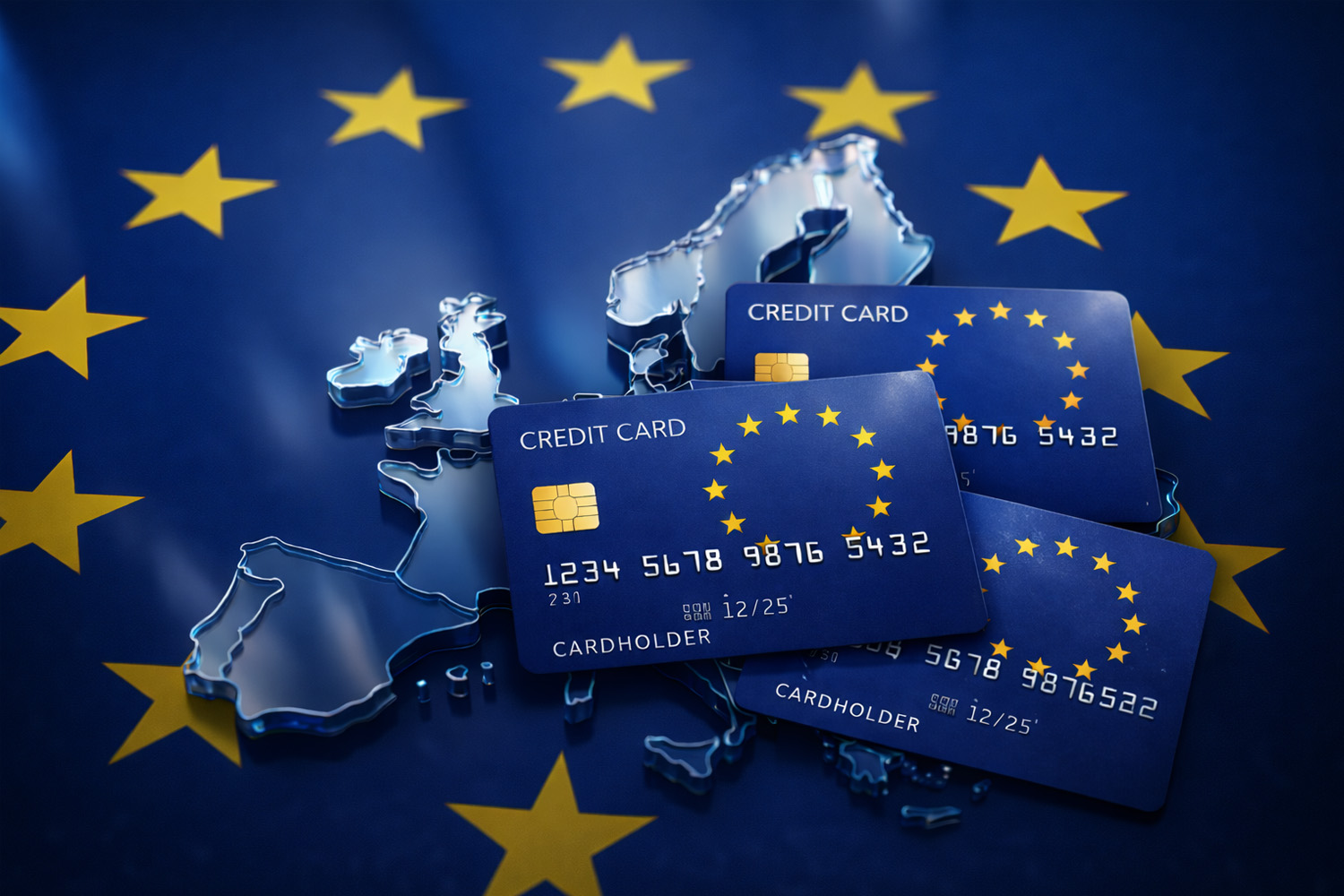
Martina Weimert, Executive Director of the European Payments Initiative (EPI), has issued a renewed warning about Europe’s dependence on U.S.-based payment giants Visa and Mastercard, arguing that the continent must urgently strengthen its financial sovereignty.
Speaking in recent interviews and public remarks, Weimert stressed that Europe remains heavily reliant on non-European card schemes for retail and cross-border payments. According to industry data, Visa and Mastercard process a dominant share of card transactions across the European Union, particularly in international payments. Weimert argues that this structural dependence leaves Europe geopolitically exposed, especially in the event of deteriorating transatlantic relations or sanctions-related disruptions.
The European Payments Initiative was launched in 2021 by a consortium of major European banks with the backing of the European Central Bank and the European Commission. Its flagship project, the digital wallet Wero, is designed to provide a pan-European alternative for instant payments and, eventually, card-based transactions. The system aims to unify fragmented national payment schemes under a single European brand, reducing reliance on U.S. networks.
Why It Matters
Weimert’s comments come at a time of heightened geopolitical uncertainty and ongoing debates in Brussels about “strategic autonomy” in critical infrastructure sectors, including finance, energy, and technology. Payment systems are considered core financial infrastructure; any external dependency can translate into political leverage.
European policymakers have long expressed concerns about the lack of a homegrown card network capable of competing at scale with Visa and Mastercard. While domestic systems such as France’s Carte Bancaire or Germany’s Girocard operate successfully at national levels, they lack seamless cross-border reach across the EU’s single market.
The push for greater autonomy in payments also aligns with the European Central Bank’s work on a potential digital euro, which is intended to strengthen monetary sovereignty in an increasingly digital economy.
Trend Impact
If EPI succeeds in scaling Wero and expanding beyond instant account-to-account transfers into broader retail and e-commerce payments, Europe could gradually reduce its dependence on U.S. processors. However, building consumer trust, merchant adoption, and cross-border interoperability remains a significant challenge.
For global payment companies, the debate signals rising regulatory and competitive pressure in Europe. For European banks and fintech firms, it represents both an opportunity and a test of whether financial integration can translate into true technological independence.
The broader question raised by Weimert is strategic rather than purely commercial: in a fragmented geopolitical landscape, who controls the rails of global finance-and who bears the risk when those rails are not domestic?