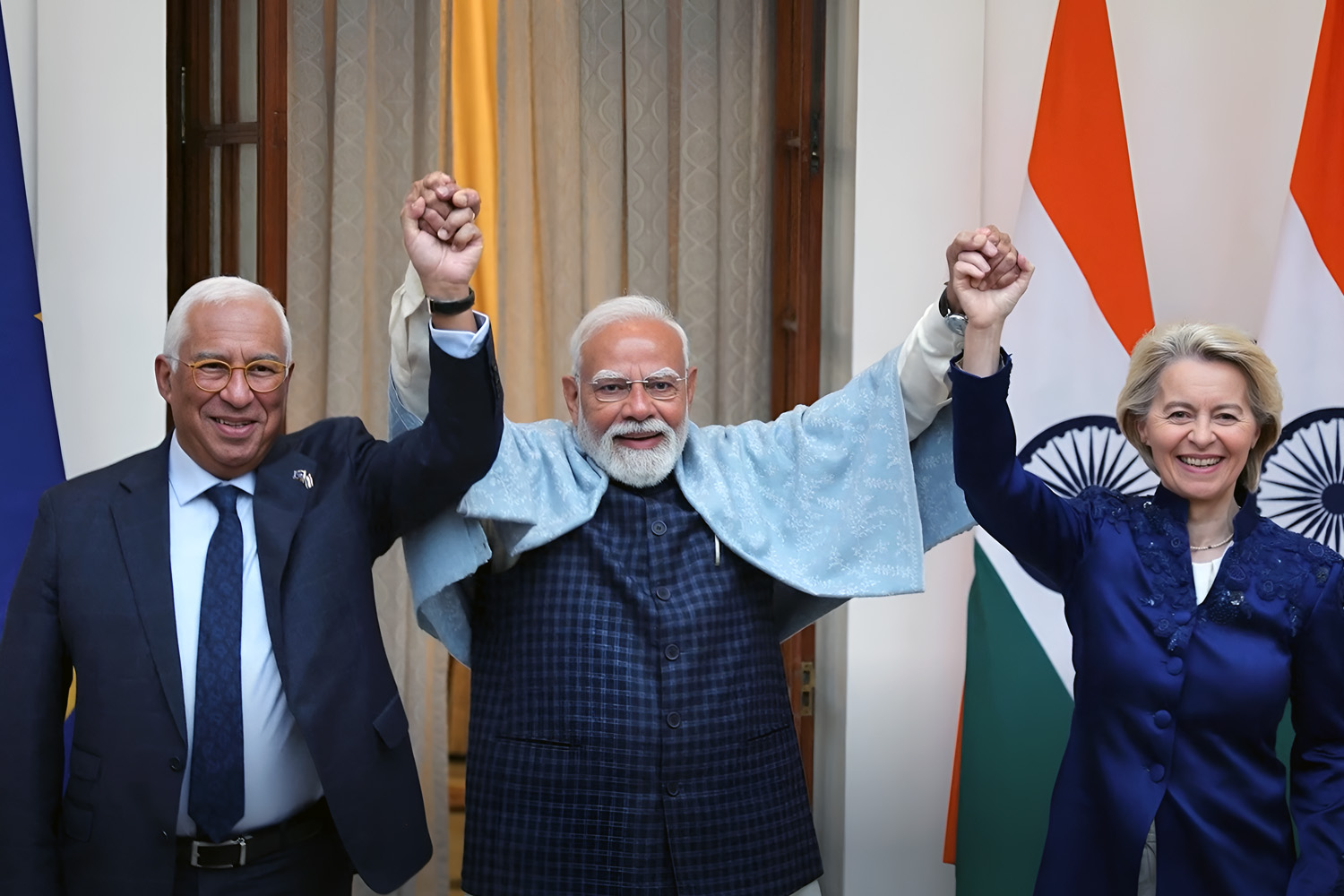
India and the European Union have reached a landmark trade agreement after years of negotiations, marking one of the most significant economic partnerships signed by both sides in recent decades. The deal aims to sharply reduce tariffs on a broad range of goods, covering approximately 96.6% of the total value of trade between the two economies.
According to the announced framework, the agreement is expected to double EU exports to India by 2032 and generate around €4 billion in duty savings for European companies. The accord is designed to deepen economic integration, expand market access, and provide greater predictability for businesses operating across both regions.
The agreement spans multiple sectors, including manufacturing, consumer goods, and industrial products, reflecting India’s growing role as a global manufacturing hub and the EU’s interest in diversifying trade relationships amid shifting geopolitical and supply-chain dynamics.
Why It Matters
For the European Union, the deal opens wider access to one of the world’s fastest-growing major economies, offering new opportunities for exporters facing slower growth in traditional markets. Lower tariffs are expected to improve the competitiveness of European goods in India and encourage long-term investment.
For India, the agreement supports its strategy of integrating more deeply into global trade networks while attracting foreign capital and advanced manufacturing capabilities. Reduced trade barriers could also benefit Indian consumers through increased product availability and competitive pricing.
At a broader level, the deal sends a strong signal at a time when protectionism and trade fragmentation remain concerns in global commerce. By committing to large-scale tariff reductions, India and the EU position themselves as advocates of rules-based trade and economic cooperation.
Trend Impact
The India–EU trade agreement reflects a wider global trend toward bilateral and regional trade deals as countries seek reliable partners in an uncertain economic environment. It is likely to influence supply-chain strategies, encourage cross-border investment, and strengthen India’s position as a key alternative manufacturing and export destination.
If implemented as planned, the deal could serve as a benchmark for future trade agreements involving major emerging and developed economies, reshaping trade flows well into the next decade.