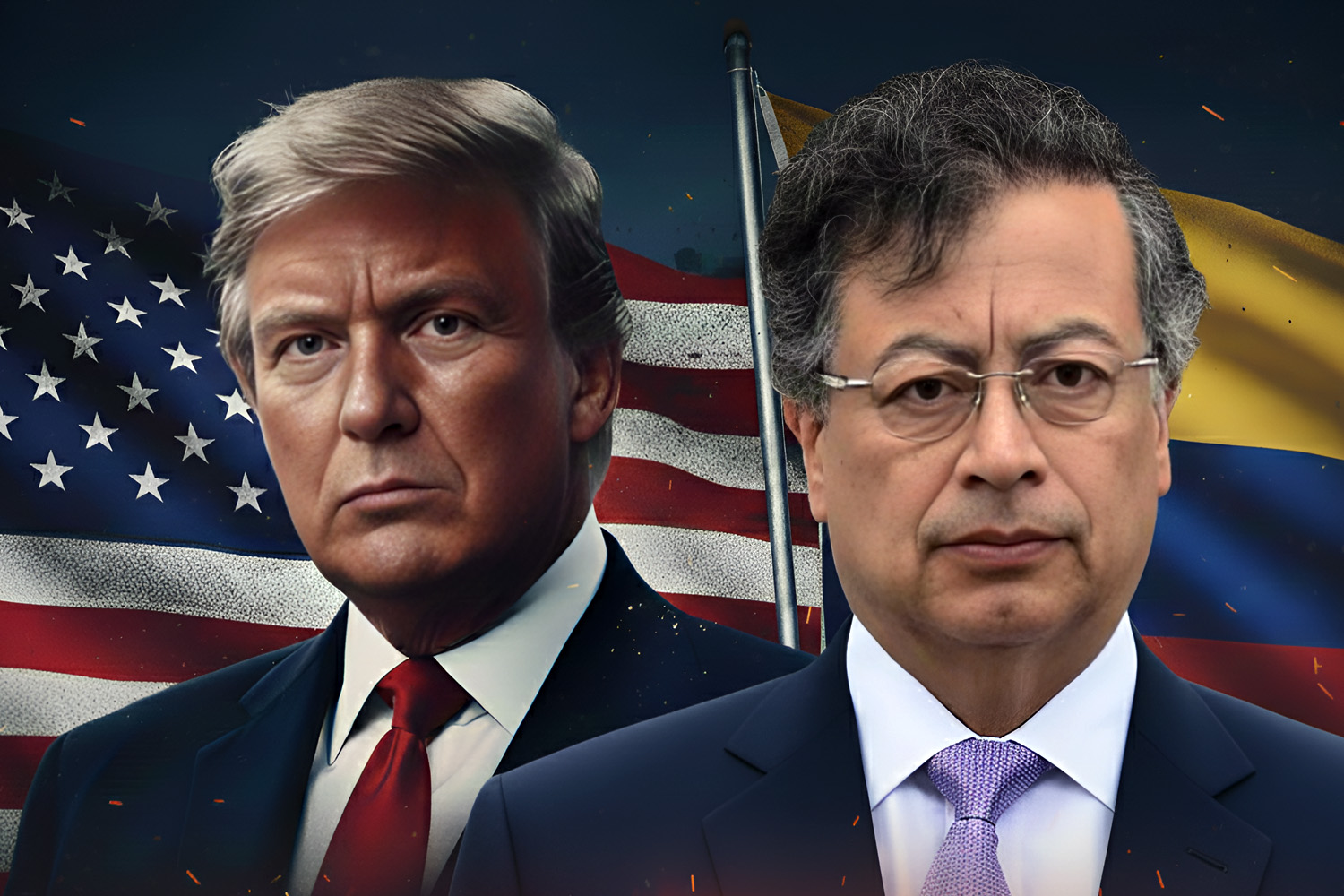
U.S. President Donald Trump has issued a stark warning to Colombian President Gustavo Petro, suggesting that if Colombia does not strengthen its efforts against drug trafficking, it could face consequences similar to those already directed at Venezuela. The remarks were made amid a series of heightened confrontations between Washington and Bogotá over the flow of illegal narcotics into the United States and broader regional policy disputes.
Speaking to reporters in early December 2025, Trump accused Colombia of being a major producer of cocaine and claimed that drug “factories” in the country send substantial quantities of the drug into the U.S. market. He warned that Petro “better wise up, or he’ll be next,” in the context of expanding U.S. military pressure in the region.
Trump’s comments reflect a broader escalation in U.S. policy. His administration has conducted military operations targeting suspected drug trafficking routes and vessels in the Caribbean Sea and has framed these actions as part of a campaign to disrupt networks that supply illegal drugs to the U.S.
The Colombian government has strongly rejected Trump’s language and threats. Petro has defended his counter-drug efforts, noting significant destruction of cocaine laboratories under his administration and warning that direct threats to Colombia’s sovereignty would be viewed as declarations of war. He has invited the U.S. president to visit Colombia to see anti-narcotics operations firsthand, emphasizing cooperation rather than unilateral military action.
Relations between the two countries, historically strong partners in the fight against drugs, have deteriorated sharply in 2025. Earlier in the year, the United States sanctioned President Petro and members of his inner circle under counternarcotics authorities and criticized Colombia’s progress in controlling illicit drug production.
Colombia has maintained that it remains committed to combating illegal drug networks and has pushed back against what it describes as aggressive U.S. military actions that risk violating international law and infringing on national sovereignty.
As tensions persist, diplomatic and security experts warn that miscommunication or further escalation could negatively affect regional stability and cooperation, particularly given Colombia’s central role in global cocaine supply routes and longstanding collaboration with international partners on anti-drug strategies.