Platform accountability is becoming a competitive advantage
The European Commission’s decision to impose a record €550 million ($629 million) fine on AliExpress under the Digital Services Act (DSA) is significant not simply because of its size, but because it reflects a broader transformation in how governments intend to regulate global digital marketplaces.
For more than two decades, large online platforms competed primarily on price, assortment, and logistical efficiency. Compliance with product safety rules often remained a secondary operational challenge rather than a defining strategic priority. That balance is changing. Regulators-particularly in the European Union-are increasingly treating marketplace operators not merely as intermediaries connecting buyers and sellers, but as responsible gatekeepers of the digital economy.
The case against AliExpress, which the European Commission says failed to adequately prevent the sale of counterfeit products, dangerous toys, and unsafe cosmetics while maintaining insufficient review procedures, illustrates this transition. The company has announced that it will appeal the decision, arguing that the penalty is disproportionate and does not reflect the compliance improvements it has already implemented. Nevertheless, the broader significance extends well beyond one platform.
The fine demonstrates that digital trust, regulatory compliance, and marketplace governance are becoming strategic assets rather than administrative obligations. Companies that fail to integrate these capabilities into their business models may increasingly face not only financial penalties but also competitive disadvantages in major consumer markets.
The Digital Services Act is reshaping platform economics
The Digital Services Act represents one of the most ambitious regulatory frameworks governing online platforms worldwide. Unlike earlier internet regulations that focused primarily on removing illegal content after complaints were received, the DSA places greater emphasis on proactive risk management.
For very large online platforms, this means demonstrating that adequate systems exist to identify, assess, and mitigate systemic risks before they reach consumers.
This shift fundamentally changes platform economics.
Historically, marketplace operators benefited from scale. Adding millions of third-party sellers expanded product variety while requiring relatively modest increases in operational oversight. Automation and rapid seller onboarding became key competitive advantages.
The DSA introduces a different incentive structure. Scale now creates proportionally greater compliance obligations. As marketplaces grow larger, investment in moderation systems, product verification, risk assessment, and human oversight must grow alongside them.
In other words, operational efficiency alone is no longer sufficient. Regulatory capacity has become an integral component of platform scalability.
Low-cost marketplaces face increasing structural pressure
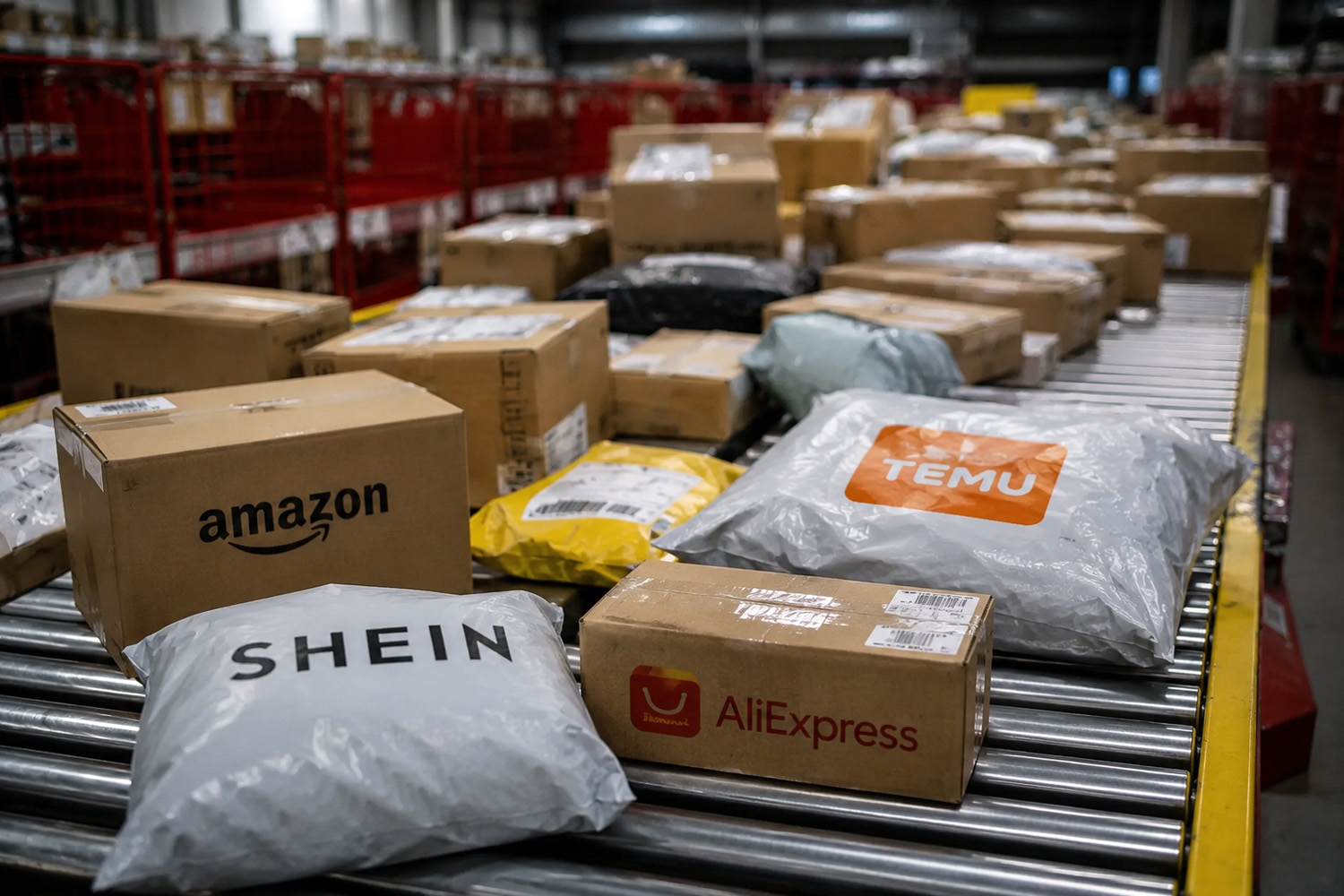
AliExpress and Temu-another major Chinese marketplace fined by the European Commission earlier this year for similar concerns-have built much of their international expansion on highly competitive pricing and direct cross-border fulfillment.
This model has transformed global retail by enabling consumers to purchase goods directly from manufacturers or merchants in Asia at prices often significantly below those available through traditional retail channels.
However, the same model creates structural challenges.
Millions of independent sellers operating across multiple jurisdictions generate enormous complexity in product verification, intellectual property enforcement, consumer protection, and safety compliance.
The economics of ultra-low-cost retail leave relatively little margin for intensive manual oversight. Yet regulators increasingly expect marketplaces to devote substantially greater resources to identifying counterfeit goods, unsafe consumer products, and illegal listings before transactions occur.
The European Commission’s observation that product reviewers allegedly had only seconds to evaluate suspicious listings highlights this tension.
The issue is therefore not simply one of staffing levels but of business model design. Marketplaces optimized primarily for rapid listing growth may now need to rebalance investments toward compliance infrastructure.
Regulation is becoming a competitive differentiator
One of the most important consequences of stronger digital regulation is that compliance itself is becoming a source of competitive advantage.
Historically, companies competed through:
- Lower prices
- Larger product catalogs
- Faster delivery
- Better user experience
Increasingly, they must also compete through:
- Product authenticity
- Consumer safety
- Transparency
- Risk management
- Regulatory credibility
This benefits companies capable of investing heavily in verification technologies, seller monitoring systems, artificial intelligence for fraud detection, and specialized compliance teams.
Large established retailers and marketplaces that already operate sophisticated quality-control systems may therefore experience relatively lower marginal compliance costs than platforms built around rapid seller expansion.
Regulation, intentionally or not, may reinforce the market positions of firms with greater operational maturity.
Compliance costs are becoming a permanent operating expense
Digital platforms have traditionally viewed regulatory compliance as an overhead function.
That perspective is becoming obsolete.
Future marketplace economics increasingly require compliance to function as a core operational capability comparable to logistics, cybersecurity, or cloud infrastructure.
This includes investments in:
- AI-assisted product detection
- Human moderation teams
- Supply chain verification
- Seller identity validation
- Product traceability
- Consumer complaint resolution
- Cross-border legal expertise
These investments increase operating expenses.
While large platforms may absorb these costs relatively efficiently, smaller competitors could struggle to meet increasingly demanding regulatory requirements.
This creates higher barriers to entry for new marketplace operators.
As a result, digital commerce may gradually consolidate around firms capable of maintaining both technological scale and regulatory sophistication.
The relationship between Europe and global platforms is changing
The AliExpress case also illustrates Europe’s evolving role in shaping global digital governance.
Unlike jurisdictions that rely primarily on voluntary industry standards, the European Union increasingly uses regulation to influence global business behavior.
Because the EU represents one of the world’s largest consumer markets, multinational technology companies frequently adapt global operational practices to comply with European rules rather than maintaining entirely separate systems for different regions.
This phenomenon-sometimes referred to as the “Brussels Effect”-extends European regulatory influence beyond its borders.
Consequently, compliance decisions made for Europe often affect platform operations worldwide.
If marketplaces redesign seller verification systems or improve product screening to satisfy EU requirements, those improvements may ultimately benefit consumers in multiple regions.
Winners and losers in the evolving marketplace landscape
The immediate financial impact of a €550 million fine is substantial, but the longer-term competitive consequences may prove even more significant.
Potential winners
Large platforms with mature compliance infrastructure may strengthen their competitive positions as regulatory requirements become more demanding.
Consumers may also benefit from improved product safety, greater transparency, and stronger marketplace accountability.
Established brands whose products are frequently targeted by counterfeit sellers could experience improved intellectual property protection if enforcement becomes more effective.
Potential losers
Platforms relying heavily on rapid merchant onboarding with limited verification may face rising compliance costs and slower international expansion.
Some small third-party sellers could encounter more extensive documentation requirements before listing products, increasing administrative burdens.
Manufacturers of counterfeit or unsafe products are likely to face greater barriers to accessing European consumers.
Market confidence increasingly depends on trust
One of the less visible consequences of stronger regulation concerns consumer behavior.
E-commerce has expanded because consumers generally trust digital transactions.
When counterfeit products, unsafe goods, or fraudulent listings become widespread, that trust deteriorates.
Marketplace operators therefore face an economic incentive beyond regulatory compliance.
Consumer confidence directly influences:
- Purchase frequency
- Customer retention
- Platform reputation
- Brand loyalty
- Lifetime customer value
In this context, investments in product safety can be viewed not merely as regulatory obligations but as mechanisms for protecting long-term platform value.
Companies that consistently demonstrate marketplace integrity may strengthen customer relationships even if compliance increases operating costs.
Global e-commerce is entering a more mature regulatory phase
The first generation of internet marketplaces emphasized expansion.
The current phase increasingly emphasizes governance.
This transition resembles earlier developments in industries such as banking, aviation, and pharmaceuticals, where rapid growth eventually gave way to more comprehensive regulatory oversight as markets matured.
Digital commerce appears to be following a similar trajectory.
Rather than asking whether platforms should bear responsibility for marketplace risks, regulators increasingly focus on defining the level of responsibility expected from companies operating at global scale.
For multinational platforms, compliance is therefore becoming embedded within long-term corporate strategy rather than remaining a reactive legal function.
Long-term structural outlook
The AliExpress case is unlikely to represent an isolated enforcement action.
Instead, it signals the continuing evolution of digital marketplace regulation toward more systematic oversight of platform governance.
Several structural developments appear increasingly likely based on current regulatory trends.
First, marketplaces will continue investing in automated compliance technologies, including artificial intelligence capable of detecting counterfeit goods, prohibited products, and suspicious seller behavior before listings become publicly available.
Second, product traceability is likely to become increasingly important. Regulators may expect greater transparency regarding supply chains, manufacturer identity, and product origin.
Third, marketplace competition will increasingly extend beyond pricing into operational trust. Consumers, regulators, and institutional investors are placing greater emphasis on governance quality as an indicator of long-term business resilience.
Finally, compliance capabilities may become an important determinant of international expansion. Companies seeking access to highly regulated markets will need to demonstrate not only technological innovation but also robust systems for consumer protection and risk management.
The result is a digital economy in which operational excellence increasingly includes regulatory excellence.
Conclusion
The European Commission’s record fine against AliExpress is about far more than a single enforcement action. It reflects a structural shift in the economics of digital commerce, where platform accountability is becoming as important as scale, pricing, and logistics.
The Digital Services Act is changing the incentives that shape marketplace strategy. Rapid seller growth without corresponding investments in governance is becoming increasingly difficult to sustain in regulated markets. Compliance is evolving from a legal necessity into a strategic capability that influences competitiveness, consumer trust, and long-term market access.
For global e-commerce companies, the message is clear: future leadership will depend not only on connecting buyers and sellers efficiently but also on demonstrating that digital marketplaces can operate safely, transparently, and responsibly. As regulation matures alongside the industry, trust is emerging as one of the most valuable assets in the global platform economy.