Introduction: AI Is Redefining Industrial Investment
Samsung’s decision to invest approximately 1000 trillion won over the next decade in South Korea-covering artificial intelligence (AI) data centers, semiconductor manufacturing, advanced components, and next-generation displays-illustrates a broader transformation underway in the global technology industry. Rather than representing a conventional capacity expansion, the investment reflects how AI has become the organizing principle behind corporate capital allocation, national industrial policy, and long-term competitive positioning.
The announcement arrives during a period in which technology companies are increasingly shifting from consumer-driven growth strategies toward infrastructure-intensive investment cycles. AI systems require enormous computing power, advanced memory chips, high-bandwidth networking, sophisticated cooling systems, and reliable energy supplies. These requirements have fundamentally altered where capital is deployed and which segments of the technology value chain generate the highest returns.
Samsung’s investment therefore should be understood not simply as an expansion of domestic manufacturing but as part of a structural repositioning toward the industries expected to dominate technology spending throughout the coming decade.
AI Infrastructure Has Become the New Engine of Capital Expenditure
The most significant trend underpinning Samsung’s strategy is the emergence of AI infrastructure as one of the world’s largest categories of corporate investment.
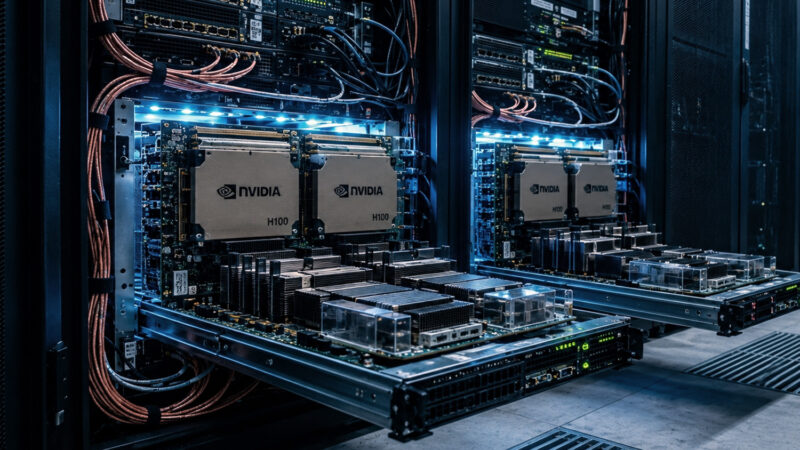
Unlike previous technology cycles driven primarily by smartphones or cloud software, generative AI requires physical infrastructure on an unprecedented scale. Every AI model depends on increasingly sophisticated hardware, creating sustained demand for advanced semiconductors, memory, storage, networking equipment, and specialized computing facilities.
This fundamentally changes investment economics.
Historically, technology companies could expand software services with relatively modest incremental capital spending. AI reverses that equation. Competitive advantage increasingly depends on access to physical computing resources, making semiconductor fabrication plants and data centers strategic assets rather than merely operational necessities.
Samsung occupies a distinctive position within this environment because it operates across multiple layers of the AI hardware ecosystem. Its businesses include memory chips, logic semiconductors, displays, electronics manufacturing, and component technologies. Investing simultaneously across these segments allows the company to benefit from complementarities that competitors focused on a single market may struggle to replicate.
The inclusion of AI data centers in Samsung’s investment plan is particularly notable. Rather than concentrating solely on component manufacturing, the company appears to be strengthening its presence throughout the broader AI infrastructure stack, reflecting a recognition that future value creation extends beyond chip production alone.
Industrial Geography Is Becoming a Competitive Strategy
Another important implication of Samsung’s investment concerns the changing geography of advanced manufacturing.
Over the past decade, geopolitical tensions, pandemic-related supply disruptions, and strategic competition over semiconductors have encouraged governments and corporations to reduce dependence on globally fragmented supply chains.
South Korea has responded by positioning itself as a long-term semiconductor hub through policy support, infrastructure investment, and collaboration with major domestic manufacturers.
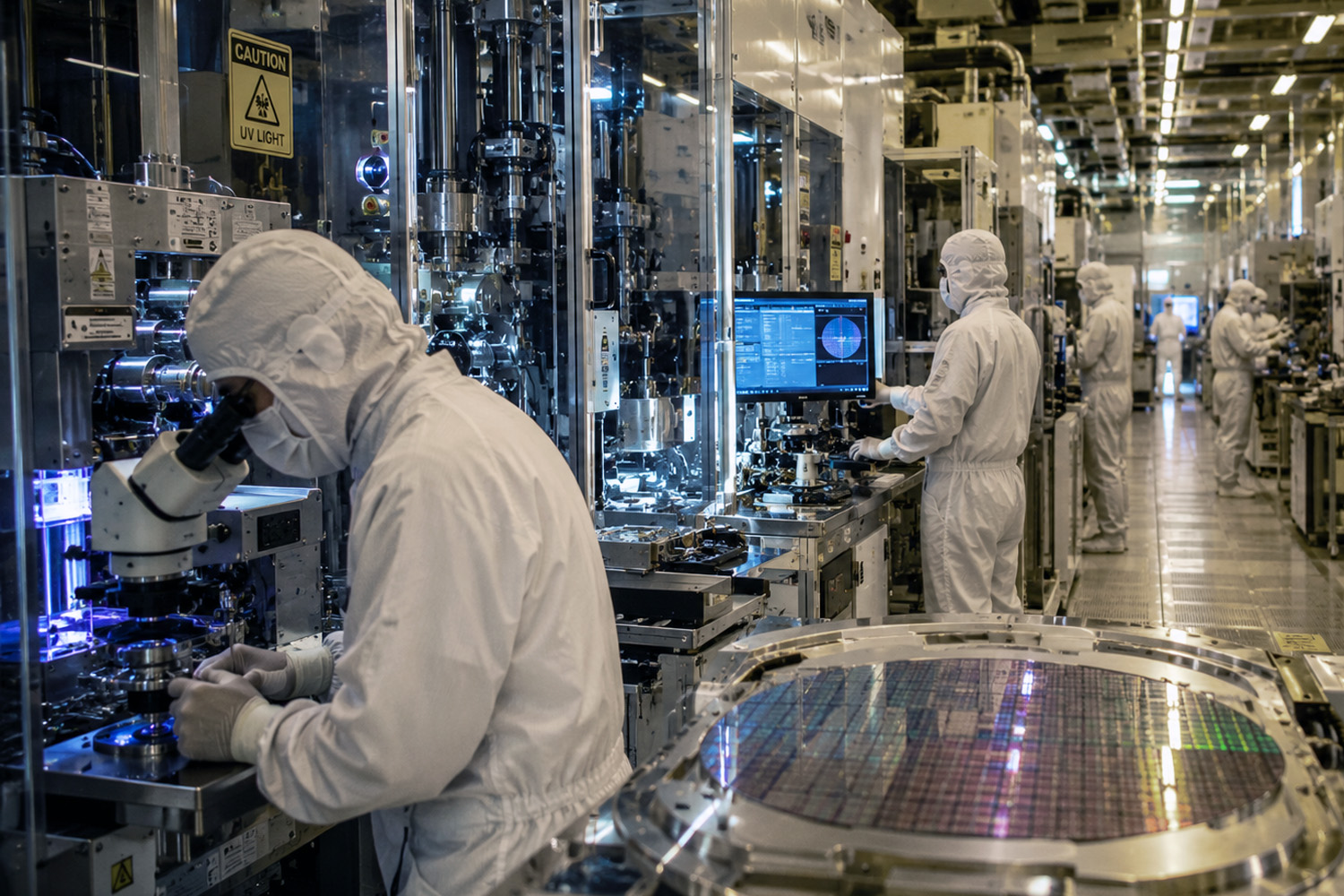
Samsung’s decision to build additional chip manufacturing capacity in the country’s southwestern regions aligns with this broader industrial strategy.
From a business perspective, geographic concentration offers several advantages.
First, clustering suppliers, research institutions, equipment manufacturers, and skilled labor reduces coordination costs and accelerates innovation.
Second, localized ecosystems improve production resilience by shortening supply chains and reducing logistical uncertainty.
Third, governments increasingly compete through industrial incentives rather than low labor costs alone. Companies evaluating multi-billion-dollar manufacturing investments now weigh factors such as energy infrastructure, permitting efficiency, workforce development, and public support for research alongside traditional cost considerations.
Samsung’s investment demonstrates that location decisions are increasingly shaped by ecosystem economics rather than purely by production expenses.
Memory Chips Remain Central to AI Economics
Although much public attention focuses on AI processors, memory technology has become equally critical.
Large language models require enormous quantities of high-bandwidth memory to process and store data efficiently. As model complexity grows, memory increasingly becomes a limiting factor for computing performance.
Samsung is already one of the world’s leading producers of advanced memory technologies, placing it in a strategically advantageous position as AI adoption expands across industries.
The company’s investment therefore reflects confidence not only in AI demand but also in the durability of memory as a structural growth market.
This differs from earlier semiconductor cycles characterized by significant price volatility and periodic oversupply.
While semiconductor markets remain cyclical, AI introduces new sources of demand that are less dependent on consumer electronics replacement cycles. Enterprise AI deployments, cloud computing expansion, scientific research, industrial automation, and autonomous systems all contribute to sustained requirements for high-performance memory.
This diversification of end markets may reduce some of the historical cyclicality associated with memory manufacturing, although fluctuations in pricing and inventory management will remain inherent features of the industry.
Vertical Integration Is Becoming More Valuable
Samsung’s investment also reinforces another major competitive trend: the growing value of vertical integration.
As AI systems become increasingly complex, coordination between hardware, manufacturing, packaging, displays, storage, and computing architecture becomes more important.
Companies capable of controlling multiple stages of production can optimize product development, reduce dependency on external suppliers, and respond more quickly to technological changes.
Samsung has long pursued a vertically integrated business model, manufacturing many of the components used within its own consumer products while also supplying competitors.
The AI era strengthens the strategic rationale for this approach.
Rather than competing solely on manufacturing scale, vertically integrated companies can capture value across multiple segments of the supply chain while benefiting from closer coordination between research, design, and production.
This may become an increasingly important competitive differentiator as AI hardware becomes more specialized and technologically demanding.
Regional Competition Is Intensifying
Samsung’s investment should also be viewed within the context of intensifying international competition over semiconductor leadership.
Governments across Asia, North America, and Europe have introduced industrial policies aimed at strengthening domestic semiconductor production.
These initiatives reflect growing recognition that advanced chips are no longer simply commercial products but foundational technologies with implications for economic competitiveness, digital infrastructure, and national resilience.
For Samsung, continued investment in South Korea helps reinforce the country’s position within global semiconductor supply chains while complementing the company’s international manufacturing footprint.
Rather than replacing overseas investment, domestic expansion strengthens the company’s ability to balance global production networks with strategic concentration in its home market.
The competitive landscape therefore increasingly involves not only firms competing against firms but also industrial ecosystems competing against one another.
Countries capable of attracting research talent, supporting advanced manufacturing, ensuring reliable energy supplies, and maintaining sophisticated supplier networks are likely to capture disproportionate shares of future technology investment.
Short-Term Market Effects Extend Beyond Samsung
In the near term, Samsung’s investment is likely to generate positive spillover effects throughout South Korea’s industrial ecosystem.
Equipment manufacturers, construction firms, materials suppliers, engineering companies, and specialized technology vendors may benefit from increased capital spending.
Research institutions and universities could also see expanded collaboration opportunities as advanced manufacturing facilities require highly skilled engineers and technical specialists.
Financial markets often interpret long-term capital commitments by major technology firms as signals of confidence in future industry demand.
However, these investments also involve substantial execution risks.
Semiconductor fabrication facilities require years to construct and optimize, while AI markets continue evolving rapidly. Companies must therefore balance aggressive investment with careful management of technological transitions and changing customer requirements.
The scale of Samsung’s commitment suggests confidence that AI-driven demand will remain sufficiently durable to justify extended investment horizons.
The Long-Term Transformation Is Industrial Rather Than Cyclical
The broader significance of Samsung’s announcement lies in what it reveals about the future structure of the technology industry.
AI is gradually shifting competition away from purely software innovation toward integrated industrial capabilities.
Success increasingly depends on manufacturing expertise, advanced materials, semiconductor engineering, power infrastructure, and supply-chain coordination.
This represents a profound change in how technology leadership is established.
Companies that combine research, manufacturing, and infrastructure development may enjoy increasingly durable competitive advantages compared with businesses dependent on outsourced production or narrower product portfolios.
For investors, policymakers, and competitors alike, Samsung’s investment illustrates that the AI economy is becoming more capital intensive, more infrastructure dependent, and more closely tied to national industrial capabilities.
The winners are likely to be organizations capable of sustaining long-term investment while integrating innovation across multiple technological disciplines.
Conclusion
Samsung’s planned decade-long investment represents more than an expansion of domestic operations. It reflects the emergence of AI infrastructure as the defining investment theme of the global technology industry and highlights how semiconductor manufacturing, memory leadership, industrial clustering, and vertically integrated production have become central sources of competitive advantage.
The announcement also underscores a broader structural reality: future technology leadership will increasingly depend not only on designing breakthrough products but on controlling the industrial systems that make those innovations possible. As AI reshapes global capital allocation, investments in manufacturing capacity, supply-chain resilience, and infrastructure are becoming as strategically important as advances in software itself. Samsung’s strategy demonstrates that in the AI era, industrial capability is once again becoming a primary determinant of technological leadership.