On October 29, 2025, Nvidia (NASDAQ: NVDA) became the first company in history to reach a market valuation of $5 trillion, marking a significant milestone in the global technology landscape. This achievement underlines how Nvidia transformed from a niche graphics-chip company into a central pillar of the rapidly growing artificial-intelligence (AI) economy.
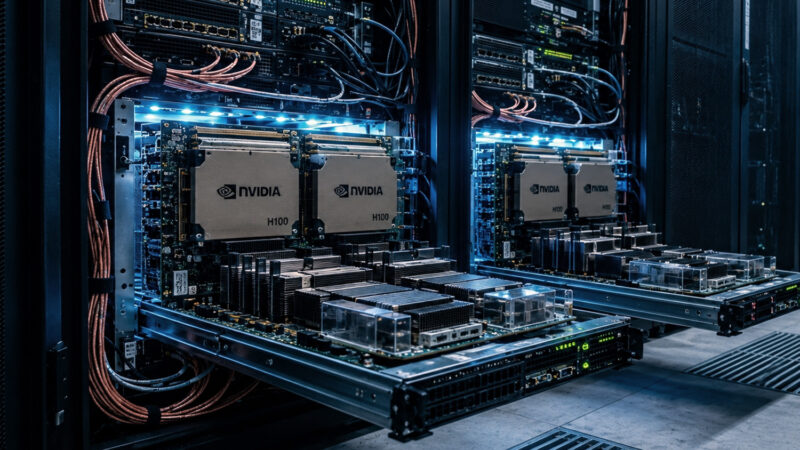
The surge in Nvidia’s value came just months after the company crossed the $4 trillion mark (in July 2025) and reflects the intense demand for its cutting-edge AI hardware, including its Blackwell and H100 processors used in large-language-model training and AI data-centres.
Why the Valuation Exploded
1. AI demand and dominance
Nvidia’s chips are foundational to the AI infrastructure boom – powering data-centres, generative-AI models and high-performance computing workloads. Analysts highlight that the company’s dominance in GPU-based compute has enabled the rapid value growth.
2. Strategic deals and visibility
In the lead-up to the milestone, Nvidia announced significant AI-related bookings and partnerships. For example, the company reported roughly $500 billion in AI-chip orders and plans to build several supercomputers for the U.S. Department of Energy. The company also struck a $1 billion investment in Nokia to collaborate on next-generation networking and 6G infrastructure.
3. Market momentum & investor sentiment
The AI narrative has driven a wave of investor enthusiasm across the tech sector, and Nvidia has emerged as the primary beneficiary of the AI investment cycle. As reported, the company’s shares climbed more than twelve-fold since late 2022 in line with the generative-AI boom.
Significance & Implications
- New benchmark for corporate value: Nvidia’s $5 trillion valuation surpasses the GDP of many countries and signals a shift in how the global economy values companies focused on AI infrastructure.
- Leadership in AI hardware: The milestone reinforces Nvidia’s position as the leading supplier of AI compute hardware, making it a critical infrastructure company rather than simply a chip designer.
- Competitive and regulatory spotlight: Nvidia’s dominant position draws increased scrutiny-especially in the context of U.S.-China tech competition, export controls and global supply-chain geopolitics.
- Valuation risk and expectation: While the achievement reflects enormous optimism, some analysts caution that valuations may rely on future growth rather than established cash flows. The firm’s success intensifies the debate around whether the AI boom may lead to a bubble.
Looking Ahead
For Nvidia to sustain its elevated valuation, the company will need to:
- Deliver strong revenue and earnings growth tied to AI infrastructure spending.
- Navigate export restrictions and international competition, particularly in China and other key markets.
- Continue innovating in GPU architecture, AI platforms, computing systems and adjacent domains such as networking and 6G.
- Manage investor expectations around margin, growth and the pace of AI adoption.
If Nvidia successfully executes on its initiatives, the $5 trillion milestone may prove to be just one chapter in a broader story of infrastructural transformation. However, given the scale of the valuation and the speed of the rise, the company-and market watchers-will be closely monitoring execution in the coming quarters.