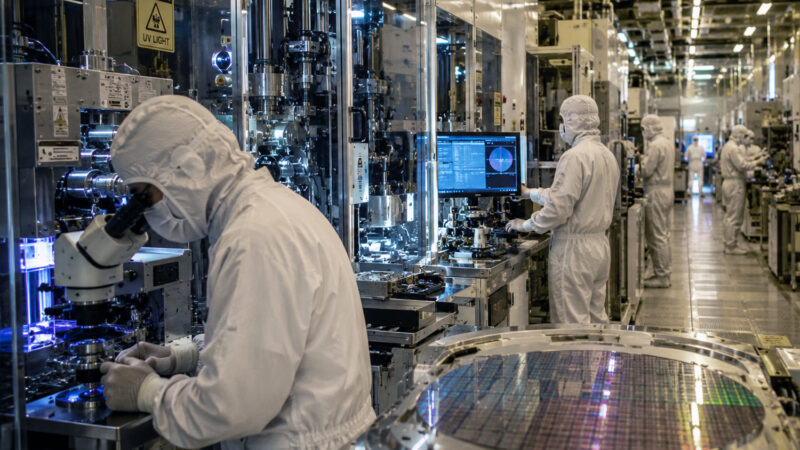
Semiconductors – the tiny chips at the heart of modern technology – are now pivotal to national security and economic power. From smartphones and cars to artificial intelligence and advanced defense systems, semiconductors define the competitive edge in high-tech industries. As governments race to secure capacity, subsidize production, and avoid supply chain chokepoints, a handful of countries stand out as leaders in the global semiconductor landscape.
1. Taiwan: The Epicenter of Advanced Chip Capacity
Taiwan remains the undisputed leader in advanced semiconductor manufacturing. The island hosts Taiwan Semiconductor Manufacturing Company (TSMC), which accounts for roughly 50 % of the global foundry market and a major share of cutting-edge nodes (such as 7 nm and below) that power today’s most sophisticated devices. Taiwan’s share of global wafer fabrication for advanced chips remains dominant despite modest declines as foreign fabs are built. However, 80–90 % of TSMC’s advanced capacity remains in Taiwan, underscoring the country’s central role in the industry.
Why this matters: Taiwan’s centrality creates a strategic chokepoint – disruption there could immediately ripple through global supply chains.
2. South Korea: Memory Powerhouse & Growing Foundry Presence
South Korea is a powerhouse in memory chips, with its companies Samsung Electronics and SK Hynix controlling a dominant ~60 % of the global memory semiconductor market. South Korea also maintains a significant position in logic chip production (about 17 % of the global foundry market), making it the second largest semiconductor producer worldwide.
Subsidies & Strategy: Recent legislation like the K-Chips Act (2025) provides tax incentives and funding to strengthen semiconductor capacity and keep manufacturing competitive.
3. United States: Design Leader, Manufacturing Rebuilder
The U.S. leads in semiconductor design and intellectual property, home to giants like Intel, Nvidia and Qualcomm. However, U.S. domestic manufacturing declined sharply over past decades, with U.S. fabs currently producing only about 12 % of global semiconductor output despite the U.S. commanding close to 46 % of sales.
To reverse this trend, the federal CHIPS and Science Act allocates tens of billions in subsidies to attract and expand domestic fabrication capacity and research. These incentives aim to reshape production and reduce reliance on Asia for manufacturing.
4. China: Rapid Expansion & Self-Sufficiency Push
China has made semiconductor autonomy a strategic priority. Through its National Integrated Circuit Industry Investment Fund (“Big Fund”), Beijing has invested tens of billions to support local production across the semiconductor value chain.
While China still lags behind Taiwan and South Korea in the most advanced chip nodes, its focus on mature processes and vertical integration helps sustain growth and reduces dependency on foreign technology.
5. Japan & Europe: Strategic Roles and Subsidy Support
Japan leverages strengths in semiconductor materials, equipment, and growing domestic capacity. Government-backed initiatives such as the Rapidus project are aimed at developing advanced nodes (like 2 nm) by the late 2020s with significant public funding.
Europe has boosted its role through the European Chips Act and public-private partnerships. Although Europe’s share of production remains lower (~8–10 %), subsidies and collaborative efforts help maintain regional capacity and supply chain diversity.
6. India: Emerging Player with Government Incentives
India is pushing to build a domestic semiconductor ecosystem with central and state-level incentives, including capital subsidies, tax exemptions, and interest support for fabs and design centers.
Despite these efforts, India’s current chip production is still in early stages, and catching up with established players will take sustained policy support and investment.
Global Chokepoints and Strategic Risks
Semiconductor supply chains are highly globalized yet fragile. Key chokepoints include:
- Advanced Manufacturing Concentration: Taiwan’s dominance in cutting-edge fabrication means disruptions there – whether from natural disasters, geopolitical tensions, or export restrictions – could jeopardize global tech supply.
- Subsidy Arms Race: Countries use generous subsidies to lure fabs and R&D. While this expands capacity, it also creates “subsidy races” that can distort markets and tie production to political priorities.
- Material Dependencies: Beyond manufacturing, control over raw materials (e.g., rare earths, specialty gases) and equipment further influences which countries can sustain semiconductor production long-term.
Conclusion
The global semiconductor race is no longer just about technology – it’s about capacity, government incentives, and strategic supply chain positions. Taiwan and South Korea continue to lead in manufacturing capacity, the U.S. retains design dominance while rebuilding fab capacity, China aggressively pursues self-sufficiency, and Japan and Europe strengthen niche roles with subsidies and collaboration. India is emerging, but scale remains limited.
As governments continue to invest and compete, understanding where capacity is concentrated and where strategic chokepoints lie will define economic and technological leadership well into the 2030s.