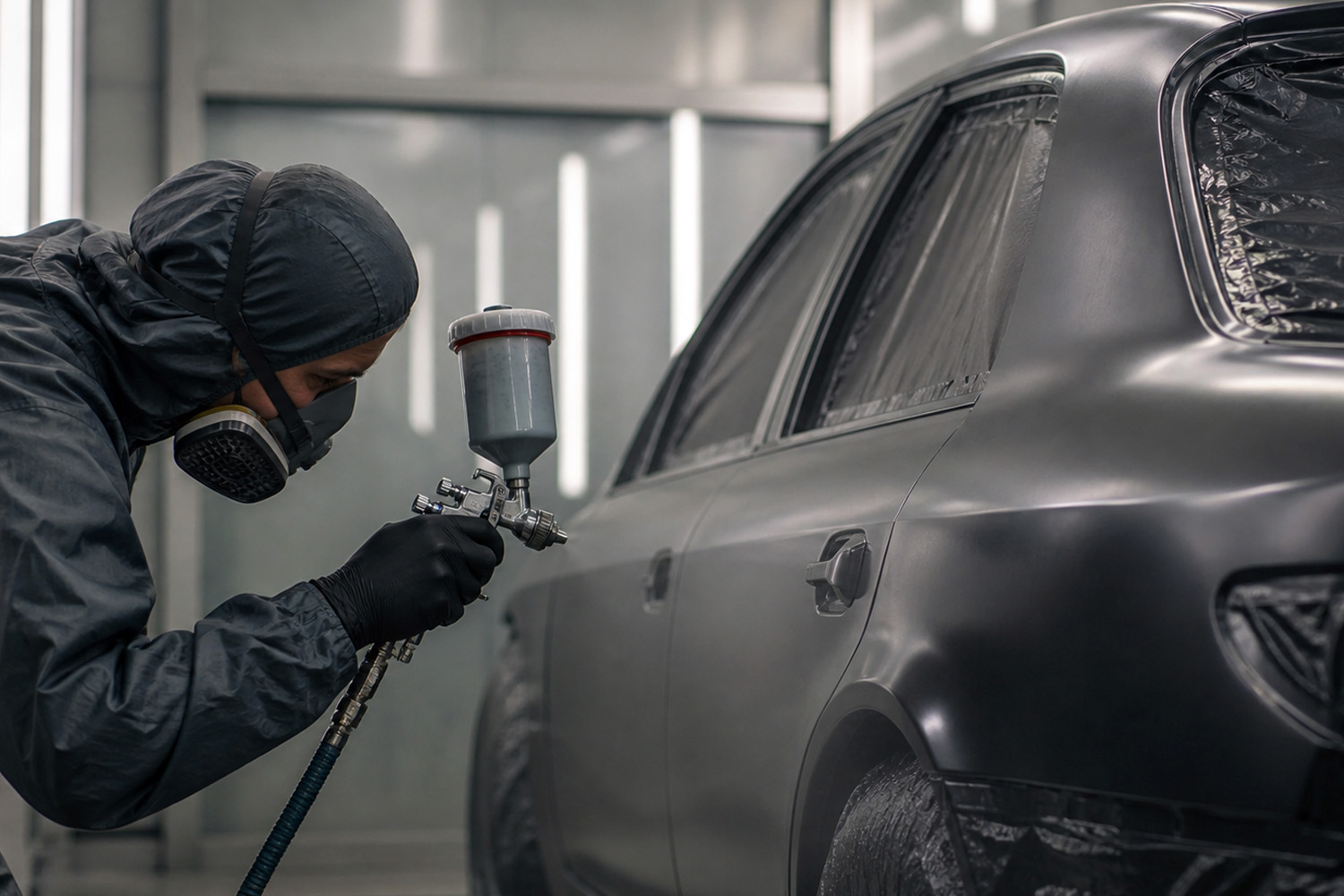
Materials Innovation in a Transforming Automotive Industry
The automotive industry is undergoing a structural transformation driven by electrification, digitalization, and sustainability pressures. While most attention is focused on batteries, software, and autonomous systems, a quieter revolution is taking place at the materials level. Advances in coatings-specifically smart paint technologies-are redefining what vehicle surfaces can do.
Traditionally, automotive paint has served two primary functions: protection and aesthetics. It shields the vehicle body from corrosion, UV radiation, and environmental damage, while also defining brand identity and consumer appeal. Today, however, paint is evolving into a functional layer-capable of self-repair, energy management, and even contributing to vehicle efficiency.
Two of the most promising innovations in this space are self-healing coatings and solar-absorbing (or energy-reactive) paints. These technologies are not just cosmetic upgrades; they reflect broader industry priorities: durability, sustainability, and energy optimization. For consumers, especially those choosing a car today, understanding these technologies can influence long-term ownership costs, maintenance needs, and even energy consumption.
Core Trend Analysis: Why Smart Coatings Are Emerging
The rise of smart paint technologies is driven by three converging forces in the automotive sector:
1. The Shift Toward Electrification
Electric vehicles (EVs) have redefined efficiency as a central performance metric. Every component-weight, aerodynamics, thermal management-affects range. Smart coatings that can manage heat or reduce maintenance indirectly support energy efficiency.
2. Lifecycle Cost Reduction
Automakers are increasingly focused on total cost of ownership rather than just upfront price. Paint damage-scratches, fading, corrosion-contributes to depreciation and maintenance costs. Self-healing coatings directly address this issue.
3. Sustainability and Regulatory Pressure
Environmental regulations are pushing manufacturers to reduce emissions not only from tailpipes but across the entire vehicle lifecycle. Durable coatings reduce repainting frequency, while solar-reactive surfaces can lower energy consumption in climate control systems.
These trends indicate that paint is no longer a passive layer-it is becoming an active contributor to vehicle performance and sustainability.
Self-Healing Paint: Engineering Durability at the Surface Level
How It Works
Self-healing automotive paint is designed to repair minor surface damage-such as scratches, swirl marks, and abrasions-without manual intervention. The technology typically relies on one of two mechanisms:
- Elastomeric polymers: Flexible molecules that can return to their original shape after being deformed. When a scratch occurs, heat (from sunlight or warm water) allows the material to “flow” back into place.
- Microcapsule systems: Tiny capsules embedded in the coating release healing agents when the surface is damaged, filling in the scratch and hardening over time.
In practice, most commercial automotive applications use polymer-based systems that respond to heat.
Real-World Applications
Several manufacturers have introduced self-healing coatings in premium segments. These coatings are often applied as a clear top layer, preserving the color beneath while adding functional resilience.
Advantages
- Reduced maintenance: Minor scratches disappear without polishing or repainting
- Improved resale value: Vehicles maintain a “new” appearance longer
- Lower long-term costs: Less need for bodywork or cosmetic repairs
Limitations
- Not suitable for deep damage: Chips and major scratches still require repair
- Temperature dependency: Healing often requires heat exposure
- Higher upfront cost: Typically available in higher-end trims or as an option
Industry Implication
Self-healing paint aligns with a broader shift toward low-maintenance vehicle ownership, particularly important in fleet operations and subscription-based mobility models. For manufacturers, it offers a way to differentiate without major mechanical changes.
Solar-Absorbing and Energy-Responsive Paints
What Does “Solar-Absorbing” Mean?
The term can be misleading. In automotive applications, solar-related coatings generally fall into two categories:
- Solar-reflective paints: Designed to reflect infrared radiation, reducing heat buildup inside the vehicle
- Solar-absorbing (energy-harvesting) coatings: Experimental surfaces that can capture solar energy and convert it into electricity
Most commercially available solutions today are reflective rather than absorptive, but research into energy-generating coatings is advancing.
How They Work
- Reflective coatings: Use pigments that reflect infrared wavelengths while maintaining visible color. This keeps the car cooler under sunlight.
- Photovoltaic coatings (experimental): Incorporate materials capable of converting sunlight into electrical energy, similar to solar panels but integrated into the paint layer.
Benefits for Vehicles
- Reduced cabin temperature: Less reliance on air conditioning
- Improved EV range: Lower energy consumption for climate control
- Enhanced comfort: Faster cooling when entering the vehicle
Current Limitations
- Energy generation is limited: Paint-based solar harvesting is far less efficient than traditional panels
- Durability challenges: Integrating energy systems into coatings without compromising longevity is complex
- Cost and scalability: Still largely in research or early-stage deployment
Industry Direction
While fully energy-generating paint is not yet mainstream, reflective coatings are already being adopted in commercial vehicles and urban fleets. As EV adoption grows, thermal management solutions like these will become increasingly important.
Technological and Engineering Drivers
The development of smart paints is rooted in advances across several scientific fields:
Nanotechnology
Nanoparticles enable coatings to achieve specific optical, thermal, and mechanical properties. For example, they can enhance UV resistance or control how surfaces interact with light.
Polymer Science
Modern coatings rely on highly engineered polymers that can respond to environmental stimuli such as heat, light, or pressure.
Materials Integration
Automotive coatings must integrate seamlessly with metal, aluminum, and composite body structures while maintaining durability under extreme conditions.
Manufacturing Compatibility
Any new paint technology must work within existing automotive production lines, which are optimized for efficiency and scale. This constraint significantly influences which innovations reach mass production.
Market and Competitive Implications
Automakers
For manufacturers, smart paint technologies represent a differentiation strategy that does not require major redesigns of vehicle platforms. Premium brands have been early adopters, but the technology is gradually moving toward mid-range segments.
Suppliers
The coatings industry-dominated by large chemical and materials companies-is a key driver of innovation. These suppliers invest heavily in R&D to develop proprietary formulations that can be licensed to automakers.
Startups and Research Institutions
Emerging companies and academic labs are pushing the boundaries of what coatings can do, particularly in energy harvesting and multifunctional surfaces. Collaboration between automakers and these entities is increasing.
Competitive Landscape
As vehicles become more similar in terms of powertrains (especially in EVs), materials innovation-including paint-becomes a subtle but important competitive factor.
Consumer Impact: What Should Buyers Consider?
For consumers choosing a car today, smart paint technologies can influence both ownership experience and long-term value.
When Self-Healing Paint Makes Sense
- Urban environments where minor scratches are common
- Premium vehicles where maintaining appearance is a priority
- Buyers planning long-term ownership
When Solar-Reflective Paint Is Valuable
- Hot climates with high sun exposure
- EV owners looking to maximize efficiency
- Drivers who prioritize cabin comfort
Cost vs. Benefit
While these technologies often come at a premium, they can reduce maintenance costs and improve usability over time. The decision ultimately depends on driving conditions, climate, and personal priorities.
Regulatory and Environmental Considerations
Governments are increasingly focusing on lifecycle emissions, not just fuel efficiency. Smart coatings contribute to this in several ways:
- Reduced repainting: Lower use of chemicals and energy in maintenance
- Improved efficiency: Less energy required for cooling systems
- Extended vehicle lifespan: Delayed replacement reduces overall environmental impact
Additionally, regulations around volatile organic compounds (VOCs) are shaping how paints are formulated, pushing the industry toward more sustainable solutions.
The Expanding Role of Automotive Surfaces
Smart paint technologies illustrate how innovation in the automotive industry is no longer confined to engines or batteries. Surfaces-once purely aesthetic-are becoming functional components that contribute to durability, efficiency, and sustainability.
Self-healing coatings address a fundamental consumer need: reducing wear and maintaining value. Solar-reactive paints, meanwhile, align with the industry’s push toward energy optimization, particularly in electric vehicles.
Looking ahead, the convergence of materials science, nanotechnology, and energy systems will likely produce even more advanced coatings-surfaces that can sense damage, adapt to environmental conditions, or actively contribute to vehicle performance.
For consumers, this means that choosing a car will increasingly involve evaluating not just what’s under the hood, but what’s on the surface. In a market defined by technological convergence, even paint is becoming a strategic decision.
Related Analysis:
Biometric Car Access: Security Innovation and Industry Trends