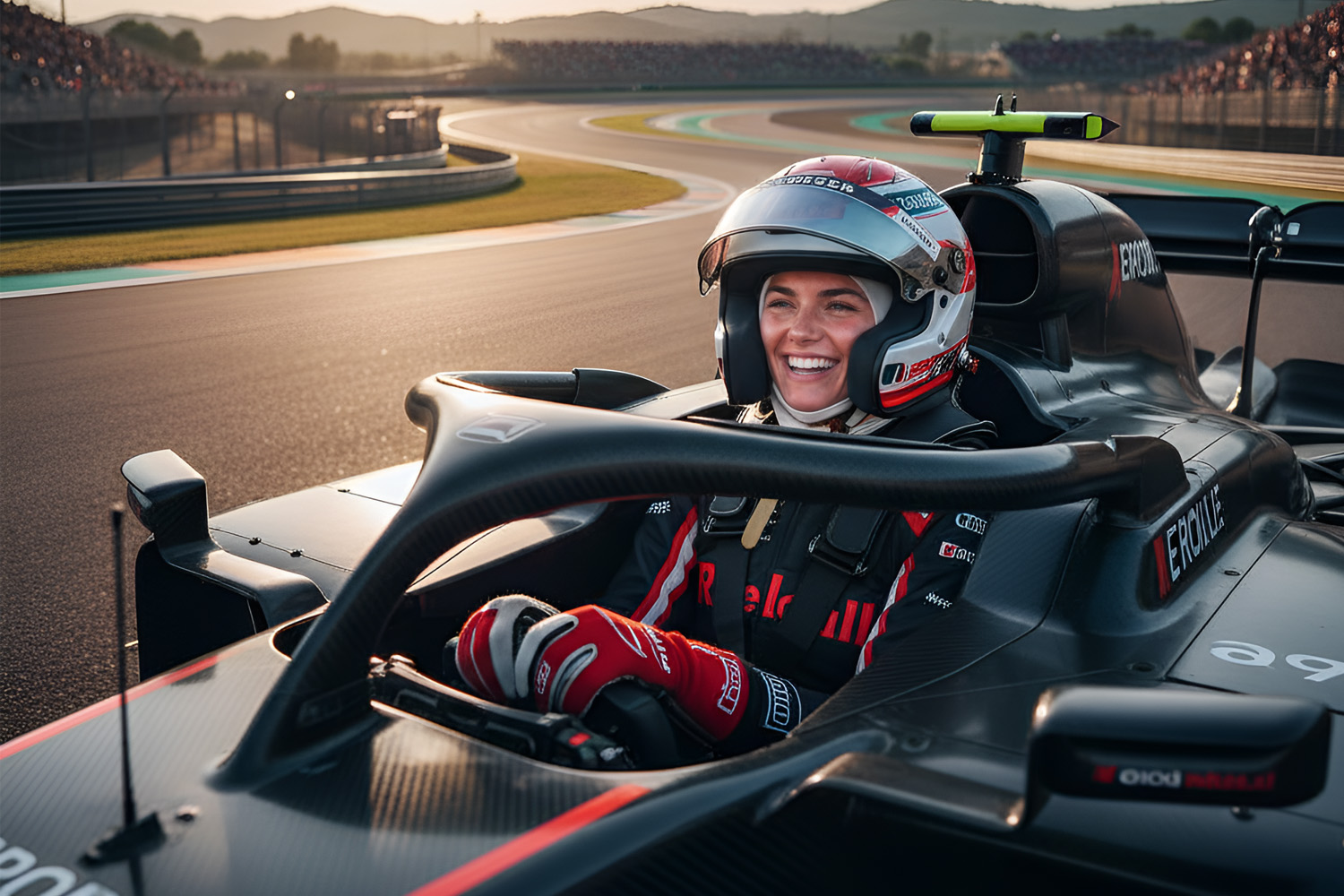
Motorsports has traditionally been a male-dominated arena, but recent years have brought meaningful change. In the 2020s, more women are entering racing series, benefiting from dedicated development programmes, mixed-gender formats, and shifted cultural expectations. The rise of female drivers is not only visible-it’s measurable.
Progress in Numbers & Opportunities
- The all-women development series F1 Academy has become a significant pathway: by 2025 its visibility and support have grown markedly, helping create a clearer route for female drivers toward higher levels.
- In the off-road electric series Extreme E, which features mixed-gender driver pairings, data show that the performance gap between male and female drivers shrank by roughly 70 % over its first four seasons.
- In North America, programmes such as the Porsche Mobil 1 Female Driver Programme North America are offering significant support-including subsidised fees-to women drivers in single-make championships.
- One real-world example: Toni Breidinger became the only woman competing full-time in NASCAR’s top three series in 2025, marking a notable milestone.
Why It Matters
- Visibility & inspiration: As female drivers achieve success and take prominent roles, they serve as role-models, encouraging more young women to enter motorsport.
- Breaking stereotypes: The narrowing performance gap in series like Extreme E helps challenge outdated assumptions about female capability in racing-contexts.
- Diversity in sport and business: Wider participation helps teams, sponsors and series reflect broader audiences-a shift supported by rising female fan-bases (e.g., in F1).
- New talent pipelines: Dedicated female-driver programmes mean that financial and structural barriers (long a major hurdle) are gradually easing.
Key Challenges That Persist
- Underrepresentation in top tiers: Although progress is strong at junior and feeder levels, women remain rare in the highest levels of formula and stock-car racing.
- Financial and sponsorship hurdles: Securing funding remains a major obstacle-racing remains expensive, and sponsorship networks are still less developed for female drivers.
- Career longevity and retention: Reports indicate that female drivers often experience shorter careers in motorsport, facing structural and cultural constraints.
What to Watch Next
- Growth of mixed-gender racing formats and how they impact inclusivity and performance.
- Female driver promotions into top racing-series seats (e.g., Formula 1, IndyCar, NASCAR’s top divisions).
- Expansion of female-driver development funds and global programmes increasing accessibility.
- How motorsport series engage with female fans and drivers together to broaden participation and sponsorship-diversity.
Conclusion
The rise of female drivers in professional motorsports is more than a trend-it is a meaningful shift. With stronger development pathways, shrinking performance gaps and greater visibility, the motorsport world is gradually becoming more inclusive. While challenges remain, the momentum in 2025 signals that a more gender-diverse future may be closer than ever.
Emerging Talents to Watch (2025 and beyond)
| Name | Country | Series | Why to Watch |
|---|---|---|---|
| Léna Bühler | 🇨🇭 Switzerland | F1 Academy / Formula Regional | 2024 F1 Academy runner-up, strong technical feedback, backed by ART Grand Prix. |
| Abbi Pulling | 🇬🇧 UK | F1 Academy / Alpine Academy | Signed with Alpine F1 Academy; one of the most consistent drivers in the F1 Academy grid. |
| Maya Weug | 🇳🇱 Netherlands | Ferrari Driver Academy / Formula Regional | The first female Ferrari Driver Academy member; competed in FRECA and supported by Ferrari since 2021. |