Strategic Context
The global automotive industry is undergoing one of the most profound transformations in its history. Electrification, supply chain reconfiguration, trade policy shifts, and geopolitical tensions are reshaping where and how vehicles are built. Governments, particularly in the United States, are incentivizing domestic production of electric vehicles (EVs), batteries, and critical components.
Against this backdrop, large-scale manufacturing investments are no longer just operational decisions – they are strategic signals about long-term positioning in a fragmented global economy.
It is in this context that Hyundai Motor Company has outlined plans to invest approximately $26 billion in the United States, expanding production capacity and adjusting its product mix in the coming years, as discussed by CEO Jose Munoz in an interview with The Wall Street Journal.
What Happened
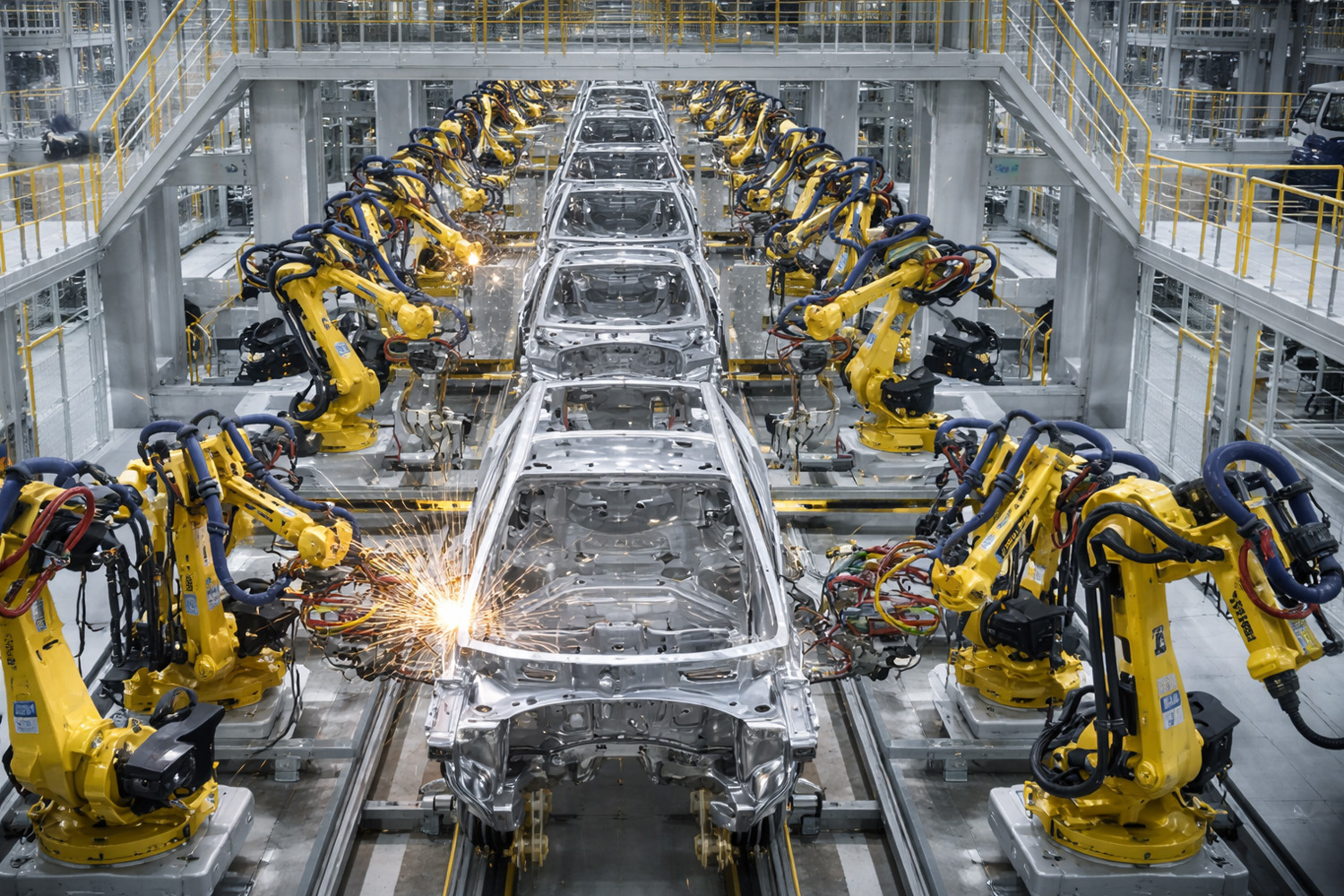
According to the interview, Hyundai intends to significantly increase its U.S. footprint through expanded manufacturing investments and product portfolio adjustments. The reported figure – around $26 billion – covers production capacity expansion, new facilities, and strategic shifts in model offerings aligned with evolving market demand.
The company has already been building out its U.S. manufacturing presence in recent years, including investments in EV and battery production. The newly discussed commitment underscores an acceleration of that trajectory rather than a one-off announcement.
Why It Matters
Hyundai’s move reflects three structural shifts shaping the global auto industry.
1. Industrial Policy Is Reshaping Production Geography
U.S. policy frameworks increasingly reward domestic production of vehicles and battery components. For global automakers, expanding U.S.-based manufacturing is not only about proximity to consumers – it is about regulatory alignment, tariff mitigation, and eligibility for incentives. Hyundai’s investment demonstrates how international manufacturers are adapting to this new industrial logic.
2. Electrification Requires Localized Ecosystems
EV production is more supply-chain intensive than traditional internal combustion manufacturing. Battery plants, critical mineral sourcing, and advanced electronics integration demand geographic clustering. Expanding U.S. operations allows Hyundai to integrate vertically within North America, reducing exposure to global logistics disruptions and geopolitical volatility.
3. Market Diversification and Risk Management
The United States remains one of the largest and most profitable automotive markets globally. Deepening local production reduces currency exposure and trade risks while strengthening brand perception as a long-term domestic stakeholder.
In strategic terms, Hyundai is not simply adding capacity – it is embedding itself more deeply into the U.S. industrial ecosystem.
Market / Financial / Sector Impact
Large-scale capital commitments tend to influence multiple layers of the automotive ecosystem:
- Supply Chains: Increased local production stimulates demand for U.S.-based parts suppliers, battery manufacturers, and logistics providers.
- Labor Markets: Manufacturing expansion supports high-skilled industrial employment, particularly in regions attracting new EV plants.
- Capital Allocation Trends: Hyundai’s move reinforces a broader pattern among global automakers reallocating investment toward North America.
For financial markets, such investments signal confidence in long-term U.S. demand for electrified and next-generation vehicles. They also indicate that global automakers view North America as central – not peripheral – to their EV strategies.
Competitive Landscape
Hyundai operates in a highly competitive field dominated by established U.S., European, and Asian manufacturers accelerating their EV transitions. Domestic production capacity has become a competitive differentiator.
Automakers that localize manufacturing gain:
- Faster response times to market shifts
- Reduced logistics costs
- Improved eligibility for consumer incentives
- Stronger political positioning
Hyundai’s expansion strengthens its ability to compete across multiple segments – from internal combustion vehicles to hybrid and fully electric models – while maintaining flexibility in its product range.
It also reinforces the broader trend of foreign automakers increasing direct investment in U.S. manufacturing rather than relying primarily on imports.
Risks & Uncertainties
Despite its strategic logic, the investment carries risks.
Demand Volatility: EV adoption rates remain sensitive to pricing, charging infrastructure availability, and broader economic conditions.
Policy Shifts: Industrial incentives are politically driven and may evolve. Long-term returns depend partly on regulatory stability.
Cost Pressures: Building and scaling advanced manufacturing facilities is capital-intensive. Rising labor or material costs could affect margins.
Technology Pace: Rapid technological change in batteries and vehicle software creates the risk of asset obsolescence if production systems are not adaptable.
Hyundai’s success will depend on execution discipline and flexibility in adjusting product strategy as consumer preferences evolve.
Bigger Trend Implications
Hyundai’s $26 billion U.S. investment illustrates a broader transformation in global industrial strategy.
First, it reinforces the re-regionalization of manufacturing. While globalization defined previous decades, the current era favors resilient regional hubs tied to major consumer markets.
Second, it underscores how electrification is driving capital concentration. EV transitions require substantial upfront investment, favoring companies with long-term strategic clarity and financial capacity.
Third, it reflects the growing alignment between corporate strategy and national economic policy. Automakers increasingly operate at the intersection of industrial planning, trade policy, and energy transition frameworks.
Finally, it signals that the U.S. auto market remains structurally attractive despite global uncertainty. International manufacturers are not retreating – they are doubling down.
In sum, Hyundai’s planned expansion is not merely a production increase. It is a strategic recalibration aligned with electrification, supply chain resilience, and policy-driven industrial transformation. As the global automotive sector enters a more regionally structured phase, such investments may become the defining feature of the industry’s next chapter.