CAIRO – On 1 November 2025, Egypt officially inaugurated the Grand Egyptian Museum (GEM), a vast cultural complex adjacent to the Pyramids of Giza that represents one of the country’s most ambitious heritage-projects to date.
After more than two decades of construction which began in 2005 and endured repeated delays due to political upheaval, pandemics and logistical challenges, GEM now stands as what many sources describe as the world’s largest museum dedicated to a single civilisation.
What the Museum Houses
Spanning an area of approximately 470 000–500 000 m² on the Giza plateau, the museum will display over 100 000 artefacts, including the complete treasure collection of Tutankhamun, for the first time together in one gallery.
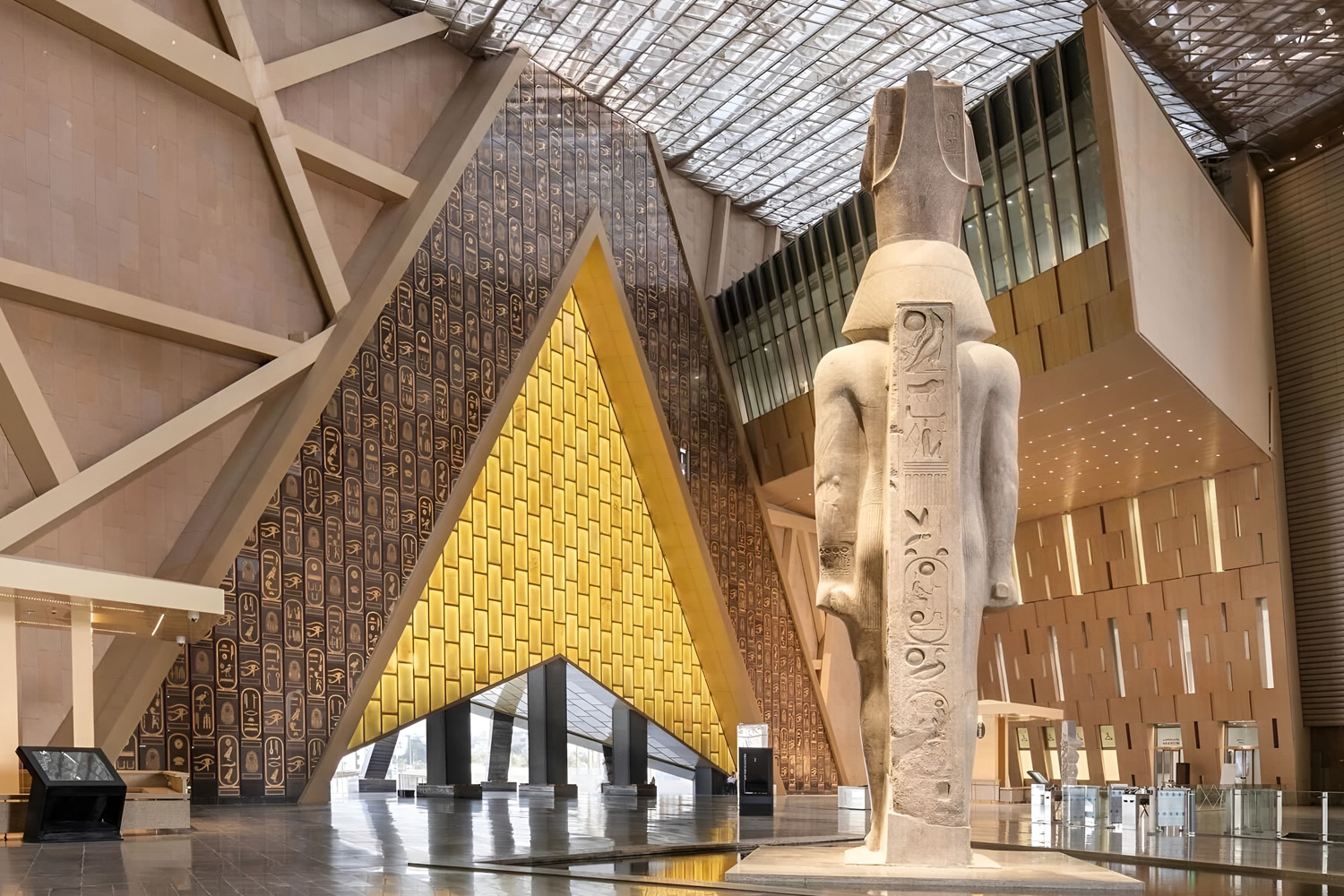
Among its standout pieces is a colossal 83-ton statue of Ramesses II, which forms a dramatic greeting to visitors at the main hall of the museum.
Why It Matters
- The opening marks a major boost for Egypt’s tourism-industry strategy, seeking to attract millions more visitors and revitalize a key economic sector.
- GEM is not just a display space – it features state-of-the-art conservation laboratories, educational facilities and immersive visitor experiences, marking a shift in how ancient heritage is preserved and presented.
- Located mere miles from the Pyramids of Giza, the museum creates a new cultural axis between ancient wonders and modern museum infrastructure.
A Long Journey
Originally announced in the early 1990s with construction beginning in 2005, the project faced multiple delays including the 2011 Arab Spring, financial constraints, the COVID-19 pandemic and regional instability.
Despite earlier soft-openings of certain galleries, the full public unveiling marks the culmination of years of planning and investment.
What Visitors Can Expect
With its thematic organisation across three wings – “Society”, “Royalty” and “Beliefs” – the museum provides a chronological journey through ancient Egyptian civilisation from prehistoric times to the Greco-Roman era.
One of the prized sections is the Tutankhamun-Gallery which brings together thousands of relics from the boy-king’s tomb, giving visitors a rare chance to see them in a single coherent exhibition.
The Wider Significance
GEM’s opening is more than a cultural milestone: it symbolises Egypt’s ambition to position itself as a global heritage destination and signals a new era of museum-making in the Middle East and North Africa. It also sets a benchmark for how ancient treasures can be showcased in modern contexts.
In summary, the Grand Egyptian Museum’s grand opening on 1 November 2025 is the realisation of a long-held vision to create a world-class cultural institution that honours Egypt’s ancient past while looking forward to its role in global cultural tourism.