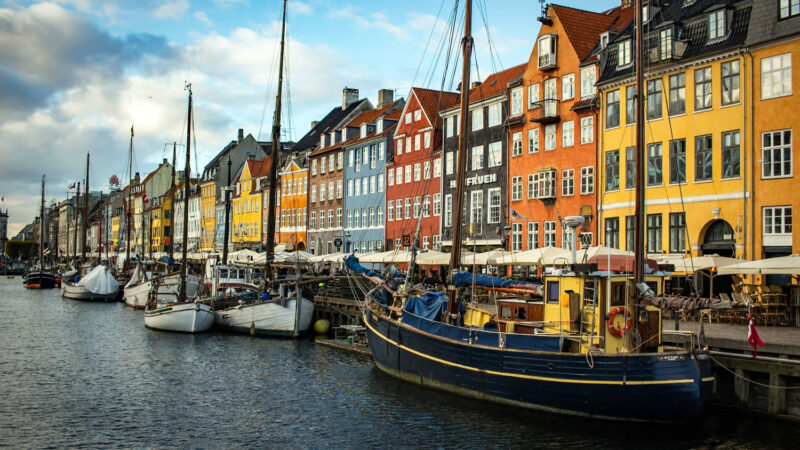
A Global Holiday with Local Expressions
Easter is one of the most widely observed religious holidays in the world, yet its expression varies significantly across regions. Rooted in Christian theology as the commemoration of the resurrection of Jesus Christ, Easter has evolved into a multi-layered cultural event that incorporates religious observance, seasonal symbolism, and local traditions.
What makes Easter particularly distinctive is its dual identity. On one level, it remains a deeply spiritual observance marked by liturgy, fasting, and pilgrimage. On another, it has absorbed a wide range of pre-Christian seasonal symbols and modern cultural practices, resulting in diverse interpretations across continents.
From solemn processions in Southern Europe to family-oriented festivities in North America and deeply rooted Orthodox rituals in Eastern Europe, Easter offers a unique lens through which to examine how global traditions adapt to local cultures. At the same time, its most recognizable symbols-eggs, rabbits, and spring motifs-carry meanings that extend far beyond their contemporary, often commercialized forms.
Why Easter Changes Dates Every Year: Astronomy, History, and Tradition
One of the most distinctive features of Easter is that it does not have a fixed date. Unlike holidays tied to a specific calendar day, Easter is a movable feast, determined by a combination of astronomical events and historical decisions within early Christianity.
The Astronomical Basis: Lunar Cycles and the Spring Equinox
The timing of Easter is based on a formula that combines the solar and lunar calendars:
- Easter is celebrated on the first Sunday after the first full moon following the spring equinox
- The spring equinox is fixed at March 21 in ecclesiastical calculations
- The “Paschal Full Moon” is not always the exact astronomical full moon but a calculated date used by the Church
This system reflects early efforts to align the Christian celebration with natural cycles, particularly those associated with renewal and spring.
Historical Origins: Decisions of Early Christianity
The method for determining Easter was formalized during the First Council of Nicaea, one of the most important gatherings in early Christian history.
Key outcomes included:
- Establishing a unified method for calculating Easter
- Separating its timing from the Jewish Passover calendar, while still maintaining a historical connection
- Ensuring that Easter would always be celebrated on a Sunday
This decision helped standardize the holiday across different regions, although variations would persist over time.
Why Orthodox and Western Easter Often Differ
Today, the date of Easter can vary between Western (Catholic and Protestant) and Eastern Orthodox churches due to differences in calendar systems:
- Western churches use the Gregorian Calendar
- Orthodox churches follow the Julian Calendar for calculating Easter
As a result:
- Orthodox Easter often falls one or more weeks later than Western Easter
- In some years, the dates coincide, but this is not consistent
Additionally, Orthodox calculations maintain a closer link to the timing of Passover, which further influences the final date.
The calculation of Easter illustrates a rare intersection of:
- Astronomy (lunar phases and equinoxes)
- Religious tradition (liturgical rules and symbolism)
- Historical compromise (efforts to unify early Christian practices)
This complexity contributes to the broader cultural richness of Easter, reinforcing its identity as both a spiritual observance and a seasonal marker.
How Easter Is Celebrated Around the World
Western Europe: Ritual, Heritage, and Public Celebrations
In many Western European countries, Easter remains closely tied to religious observance, particularly in predominantly Catholic regions such as Spain and Italy.
Key features include:
- Holy Week (Semana Santa) processions in Spain, involving large-scale public ceremonies with historical roots
- Church services, including Good Friday and Easter Sunday Mass
- Pilgrimage traditions and community gatherings
These practices emphasize continuity with historical religious traditions. The scale and public nature of events, especially in Southern Europe, reflect the integration of religion into cultural identity.
At the same time, secular customs coexist alongside religious ones:
- Easter markets in countries like Germany and Austria
- Decorative traditions, including painted eggs and seasonal crafts
The result is a hybrid celebration where religious and cultural elements operate in parallel, rather than in opposition.
United States: Commercialization and Family-Centered Traditions
In the United States, Easter has evolved into a largely family-oriented and commercial holiday, with less emphasis on formal religious observance compared to Europe.
Common traditions include:
- The Easter Bunny, a folkloric figure associated with delivering eggs and treats
- Easter egg hunts, often organized in public parks or private homes
- Seasonal consumption of chocolate and confectionery products
These practices highlight a shift toward child-centered experiences and consumer culture. Retail, food, and entertainment industries play a significant role in shaping how the holiday is experienced.
However, religious observance remains present:
- Church attendance increases on Easter Sunday
- Many communities maintain traditional services alongside modern celebrations
This dual structure reflects a broader trend in American holidays, where religious origins coexist with secular reinterpretation.
Eastern Europe: Orthodox Traditions and Ritual Continuity
In Eastern European countries, particularly those influenced by Orthodox Christianity, Easter retains a strongly liturgical and symbolic character.
Distinctive elements include:
- Midnight church services marking the resurrection
- Ritual foods such as dyed eggs and traditional breads
- Blessing of food baskets in churches
One notable example is found in Poland, where the Easter period includes Śmigus-Dyngus, often referred to as “Wet Monday”:
- Participants engage in playful water-splashing traditions
- The custom is linked to themes of purification and renewal
In countries such as Georgia, Romania, and Ukraine, Easter is often considered the most important religious holiday of the year, surpassing even Christmas in significance.
These traditions emphasize:
- Continuity of religious practice
- Strong links between faith, family, and national identity
Regional Variations and Unique Customs
Beyond major regional patterns, Easter includes a wide range of localized traditions:
- In parts of Central Europe, egg decoration is an elaborate art form
- In Scandinavian countries, Easter incorporates elements of folklore and seasonal storytelling
- In Mediterranean regions, food plays a central role, with specific dishes prepared only during the holiday
These variations demonstrate how Easter adapts to local histories, climates, and cultural priorities, while maintaining a shared symbolic core.
The Symbolism of Easter: Eggs, Rabbits, and Renewal
Eggs as Universal Symbols of Life and Rebirth
The Easter egg is one of the most enduring and globally recognized symbols associated with the holiday. Its origins predate Christianity and are linked to ancient fertility and renewal traditions.
Key symbolic meanings:
- Representation of new life and rebirth
- Association with the arrival of spring
- In Christian contexts, a metaphor for the resurrection of Christ
Historically:
- Eggs were often forbidden during Lent in medieval Europe
- Their reintroduction at Easter made them a natural symbol of celebration and abundance
Over time, the tradition evolved:
- From simple dyed eggs to elaborate decorative practices
- From symbolic objects to widely consumed confectionery products
The Easter Bunny: Folklore and Cultural Adaptation
The figure of the Easter Bunny is less directly connected to Christian doctrine and instead emerges from European folklore, particularly in German-speaking regions.
Origins and meanings:
- Rabbits are historically associated with fertility and reproduction
- The idea of a rabbit delivering eggs reflects a blending of symbolic traditions
The Easter Bunny gained prominence through:
- Migration of European traditions to North America
- Integration into popular culture and commercial practices
Today, it serves primarily as a cultural and entertainment symbol, especially in family-oriented celebrations.
Pagan and Christian Symbolism: A Layered Tradition
Easter’s symbolic framework reflects a fusion of pre-Christian and Christian elements, rather than a single unified origin.
Key overlaps include:
- Spring festivals celebrating renewal and seasonal change
- Christian narratives centered on resurrection and spiritual renewal
This convergence occurred gradually:
- Early Christian communities often adapted existing seasonal celebrations
- Symbols were reinterpreted within a Christian theological framework
The result is a holiday that operates on multiple levels:
- Religious: commemorating a central event in Christianity
- Seasonal: marking the transition from winter to spring
- Cultural: incorporating local customs and practices
Cultural and Social Impact: From Religion to Global Experience
Tourism and Seasonal Travel
Easter plays a significant role in global travel patterns, particularly in regions with strong cultural or religious traditions.
Key trends include:
- Increased travel to destinations known for Easter celebrations (e.g., Spain, Italy)
- Domestic tourism centered around family gatherings
- Growth of cultural tourism focused on traditional festivals
Travel during Easter is often influenced by:
- School holidays
- Religious pilgrimage opportunities
- Seasonal weather conditions in Europe and other regions
Commercialization and Globalization
The commercialization of Easter has expanded its reach beyond religious communities, contributing to its status as a global cultural event.
Key aspects:
- Growth of seasonal retail markets
- Expansion of Easter-themed products (food, decorations, gifts)
- Influence of global media and marketing
While commercialization can dilute traditional meanings, it also:
- Increases accessibility of the holiday
- Facilitates cross-cultural exchange of traditions
Preservation of Tradition in a Modern Context
Despite modernization, many regions continue to maintain strong connections to traditional practices.
This persistence is supported by:
- Religious institutions
- Community organizations
- Intergenerational transmission of customs
As a result, Easter remains a dynamic balance between continuity and adaptation, rather than a static tradition.
A Shared Holiday, Diverse Meanings
Easter stands as a compelling example of how a single holiday can encompass multiple layers of meaning and expression across different societies.
Key conclusions:
- Easter’s global presence reflects both religious significance and cultural adaptability
- Regional traditions demonstrate how local contexts shape shared celebrations
- Symbolism such as eggs and rabbits reveals the historical layering of beliefs and practices
Looking ahead, Easter is likely to continue evolving as globalization, digital culture, and changing social values influence how traditions are observed. However, its core themes-renewal, community, and continuity-remain highly adaptable, ensuring its relevance across generations and cultures.
In the context of travel and leisure, Easter offers not only an opportunity for seasonal exploration but also a deeper understanding of how cultural identity is expressed through shared yet diverse traditions.