The public listing of SpaceX and its rapid ascent to roughly $2.3 trillion in market capitalization is not simply another story about investor enthusiasm or billionaire-led corporate success. The event matters because it challenges long-standing assumptions about what kinds of businesses deserve the world’s highest valuations.
Historically, global equity markets rewarded companies with scalable digital economics: software firms, consumer internet platforms, semiconductor designers, and cloud providers. SpaceX represents something structurally different. It is a capital-intensive infrastructure company operating in launch services, satellite connectivity, defense-adjacent systems, and space logistics. Its rise suggests investors may be reassessing how strategic infrastructure businesses are valued in an era increasingly shaped by geopolitical fragmentation, artificial intelligence, and communications sovereignty.
The significance of SpaceX’s IPO therefore extends beyond one company’s market debut. It reflects a deeper transition in capital allocation, industrial competition, and the economic logic underpinning future growth sectors.
The End of the “Asset-Light Premium”
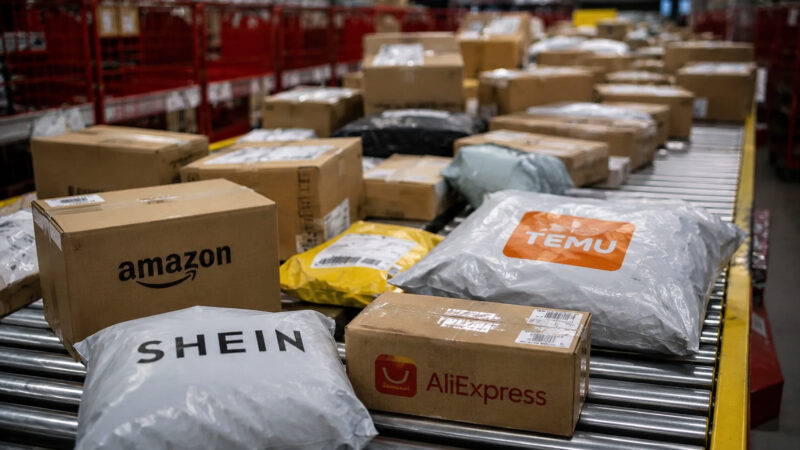
For more than two decades, equity markets favored businesses with high margins and low physical capital requirements. Investors rewarded software and platform companies because they scaled globally with relatively limited incremental costs. This model produced dominant firms in cloud computing, e-commerce, digital advertising, and semiconductor design.
SpaceX does not fit this pattern.
Rocket manufacturing, launch infrastructure, satellite deployment, and space systems require extraordinary upfront investment, long development cycles, and high execution risk. Under previous market conditions, such businesses would likely have struggled to justify valuations comparable to digital platforms.
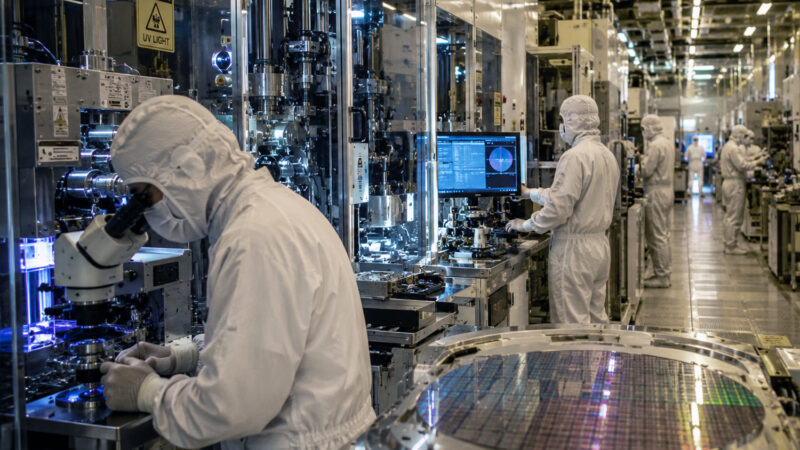
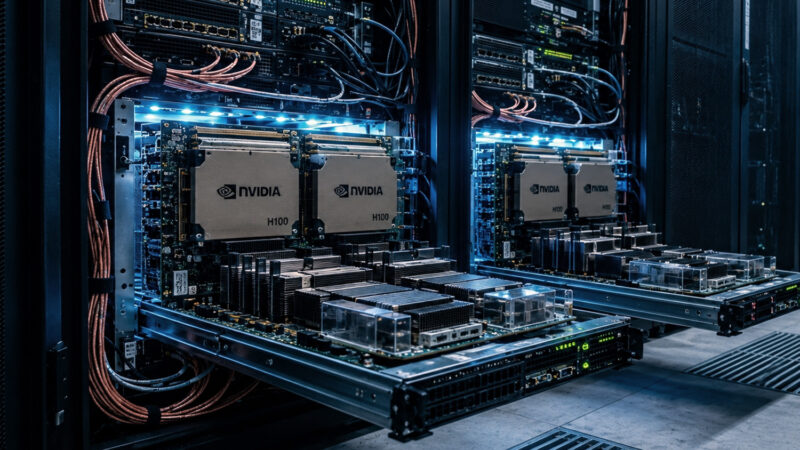
Yet investors are increasingly treating infrastructure differently. This shift is visible across several sectors, including energy grids, semiconductor manufacturing, artificial intelligence data centers, and telecommunications networks. What connects these industries is scarcity.
Markets are beginning to assign premium valuations not merely to software applications, but to companies controlling difficult-to-replicate physical systems that others depend upon.
SpaceX occupies a strategically rare position. It combines launch capabilities, reusable rocket economics, satellite communications infrastructure, and deep institutional relationships with government agencies and defense procurement systems. Few firms globally possess comparable vertical integration.
In business terms, investors are rewarding control over bottlenecks rather than simply software scale.
Why Capital Markets Accepted a Multi-Trillion-Dollar Valuation
A valuation exceeding $2 trillion initially appears difficult to reconcile with conventional aerospace economics. Traditional aerospace firms typically trade at far lower multiples because they operate within slower growth environments and rely heavily on government contracting cycles.
However, SpaceX’s valuation reflects a market perception that it is not fundamentally an aerospace company.
Instead, investors increasingly view it as a hybrid of several strategic industries simultaneously:
- Aerospace and launch services
- Telecommunications infrastructure through satellite broadband
- Defense-adjacent systems and national security logistics
- Data and connectivity networks
- Future transportation infrastructure
The most important factor from a market perspective is recurring revenue visibility.
Launch services alone tend to produce cyclical cash flows. Satellite broadband, by contrast, creates subscription-based recurring revenue, which equity markets typically value more highly. Infrastructure businesses that combine long-term contracts with recurring payments often receive premium multiples because revenue becomes more predictable.
This partly explains why investors may be willing to price SpaceX differently from legacy aerospace firms. The company is perceived not merely as building rockets but as owning infrastructure layers that governments, enterprises, and consumers increasingly depend upon.
The valuation therefore reflects market expectations about future strategic relevance rather than present aerospace economics alone.
A Structural Shift in Competitive Dynamics
SpaceX’s rise also alters competitive incentives across multiple industries.
In aerospace, the IPO significantly changes the competitive environment for incumbent launch providers. Public market access gives SpaceX a deeper pool of financing, potentially lowering capital constraints for research, manufacturing expansion, and launch cadence optimization.
For competitors, this creates asymmetry. Companies operating with thinner capital access may find it increasingly difficult to compete on launch costs or deployment scale.
In telecommunications, satellite broadband operators now face a market participant with vastly greater financial flexibility. Scale matters because satellite systems require continuous replenishment and network investment. A highly capitalized operator gains resilience against cyclical downturns and pricing pressure.
The implications also extend to semiconductor supply chains.
SpaceX briefly overtaking TSMC in market capitalization carries symbolic significance beyond rankings. Semiconductor manufacturing has long represented one of the most strategically valuable industrial sectors globally. If markets now place equivalent or greater value on orbital infrastructure and connectivity networks, it suggests investors increasingly view communications resilience and space logistics as foundational economic assets.
This does not reduce the importance of semiconductors. Instead, it broadens the definition of strategic infrastructure.
Future competition may increasingly revolve around which firms control indispensable industrial platforms rather than purely digital ecosystems.
Why Governments Matter More Than Investors Assume
One frequently misunderstood aspect of SpaceX’s valuation is the role of public-sector economics.
The company operates in markets shaped heavily by government incentives, procurement frameworks, and national security priorities. In industries such as launch systems, communications resilience, and defense logistics, states are not peripheral customers-they are often anchor demand sources.
This creates unusual economic stability.
Governments rarely optimize exclusively for lowest cost. Reliability, domestic capability, geopolitical resilience, and supply-chain security increasingly shape procurement decisions. As geopolitical competition intensifies, governments are allocating larger budgets toward strategic technologies that reduce dependence on rivals.
This dynamic benefits companies positioned at the intersection of industrial capability and national security relevance.
Investors appear to recognize that such positioning may create durable competitive advantages that conventional market models underestimate.
Importantly, this does not mean SpaceX is insulated from risk. Government dependence can create political scrutiny, regulatory complexity, and concentration risk. But it also creates unusually resilient demand conditions compared with purely consumer-oriented businesses.
Short-Term Market Effects: Momentum and Capital Rotation
In the short term, the IPO’s immediate effect is likely to reshape capital flows.
Record public listings often redirect institutional attention toward adjacent sectors. Aerospace suppliers, satellite infrastructure firms, defense technology companies, and advanced manufacturing providers could see increased investor scrutiny.
Markets frequently seek secondary beneficiaries after landmark listings.
There is also a broader psychological effect.
SpaceX’s debut reinforces investor appetite for companies perceived as operating in frontier industries. This may improve financing conditions for firms connected to launch technologies, advanced robotics, communications infrastructure, and strategic manufacturing.
However, short-term volatility remains likely.
Multi-trillion-dollar IPOs frequently experience periods of valuation reassessment as investors transition from narrative-driven enthusiasm to earnings scrutiny. Public markets demand transparency and quarterly accountability that private valuations often avoid.
The central question will become whether operational performance can support extraordinary expectations embedded in valuation levels.
The Long-Term Transformation: Infrastructure as the New Growth Story
The deeper implication of SpaceX’s IPO is structural.
For years, investors prioritized software because digital platforms delivered the strongest returns in an era of globalization and low capital costs. But several forces are reshaping market priorities:
- Artificial intelligence requires enormous physical computing infrastructure
- Geopolitical fragmentation raises the value of domestic industrial capacity
- Energy transitions demand new networks and manufacturing systems
- Communications resilience becomes increasingly strategic
As a result, markets are beginning to reward companies controlling scarce physical systems.
SpaceX exemplifies this transition.
Its valuation suggests investors increasingly believe future economic power will depend not only on digital interfaces but also on the infrastructure beneath them: launch systems, orbital communications, energy networks, semiconductor fabs, and logistics architectures.
This could mark a broader rebalancing in global capital markets, where industrial capability regains valuation importance after decades dominated by software-centric growth models.
If sustained, the shift would create new winners and losers.
Companies controlling strategic bottlenecks may command premium valuations, while firms dependent on commoditized services could face margin compression. Capital-intensive industries previously viewed as unattractive may regain investor favor if they possess defensible infrastructure advantages.
Conclusion
SpaceX’s IPO is not merely remarkable because of its size. Its deeper significance lies in what investors appear to be rewarding.
The company’s rise suggests markets are moving toward a new valuation logic-one that increasingly prioritizes strategic infrastructure, recurring connectivity systems, and industrial resilience alongside software scalability.
Whether SpaceX maintains its valuation remains uncertain and will ultimately depend on operational execution, revenue durability, and competitive positioning.
But the broader signal is already clear: investors may be entering a period where control of physical bottlenecks matters as much as digital reach.
In that sense, SpaceX’s debut may prove less important as a single corporate milestone and more important as evidence of a structural shift in how markets define future economic power.