The Infrastructure Problem Behind the AI Economy
The idea of placing data centers in orbit sounds, at first glance, like science fiction. Yet a growing number of aerospace startups, infrastructure companies, and technology leaders increasingly describe orbital computing as a future commercial market rather than a distant fantasy. The renewed interest is not driven by curiosity alone. It reflects mounting pressure inside the global computing industry-especially from artificial intelligence.
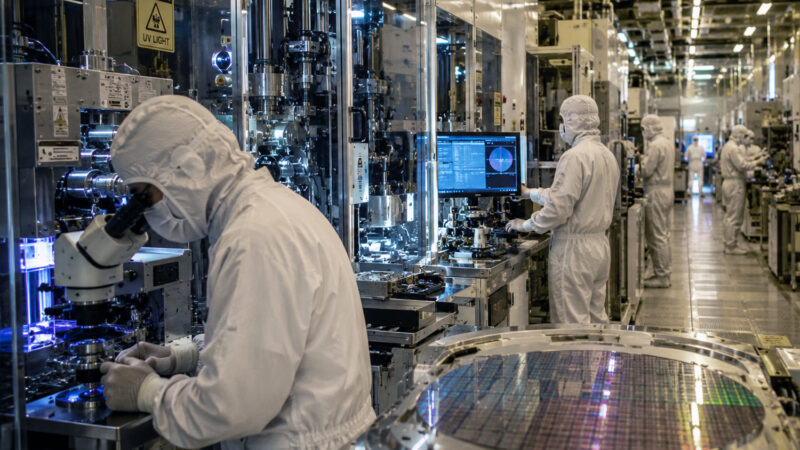
Modern AI systems demand extraordinary computing power. Training advanced large language models and operating cloud-scale AI services require enormous volumes of electricity, cooling systems, semiconductor capacity, and land. As technology companies race to build more infrastructure, constraints are becoming increasingly visible. Energy availability, rather than chip supply alone, is emerging as a strategic bottleneck.
This is the economic backdrop behind growing discussions about orbital data centers. The business question is not simply whether computing in space is technologically possible-it is whether shifting portions of computing infrastructure off Earth could solve emerging economic constraints better than terrestrial alternatives.
At present, the answer is complex: orbital data centers are technically plausible, commercially premature, but strategically significant enough that major players cannot afford to ignore them.
Why Companies Are Exploring Orbital Computing
The strongest argument for orbital data centers begins with energy economics.
Traditional data centers consume immense electricity and generate significant heat. Hyperscale operators such as cloud providers increasingly compete for access to power grids capable of supporting gigawatt-scale facilities. In some markets, electricity access-not financing-has become the limiting factor in expansion.
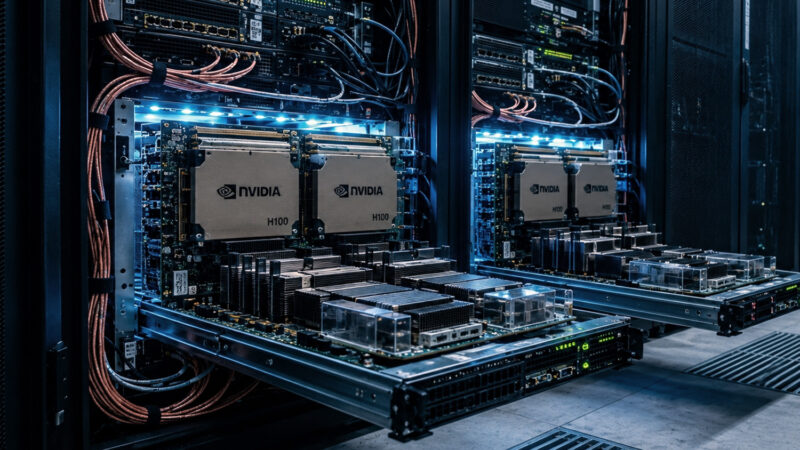
AI intensifies this challenge. Training large AI systems can require clusters containing tens of thousands of graphics processing units (GPUs), consuming energy on a scale historically associated with industrial manufacturing.
Orbital infrastructure appears attractive because space offers near-continuous access to solar energy. Unlike terrestrial renewable systems constrained by weather patterns, nighttime cycles, or land availability, satellites positioned appropriately can receive sunlight almost constantly. In theory, this could create computing infrastructure powered directly by solar energy without competing for local electricity grids.
Land scarcity also matters. Large-scale data centers require enormous physical footprints, cooling systems, water resources, and local permitting. Communities increasingly resist new projects because of environmental concerns, power consumption, and water use. Building in orbit potentially removes some of these geographic conflicts.
There is also a strategic motivation tied to latency and communications. As satellite internet systems expand and global communications increasingly move through space-based infrastructure, some firms see logic in processing data closer to orbital communications networks rather than transmitting everything back to Earth.
Yet these theoretical advantages do not automatically create a viable business model.
The AI-Energy Bottleneck Is Real-But Space May Not Be the Cheapest Fix
The most important structural force behind orbital computing is the collision between AI demand and electricity constraints.
Technology companies are already investing heavily in terrestrial solutions. Major cloud providers are signing long-term renewable energy contracts, expanding nuclear partnerships, building private power infrastructure, and redesigning data centers to improve efficiency.
The reason is straightforward: terrestrial solutions remain dramatically cheaper.
Even though launch costs have declined substantially over the last decade due to reusable rockets, putting computing hardware into orbit remains extraordinarily expensive relative to land-based infrastructure. Servers in orbit must also survive radiation exposure, thermal extremes, and maintenance limitations.
On Earth, replacing failed hardware is relatively simple. In orbit, repairs become expensive logistical operations. Reliability requirements therefore rise significantly, increasing manufacturing costs.
Cooling presents another challenge. While space is cold, dissipating heat in a vacuum is technically difficult because there is no atmosphere for conventional cooling methods. Orbital systems rely heavily on radiative cooling technologies, which remain costly and engineering-intensive.
In practical terms, orbital computing does not currently solve the AI-energy problem at competitive economics. Instead, it represents a hedge against future constraints if terrestrial infrastructure becomes increasingly expensive, politically contested, or energy constrained.
The market is behaving accordingly. Most investment today focuses on experimentation, prototypes, and enabling technologies rather than full-scale commercial deployment.
Launch Economics and Capital Allocation
The strongest argument in favor of orbital data centers is not technological-it is financial trajectory.
Historically, space infrastructure was prohibitively expensive because launch costs dominated economics. Reusable rocket systems have materially changed this calculation. Lower launch prices make entirely new categories of commercial activity conceivable.
However, “conceivable” does not mean profitable.
The capital intensity of orbital computing is immense. Companies would need to finance spacecraft manufacturing, launch services, energy systems, communications infrastructure, redundancy mechanisms, cybersecurity protections, and orbital maintenance capabilities.
Even for cash-rich firms, this creates difficult investment tradeoffs.
Technology companies allocate capital based on expected return and time horizon. Today, terrestrial AI infrastructure offers immediate monetization opportunities through cloud subscriptions, enterprise AI products, and model training services. Orbital computing, by contrast, represents a speculative long-duration investment with uncertain demand.
This creates an incentive mismatch. Public companies generally prioritize investments capable of producing near- or medium-term returns. Unless orbital computing offers major economic advantages, executives face pressure to focus capital elsewhere.
For that reason, near-term investment is more likely to emerge from aerospace firms and government partnerships rather than mainstream hyperscalers acting independently.
Competitive Dynamics: Why Every Industry Has Different Incentives
One reason orbital data centers receive attention is because multiple industries see different opportunities.
Cloud providers view orbital computing primarily through the lens of infrastructure resilience and long-term energy access. They may not need orbital systems immediately, but cannot afford to ignore technologies that could eventually reshape computing economics.
Space companies see a different opportunity entirely. Launch providers face a structural challenge: rockets are capital-intensive businesses requiring sustained demand. Orbital data centers could create recurring launch markets rather than episodic satellite deployments.
Semiconductor firms have mixed incentives. Higher computing demand generally benefits chipmakers regardless of location. However, space-rated semiconductors are more specialized, expensive, and difficult to manufacture, potentially creating premium market segments.
Energy companies also have a stake in the outcome. If terrestrial electricity constraints intensify, orbital computing could emerge as an indirect competitor to grid-scale infrastructure expansion. Yet conventional energy providers currently benefit from booming AI electricity demand.
The competitive question is therefore less about “who wins” immediately and more about which industry becomes strategically dependent on solving AI infrastructure bottlenecks first.
Short-Term Impact: More Narrative Than Market Reality
In the short term, orbital data centers are unlikely to materially disrupt the cloud industry.
Economic fundamentals strongly favor terrestrial facilities for at least the next decade. Existing data center operators continue expanding aggressively, and governments increasingly support infrastructure investments tied to AI competitiveness.
Short-term effects are more likely to appear in capital markets and corporate positioning. Aerospace firms can attract funding by aligning themselves with AI narratives, while cloud companies may quietly fund research programs to avoid future technological disruption.
The nearer-term commercial impact may emerge through hybrid applications rather than full orbital cloud computing. Space-based edge computing for Earth observation, military communications, satellite imaging, and remote sensing already has clearer economic justification.
These niche applications could gradually establish the technical foundation for broader orbital infrastructure.
Long-Term Outlook: A Strategic Hedge Against Terrestrial Constraints
The long-term outlook is more nuanced.
Orbital data centers become economically interesting only if three structural conditions change simultaneously: launch costs fall dramatically, space-based power systems become cheaper, and terrestrial constraints intensify.
If electricity shortages, regulatory barriers, land scarcity, or environmental opposition make Earth-based expansion significantly harder, the cost gap between terrestrial and orbital systems narrows.
Under that scenario, orbital computing shifts from improbable to strategically rational.
The biggest beneficiaries would likely include reusable launch providers, aerospace manufacturers, satellite operators, radiation-resistant chipmakers, and infrastructure firms specializing in orbital energy systems.
Potential losers could include traditional data center real estate businesses and regions currently dependent on hosting hyperscale facilities-though only if adoption reaches meaningful scale.
Importantly, this would not represent replacement but diversification. Computing infrastructure historically expands through layers rather than substitution. Cloud computing did not eliminate local servers entirely; it changed where workloads are processed. Orbital computing would likely function similarly, handling specialized workloads rather than replacing terrestrial facilities wholesale.
Conclusion: A Real Idea Facing Economic Reality
Orbital data centers are neither pure fantasy nor imminent reality. They represent a strategic response to a genuine economic problem: the growing tension between AI-driven computing demand and terrestrial infrastructure limits.
The business logic exists. Unlimited solar exposure, reduced land constraints, and closer integration with orbital networks offer compelling theoretical advantages. Yet the economics remain unfavorable compared with increasingly efficient terrestrial alternatives.
What matters most is not whether space data centers become mainstream in the next few years-they almost certainly will not. The more important question is whether the pressures driving interest in them continue intensifying.
If AI demand keeps rising faster than terrestrial energy systems can adapt, orbital computing may evolve from speculative ambition into an economically rational infrastructure category.
For now, space data centers are best understood not as a near-term market revolution, but as a strategic insurance policy against the possibility that Earth’s computing infrastructure eventually reaches its limits.
Related Analysis:
AI Infrastructure War: Why Compute Power Now Decides the Market