The rise of trillion-dollar corporations represents one of the most important structural shifts in modern capitalism. What began as a rare milestone achieved by a handful of American technology firms has evolved into a broader transformation of global capital markets, industrial concentration, and economic power.
In 2026, the list of companies valued above $1 trillion continues to expand, but the composition of that group reveals something deeper than stock-market enthusiasm. The trillion-dollar threshold has become a marker of strategic control over critical economic infrastructure: artificial intelligence, semiconductors, cloud computing, digital platforms, energy systems, and global consumer ecosystems.
The emergence of South Korean technology giants as trillion-dollar contenders – particularly Samsung Electronics and SK Hynix – further demonstrates that the global economy is entering a new phase in which semiconductor dominance increasingly determines financial power.
The modern trillion-dollar corporation is no longer simply a large business. It is increasingly a system-level economic actor with influence over supply chains, labor markets, geopolitical strategy, and technological development.
The Current Trillion-Dollar Club
As of May 2026, the world’s trillion-dollar companies are concentrated primarily in technology and AI-related sectors.
Major Trillion-Dollar Companies
| Company | Approx. Market Value | Country | Core Industry | Trillion-Dollar Milestone |
|---|---|---|---|---|
| Nvidia | $5.5 trillion | United States | AI chips & computing | 2024 |
| Microsoft | $4+ trillion | United States | Software & cloud computing | 2019 |
| Apple | $3+ trillion | United States | Consumer electronics | 2018 |
| Amazon | $2+ trillion | United States | E-commerce & cloud infrastructure | 2020 |
| Alphabet | $2+ trillion | United States | Internet services & AI | 2020 |
| Meta Platforms | $1.8+ trillion | United States | Social media & AI advertising | 2025 |
| TSMC | $1.8+ trillion | Taiwan | Semiconductor manufacturing | 2025 |
| Broadcom | $1.4+ trillion | United States | Semiconductors & networking | 2025 |
| Saudi Aramco | $1.7+ trillion | Saudi Arabia | Energy & oil production | 2019 |
| Berkshire Hathaway | $1+ trillion | United States | Diversified investments | 2025 |
| Tesla | $1.5+ trillion | United States | Electric vehicles & AI mobility | 2021 |
| Walmart | $1+ trillion | United States | Retail & logistics | 2026 |
| Samsung Electronics | $1+ trillion | South Korea | Semiconductors & electronics | 2026 |
Samsung Electronics became the first South Korean company to surpass the $1 trillion valuation threshold in 2026, driven primarily by the AI-driven semiconductor boom.
Meanwhile, SK Hynix is rapidly approaching the same milestone, with its market capitalization nearing $1 trillion amid surging demand for high-bandwidth memory chips used in AI servers.
Why Trillion-Dollar Companies Are Concentrated in AI and Semiconductors
The concentration of trillion-dollar valuations in AI and semiconductor firms is not accidental. It reflects a structural shift in how economic value is created.
For decades, the world’s largest companies were primarily tied to physical production, finance, or energy extraction. Today, the most valuable corporations increasingly control computational infrastructure.
Artificial intelligence systems require three strategic layers:
- Computing hardware
- Data infrastructure
- Platform ecosystems
The firms dominating these layers now command enormous pricing power and investor confidence.
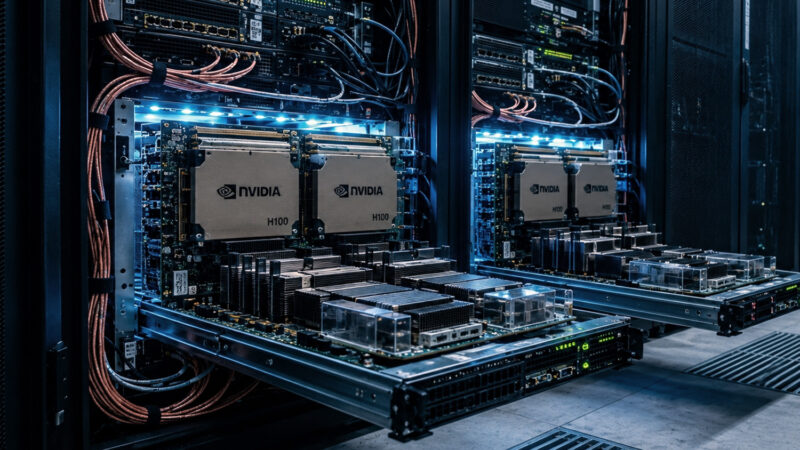
Nvidia’s rise illustrates this transformation most clearly. The company evolved from a graphics-chip manufacturer into the central infrastructure supplier for global AI development. By 2026, Nvidia briefly surpassed a $5.5 trillion market capitalization, becoming the most valuable corporation in history.
This valuation reflects more than enthusiasm for AI. It reflects investor belief that AI infrastructure may become as economically essential as electricity, telecommunications, or oil pipelines were in previous industrial eras.
Similarly, Microsoft’s massive valuation is tied not only to software sales but also to its control over enterprise cloud infrastructure and AI integration through Azure and OpenAI-related services.
In this environment, trillion-dollar valuations increasingly correspond to control over strategic digital infrastructure rather than consumer branding alone.
Samsung and SK Hynix: Why South Korea Matters
The emergence of Samsung Electronics and SK Hynix as trillion-dollar-scale firms reveals another major trend: the geopolitical centrality of memory semiconductors.
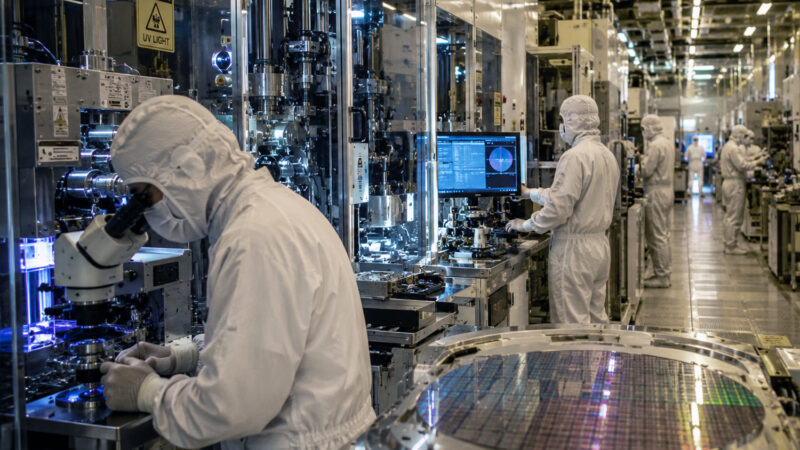
Unlike earlier technology cycles dominated primarily by software platforms, the AI economy depends heavily on hardware production capacity. High-bandwidth memory (HBM), advanced DRAM, and AI server components have become critical bottlenecks in global AI deployment.
Samsung Electronics operates across several strategic sectors simultaneously:
- Memory semiconductors
- Foundry manufacturing
- Consumer electronics
- Advanced packaging technologies
- AI hardware systems
Its valuation surge in 2026 was driven by explosive demand for memory chips used in AI data centers.
SK Hynix, meanwhile, became one of the biggest beneficiaries of the AI infrastructure boom because of its leadership in HBM chips used in Nvidia AI systems. Reuters reported that the company’s market capitalization surged from under $100 billion to more than $940 billion within roughly sixteen months.
This is strategically significant because it signals a redistribution of global financial power toward firms controlling semiconductor bottlenecks.
South Korea’s rise therefore reflects more than stock performance. It demonstrates how semiconductor specialization can elevate entire national economies within the global technology hierarchy.
Why Investors Reward Scale More Than Diversification
Another structural trend visible in trillion-dollar companies is the market’s increasing preference for dominant platforms rather than diversified industrial models.
Historically, conglomerates often traded at lower valuation multiples because complexity reduced investor confidence. Today, however, scale itself is increasingly treated as a strategic advantage.
The reason lies in AI economics.
Artificial intelligence systems improve with larger datasets, greater computational capacity, and stronger ecosystem integration. This creates powerful network effects favoring already dominant firms.
For example:
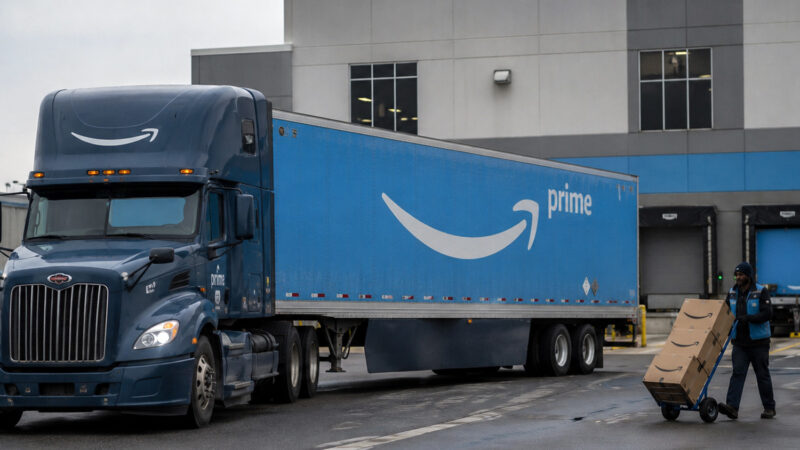
- Amazon benefits from logistics scale and cloud infrastructure
- Meta benefits from global advertising data
- Alphabet benefits from search and AI training datasets
- Microsoft benefits from enterprise software integration
- Nvidia benefits from software-hardware lock-in through CUDA
These companies increasingly function as self-reinforcing ecosystems rather than standalone businesses.
As a result, capital markets now reward firms capable of integrating infrastructure, software, AI systems, and data ownership into unified platforms.
The Strategic Importance of Capital Allocation
One overlooked feature of trillion-dollar companies is their extraordinary ability to finance long-term technological dominance.
Large market capitalization reduces capital costs, allowing firms to invest aggressively in research, acquisitions, semiconductor production, and AI infrastructure.
This creates a feedback loop:
- Market dominance raises valuation
- High valuation lowers financing costs
- Lower financing costs enable larger investment
- Larger investment strengthens dominance
This dynamic explains why trillion-dollar firms continue widening the gap between themselves and smaller competitors.
For example, Samsung Electronics and SK Hynix are investing heavily in advanced memory manufacturing, while Nvidia, Microsoft, and Alphabet are committing hundreds of billions of dollars to AI infrastructure expansion.
The scale of these investments makes it increasingly difficult for smaller firms or emerging competitors to catch up.
Industry and Global Economic Implications
The expansion of trillion-dollar corporations has major consequences for global markets.
1. Increasing Industry Concentration
Economic power is becoming concentrated among a relatively small number of firms controlling critical technological infrastructure.
This concentration affects:
- Pricing power
- Labor markets
- Supply-chain dependency
- Innovation access
- National industrial policy
2. Rising Geopolitical Competition
Governments increasingly view semiconductor firms as strategic national assets.
The United States, China, South Korea, Taiwan, and the European Union are all competing to secure semiconductor production capacity and AI infrastructure leadership.
The trillion-dollar status of firms like TSMC, Samsung, and Nvidia reflects the growing overlap between corporate valuation and geopolitical influence.
3. Transformation of Equity Markets
Stock-market indices are becoming increasingly dependent on a small number of mega-cap technology firms.
This concentration changes market dynamics because pension funds, ETFs, and institutional investors become heavily exposed to the performance of a limited group of companies.
As a result, trillion-dollar firms increasingly influence not only technology sectors but also broader global financial stability.
Long-Term Structural Outlook
The trillion-dollar company era is likely still in its early stages.
The next wave of mega-cap corporations will probably emerge from sectors tied to:
- Artificial intelligence infrastructure
- Semiconductor manufacturing
- Robotics
- Energy transition systems
- Autonomous transportation
- Biotechnology computation
However, future growth may also trigger stronger regulatory scrutiny.
Governments are already examining:
- Antitrust enforcement
- AI governance
- Semiconductor supply-chain security
- Data concentration
- Labor-market displacement from automation
This means trillion-dollar corporations may increasingly operate in environments shaped not only by market competition but also by political negotiation and national-security concerns.
Conclusion
The rise of trillion-dollar corporations reflects a profound transformation in the structure of the global economy.
Modern corporate value is increasingly tied to ownership of computational infrastructure, semiconductor production, AI ecosystems, and large-scale data networks. Companies capable of controlling these systems are achieving unprecedented financial scale.
The emergence of Samsung Electronics and the rapid ascent of SK Hynix demonstrate that semiconductor dominance has become one of the defining strategic advantages of the AI era.
This is not merely a story about stock-market growth. It is a story about how technological infrastructure is redefining global economic power.
The trillion-dollar corporation is becoming the central institutional actor of the digital economy – shaping competition, influencing governments, directing capital flows, and increasingly determining the architecture of the modern global market itself.