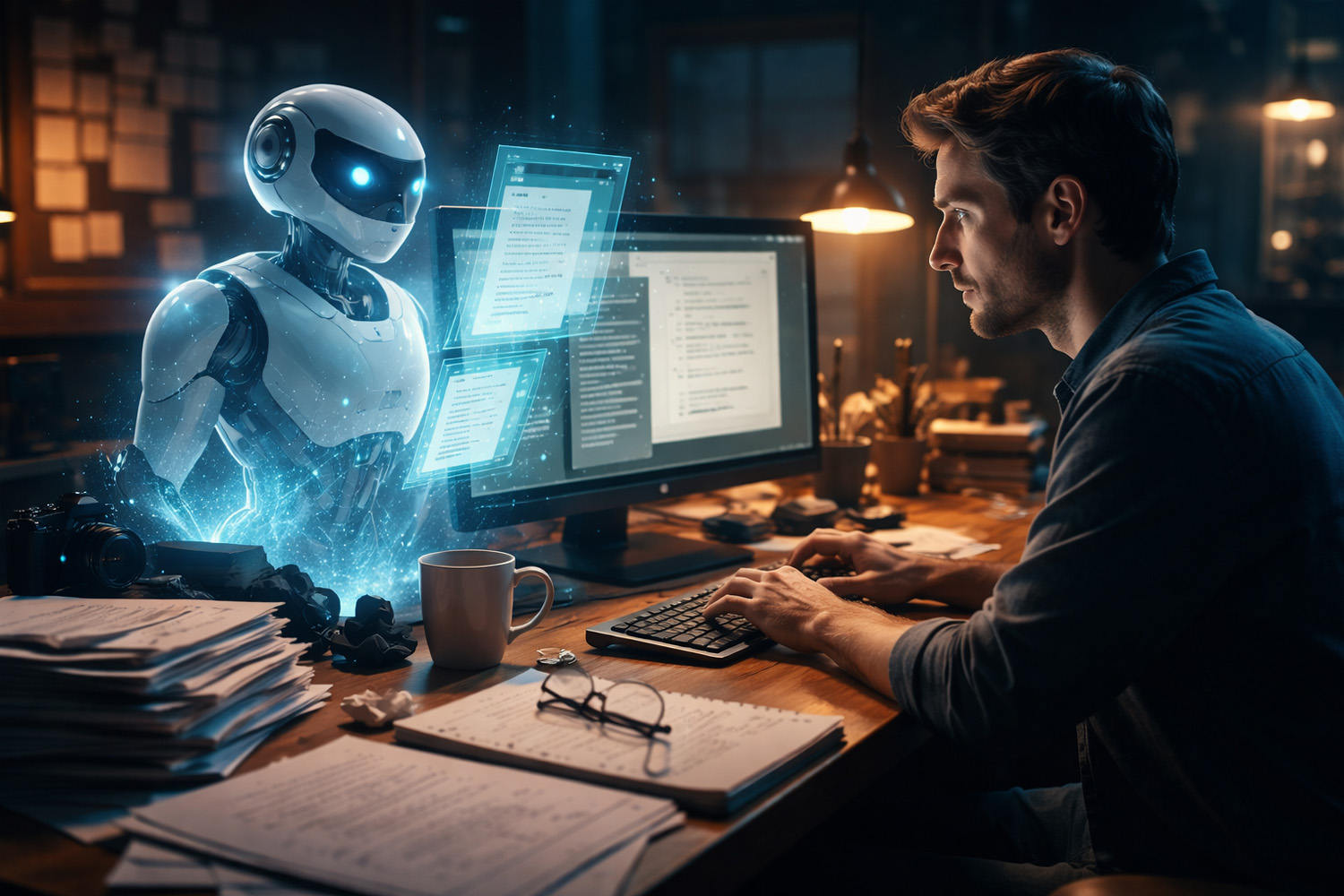
Artificial intelligence is increasingly entering one of Hollywood’s most protected creative spaces: screenwriting. From dialogue generation to plot structuring and script polishing, AI-powered writing tools are becoming part of the development process across film and television.
The rapid rise of generative AI systems – including tools such as ChatGPT and image or text generators like Midjourney – has triggered a broader industry debate. Are these technologies replacing writers, or enhancing their productivity?
In recent years, major studios and independent creators alike have experimented with AI to brainstorm story ideas, analyze script pacing, and optimize dialogue. While AI cannot independently produce a finished, production-ready screenplay that meets professional standards, it is increasingly used as a collaborative drafting tool.
Why It Matters
The debate intensified during the 2023 writers’ strike led by the Writers Guild of America, when the role of AI in creative workflows became a central issue. Writers raised concerns about job security, intellectual property rights, and the ethical use of training data. Studios, meanwhile, emphasized efficiency and cost control.
The resulting labor agreements clarified that AI cannot be credited as a writer and that studios cannot require writers to use AI tools. However, writers may choose to use AI voluntarily if they wish. This framework suggests that AI will remain present-but regulated-within the industry.
Beyond Hollywood, streaming platforms such as Netflix and other global content producers are increasingly relying on data analytics to guide content decisions. AI-assisted writing fits naturally into this data-driven ecosystem.
Threat or Creative Accelerator?
Critics argue that overreliance on AI could homogenize storytelling, producing formulaic scripts optimized for algorithms rather than emotional depth. Supporters counter that AI functions much like previous technological shifts-such as digital editing or CGI-serving as a tool rather than a replacement for human creativity.
At its current stage, AI lacks lived experience, cultural nuance, and emotional intuition-qualities that remain essential for compelling storytelling. However, as an assistant for research, drafting, and structural experimentation, it can reduce development time and help writers overcome creative blocks.
Trend Impact
AI-assisted screenwriting represents a broader transformation across creative industries. The key question is not whether AI will be used, but how it will be governed. Transparent policies, ethical safeguards, and clear authorship standards will shape its long-term impact.
For now, AI appears less a threat to storytelling and more a powerful-if controversial-tool reshaping how stories are developed in the digital age.