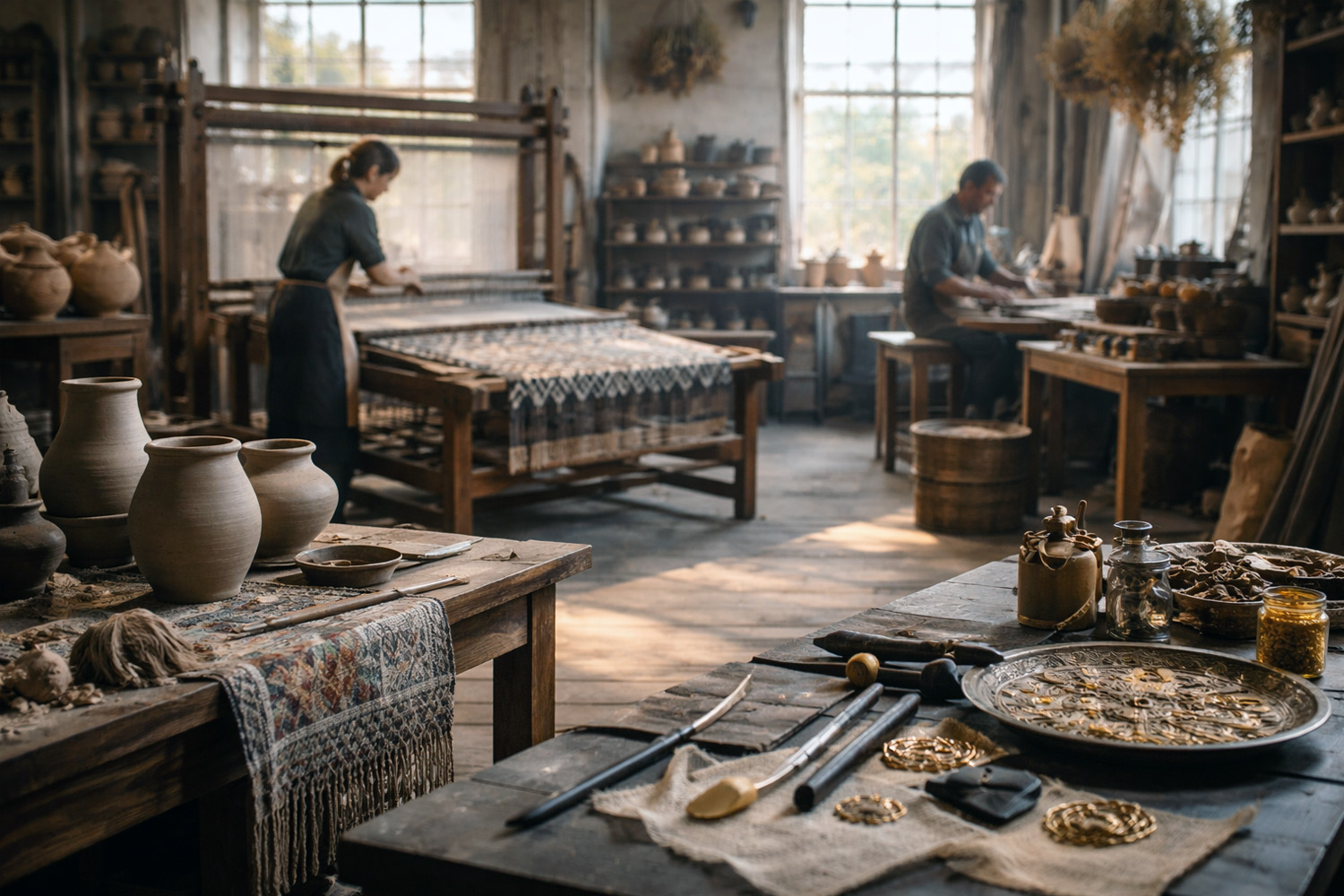
Introduction: The Renewed Role of Craft in Contemporary Design
Traditional craft techniques, once associated primarily with heritage preservation, are increasingly integrated into contemporary design practices. This shift reflects broader changes in consumer values, production models, and artistic priorities. Designers today are not simply preserving historical methods; they are reinterpreting them to address modern demands for sustainability, authenticity, and cultural continuity.
Ancient techniques such as weaving, ceramics, wood carving, and metalwork have persisted across centuries due to their adaptability and material efficiency. In the current design landscape, these methods are being revisited as alternatives to industrial mass production, offering both aesthetic distinctiveness and functional durability.
Drivers of Revival: Sustainability, Identity, and Market Demand
One of the primary drivers behind the resurgence of traditional craft techniques is the growing emphasis on sustainability in design and production. Many historical methods rely on locally sourced, natural materials and low-energy processes.
Key sustainability advantages include:
- Use of renewable or biodegradable materials such as clay, wood, and natural fibers
- Lower energy consumption compared to industrial manufacturing
- Reduced waste through manual, small-scale production
- Longer product lifecycles due to durability and repairability
These characteristics align with contemporary efforts to reduce environmental impact, making traditional crafts relevant in modern sustainable design strategies.
Cultural Identity and Authenticity in Global Markets
Globalization has expanded access to products but has also increased demand for culturally distinctive goods. Traditional craft techniques provide a means of preserving and expressing cultural identity within a globalized design economy.
Designers and brands increasingly incorporate craft elements to:
- Differentiate products in competitive markets
- Communicate cultural narratives and heritage
- Appeal to consumers seeking authenticity and traceability
This trend is evident in the integration of traditional textile techniques, handcrafted ceramics, and artisanal finishes into both luxury and mainstream design sectors.
Contemporary Adaptation: Technology and Design Integration
Rather than replacing traditional methods, modern technology often complements them. Digital tools and advanced manufacturing processes are used to enhance precision, scalability, and accessibility.
Examples of integration include:
- Digital modeling and prototyping combined with hand-finishing techniques
- Use of laser cutting or 3D printing to create components later refined by artisans
- Online platforms enabling global distribution of handcrafted products
This hybrid approach allows designers to maintain the aesthetic and cultural value of craft while meeting contemporary production and market requirements.
Cross-Disciplinary Influence in Art and Design
Traditional craft techniques increasingly intersect with multiple design disciplines, including architecture, fashion, and product design.
Key areas of application include:
- Architecture: incorporation of traditional materials and construction methods into modern structures
- Fashion: reinterpretation of handwoven textiles and embroidery in contemporary collections
- Product design: use of artisanal techniques to create limited-edition or high-value objects
This cross-disciplinary adoption demonstrates the versatility of traditional crafts and their capacity to evolve within different creative contexts.
Supporting Artisan Communities and Local Economies
The renewed interest in traditional crafts has economic implications, particularly for artisan communities. Increased demand for handcrafted products can contribute to local employment and skill preservation.
Positive impacts include:
- Creation of income opportunities in rural and culturally significant regions
- Preservation of specialized skills that might otherwise decline
- Strengthening of local supply chains based on traditional knowledge
However, the sustainability of these benefits depends on fair compensation, ethical sourcing practices, and long-term market stability.
Challenges of Scaling and Standardization
Despite their advantages, traditional craft techniques face structural challenges when integrated into modern production systems.
Key limitations include:
- Limited scalability due to labor-intensive processes
- Variability in output, which may conflict with industrial standardization
- Dependence on skilled labor, which can be difficult to maintain across generations
These challenges require careful management to ensure that the integration of craft into modern design does not compromise its authenticity or viability.
Craft as a Dynamic Component of Modern Design
The reimagining of traditional craft techniques reflects a broader transformation in the relationship between design, production, and cultural heritage. Rather than existing in opposition to modern technology, craft is increasingly integrated into contemporary systems as a complementary approach.
This evolution highlights several key trends:
- A shift toward sustainable and responsible production methods
- Growing recognition of cultural identity in design
- The emergence of hybrid models combining tradition and innovation
As global design continues to evolve, traditional crafts are likely to remain a dynamic and influential component. Their adaptability ensures that they are not only preserved but also continuously redefined, contributing to a more diverse and resilient design landscape.