The Mystery of Ball Lightning: What We Know So Far
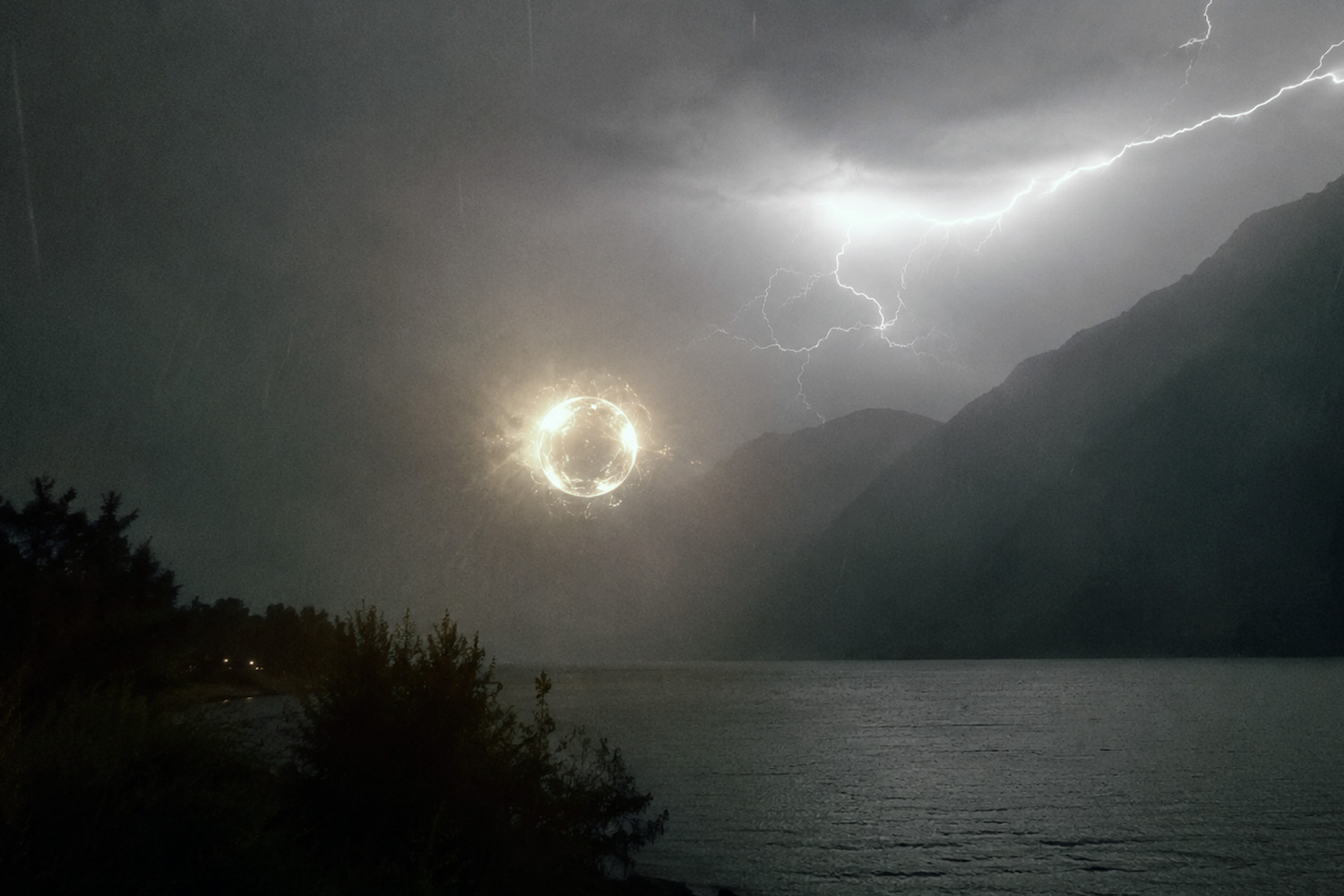
For centuries, reports of glowing spheres drifting through the air during thunderstorms were dismissed as folklore, optical illusions, or misinterpretations of ordinary lightning strikes. Yet accounts of these luminous objects-commonly known as ball lightning-have persisted across cultures, historical periods, and geographical regions. Pilots, sailors, scientists, and ordinary observers have all described remarkably similar phenomena: glowing spheres ranging from a few centimeters to several meters in diameter, floating silently or moving unpredictably before disappearing or exploding.
Despite advances in atmospheric science, ball lightning remains one of the least understood natural phenomena ever documented. Unlike conventional lightning, which is relatively well explained through electrical discharge processes, ball lightning occupies an unusual space between eyewitness observation and scientific uncertainty. The challenge is not merely understanding how it forms, but determining whether multiple mechanisms may produce similar visual effects.
The study of ball lightning represents a broader challenge within environmental science: understanding rare atmospheric events that occur at the intersection of weather systems, energy transfer, and complex physical processes. As observational technologies improve and climate systems continue to change, researchers are gaining new insights into a phenomenon that has remained elusive for generations.
Ball Lightning in Scientific Context
Ball lightning is generally described as a luminous spherical object associated with thunderstorms and electrical activity. Reports typically characterize the phenomenon as lasting significantly longer than conventional lightning flashes-often several seconds and occasionally much longer.
Witnesses frequently describe glowing balls that move independently of prevailing winds, pass through open windows, travel along surfaces, or hover in place before fading away. Colors vary from white and yellow to orange, blue, or red. Some observations include sounds such as hissing or buzzing, while others report complete silence.
The scientific challenge begins with the rarity and unpredictability of these events. Unlike ordinary lightning, which can be studied through extensive field measurements and remote sensing networks, ball lightning occurs infrequently and often without instrumentation present. Historically, the lack of direct measurements led many scientists to question whether the phenomenon existed at all.
However, accumulating evidence over the past several decades has shifted scientific opinion. Thousands of consistent eyewitness reports, photographic records, and a small number of instrumented observations suggest that ball lightning is a genuine atmospheric phenomenon worthy of investigation.
The turning point came as atmospheric researchers began documenting cases that could not easily be explained by visual illusions or conventional lightning behavior. While no universally accepted model exists, the scientific community now largely accepts that unusual luminous atmospheric events occur and require explanation.
Competing Scientific Theories
The absence of a definitive explanation has led to numerous scientific hypotheses. Importantly, researchers increasingly suspect that “ball lightning” may not represent a single phenomenon but rather several different processes producing similar appearances.
One of the leading theories involves plasma formation. Plasma-the fourth state of matter-consists of ionized gas capable of conducting electricity. Since lightning itself generates plasma channels with temperatures exceeding tens of thousands of degrees Celsius, some researchers propose that ball lightning forms when energy becomes temporarily trapped within a stable plasma structure.
The difficulty with this explanation lies in energy retention. Ordinary plasma cools rapidly. Ball lightning, however, appears capable of maintaining luminosity for seconds, requiring mechanisms that continuously sustain or replenish energy.
Another influential theory focuses on vaporized materials. When lightning strikes soil, rocks, or man-made surfaces, it can vaporize silicon-rich materials. Some laboratory experiments suggest that nanoparticles produced during these events may oxidize gradually, releasing energy and creating glowing spherical structures resembling reported ball lightning.
Electromagnetic theories propose that microwave radiation generated during lightning strikes becomes confined within self-organizing structures. In this scenario, trapped electromagnetic energy could sustain a luminous sphere for a limited period.
More recent computational models have explored complex interactions between atmospheric electricity, magnetic fields, aerosols, and plasma dynamics. These approaches reflect a broader trend in environmental science: recognizing that many natural phenomena emerge from interactions among multiple systems rather than single isolated mechanisms.
The current consensus is not that one theory has won, but that multiple pathways may produce ball-lightning-like events under different environmental conditions.
Atmospheric Conditions and Environmental Drivers
Ball lightning appears most frequently in association with thunderstorms, indicating a strong relationship with atmospheric electrical processes.
Thunderstorms are among the atmosphere’s most powerful energy-transfer systems. Within storm clouds, collisions between ice crystals, water droplets, and graupel particles generate charge separation. This process creates enormous electrical potential differences that eventually discharge as lightning.
Ball lightning may represent a secondary consequence of these energy releases. If so, understanding its occurrence requires examining the broader environmental conditions that influence storm behavior.
Several atmospheric factors appear relevant:
- Strong electrical fields
- High humidity levels
- Intense lightning activity
- Complex terrain interactions
- Conductive surfaces
- Aerosol concentrations
These variables illustrate the interconnected nature of atmospheric systems. Weather phenomena rarely arise from a single cause; instead, they emerge from dynamic interactions involving temperature, moisture, pressure, particle concentrations, and energy flows.
Environmental scientists increasingly use systems-based approaches to study such phenomena. Rather than searching for a single trigger, researchers investigate networks of conditions that collectively increase the probability of rare events.
This perspective aligns with modern understanding of Earth’s atmosphere as a complex adaptive system in which small variations can produce disproportionately large outcomes under certain circumstances.
Climate Trends and Potential Implications
An important question is whether climate change could influence the occurrence of ball lightning.
At present, there is insufficient evidence to establish a direct connection. Ball lightning remains too poorly documented for reliable trend analysis. Nevertheless, broader changes in atmospheric behavior may indirectly affect the conditions under which such phenomena occur.
Climate models indicate that a warmer atmosphere can hold more moisture, potentially increasing the intensity of convective storms in many regions. Numerous studies suggest that some areas may experience more energetic thunderstorms, stronger rainfall events, and greater atmospheric instability.
Because ball lightning appears linked to electrical storm activity, changes in thunderstorm characteristics could theoretically alter opportunities for its formation. However, this remains speculative and unsupported by direct observational evidence.
What is scientifically defensible is that climate-driven changes in atmospheric dynamics are affecting the frequency, intensity, and distribution of many weather phenomena. As monitoring technologies improve, researchers may gain better opportunities to observe rare atmospheric events that previously went undocumented.
The broader lesson is that environmental change often reveals gaps in scientific understanding. Phenomena once considered curiosities may become important subjects of investigation as observational networks expand and atmospheric behavior evolves.
Human Activity and Research Challenges
Human influence on atmospheric systems introduces another layer of complexity.
Urban environments modify local weather through heat-island effects, altered airflow patterns, and increased aerosol concentrations. Industrial activities release particles that can affect cloud formation and atmospheric electrical properties. Modern infrastructure also creates dense networks of conductive surfaces that interact with lightning.
Whether these factors influence ball lightning remains uncertain. However, they illustrate how human activities increasingly shape atmospheric processes.
The challenge for researchers is distinguishing genuine environmental effects from observational bias. Modern societies possess far more cameras, sensors, and communication systems than previous generations. Consequently, increased reports of unusual atmospheric events may reflect better documentation rather than actual increases in occurrence.
Advances in technology are helping address this problem. High-speed imaging systems, lightning-mapping networks, satellite observations, and automated weather stations provide unprecedented opportunities to capture rare events objectively.
Artificial intelligence is also becoming an important research tool. Machine-learning systems can analyze massive datasets from weather networks and identify unusual patterns that might otherwise go unnoticed. Such approaches may eventually help determine whether specific atmospheric signatures precede ball lightning events.
This technological evolution reflects a broader transformation in environmental science, where increasingly sophisticated observational systems are replacing reliance on anecdotal reports.
Policy and Scientific Response
Unlike many environmental issues, ball lightning does not currently drive major policy initiatives. However, its study contributes to larger goals involving atmospheric monitoring, weather prediction, and public safety.
Governments and research institutions worldwide continue investing in lightning detection systems, storm forecasting capabilities, and atmospheric observation networks. These efforts primarily address severe weather risks, but they also create opportunities to study rare phenomena.
International collaboration is particularly important. Ball lightning reports emerge from diverse climates and geographical regions, suggesting that comprehensive understanding requires globally coordinated research efforts.
The phenomenon also highlights the importance of funding basic scientific research. Many breakthroughs arise not from immediately practical questions but from attempts to understand unusual observations that challenge existing theories.
Historically, scientific progress has often depended on investigating anomalies rather than ignoring them. Ball lightning represents exactly such a case.
Long-Term Outlook
The mystery of ball lightning remains unresolved, but the gap between anecdote and scientific understanding is narrowing.
Most researchers now agree that unusual luminous atmospheric spheres exist and that conventional explanations cannot account for all documented observations. The remaining challenge is determining the physical mechanisms involved and whether multiple processes are responsible.
Future progress will likely depend on advances in observational technology, atmospheric modeling, and interdisciplinary research combining meteorology, plasma physics, materials science, and environmental systems analysis.
From an environmental perspective, ball lightning serves as a reminder that Earth’s atmosphere remains only partially understood. Despite centuries of scientific advancement, complex interactions among energy, matter, and weather continue to produce phenomena that challenge existing knowledge.
Rather than representing a failure of science, this uncertainty demonstrates one of science’s greatest strengths: the willingness to revise theories as evidence accumulates. Ball lightning remains mysterious not because it is beyond explanation, but because the atmosphere is an extraordinarily complex system whose rarest behaviors are often the most difficult to capture and understand.
As monitoring networks expand and analytical tools become more sophisticated, the coming decades may finally provide answers to one of nature’s most enduring atmospheric puzzles. Until then, ball lightning remains a compelling example of how much there is still to learn about the dynamic environment surrounding our planet.