Ocean-Dissolving Plastics: A Scientific Breakthrough or Partial Fix?
The Scale of Ocean Plastic Pollution and Its Ecological Consequences
Plastic pollution remains one of the most persistent environmental challenges facing marine ecosystems. Each year, vast quantities of plastic waste enter the world’s oceans, accumulating in coastal zones, open waters, and seabeds. Unlike organic materials, conventional plastics degrade extremely slowly, fragmenting into microplastics that persist for decades or longer.
The environmental consequences are well-documented:
- Marine wildlife ingestion: Fish, seabirds, and mammals frequently ingest plastic particles, mistaking them for food. This can lead to internal injuries, starvation, or toxic exposure.
- Habitat disruption: Coral reefs, mangroves, and seabed ecosystems are physically damaged by plastic debris accumulation.
- Chemical contamination: Plastics can absorb and transport harmful pollutants, introducing them into marine food chains.
- Microplastic proliferation: Fragmentation creates microscopic particles that are now found across nearly all ocean layers, from surface waters to deep-sea sediments.
Traditional mitigation strategies-such as recycling, waste management improvements, and cleanup initiatives-have proven insufficient to fully address the scale of the problem. As a result, scientific attention has increasingly shifted toward material innovation as a complementary solution.
The Japanese Innovation: Materials That Dissolve in Salt Water
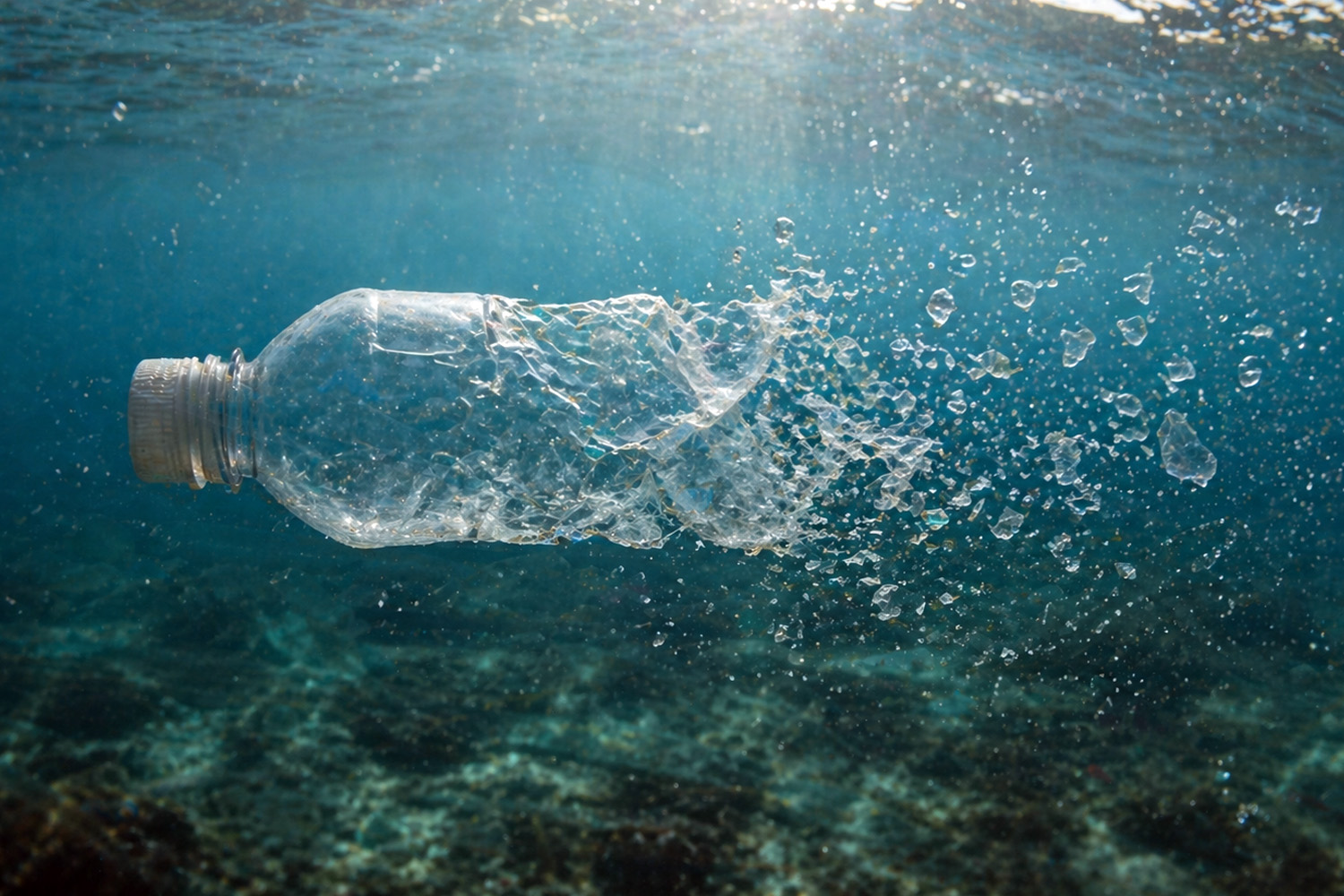
Recent research from Japan has introduced a new class of plastic-like materials designed to address one of the core limitations of conventional plastics: persistence in marine environments. These materials are engineered to dissolve rapidly in salt water, reportedly breaking down within a matter of hours under controlled conditions.
Core Characteristics of the Material
The innovation lies not merely in biodegradability, but in targeted environmental responsiveness:
- Saltwater-triggered dissolution: The material remains stable under normal usage conditions but begins to break down when exposed to saline environments.
- Rapid degradation timeline: Laboratory observations indicate dissolution within approximately two to three hours in seawater conditions.
- Non-toxic byproducts: The material decomposes into compounds considered environmentally benign, avoiding the formation of harmful microplastics.
- Structural usability: Despite its dissolvable nature, the material is designed to maintain sufficient durability for practical applications, such as packaging.
This approach differs fundamentally from conventional biodegradable plastics, which often require specific conditions-such as industrial composting facilities-to degrade effectively. In many cases, those plastics still persist in marine environments due to the absence of required microbial or thermal conditions.
Scientific Mechanism Behind Dissolution
The material’s behavior is based on chemical bonds that are stable in freshwater or dry environments but become unstable in the presence of salt ions. When exposed to seawater:
- Ionic interactions disrupt the polymer structure.
- The material breaks into smaller molecular components.
- These components dissolve rather than fragment into persistent particles.
This distinction is critical. Traditional plastics typically undergo physical fragmentation, while this new material undergoes chemical dissolution, reducing the likelihood of microplastic formation.
Evaluating Environmental Impact: Potential and Limitations
While the innovation represents a significant advancement, its real-world environmental impact depends on multiple factors beyond laboratory performance.
Potential Benefits
If successfully scaled and adopted, ocean-dissolving plastics could address several key issues:
- Reduction of persistent marine debris: Materials that dissolve quickly would not accumulate in ocean gyres or coastal ecosystems.
- Elimination of microplastic formation: By avoiding fragmentation, the material could reduce one of the most harmful aspects of plastic pollution.
- Improved lifecycle outcomes: Even if waste management systems fail, the environmental consequences of leakage into oceans would be significantly mitigated.
These advantages align with broader environmental goals focused on pollution prevention rather than post-hoc cleanup.
Key Limitations and Challenges
Despite its promise, several constraints must be considered:
1. Limited Scope of Application
Not all plastic products are suitable for rapid dissolution. For example:
- Long-term-use items (e.g., construction materials, electronics) require durability that contradicts dissolvable properties.
- Packaging applications may be more viable, but even here, moisture exposure during transport must be carefully managed.
2. Environmental Specificity
The material is designed to dissolve in salt water, which raises questions about:
- Performance in freshwater systems such as rivers and lakes.
- Behavior in varying salinity conditions, including estuaries.
3. Production and Cost Factors
New materials often face barriers related to:
- Manufacturing scalability
- Cost competitiveness with conventional plastics
- Supply chain integration
Without economic feasibility, adoption may remain limited to niche applications.
4. Waste System Integration
Even with improved materials, systemic issues remain:
- Inadequate waste management infrastructure in many regions
- High global plastic consumption rates
- Limited recycling adoption
Material innovation alone cannot resolve these structural challenges.
Broader Implications for Industry and Marine Conservation
The development of ocean-dissolving plastics reflects a broader shift in how environmental problems are approached. Rather than relying solely on behavioral change or policy enforcement, there is increasing emphasis on designing materials that inherently reduce harm.
Implications for Industry
Industries most likely to be affected include:
- Packaging: Short-use plastic packaging represents a major source of ocean pollution and could benefit significantly from dissolvable alternatives.
- Consumer goods: Items with high leakage rates into the environment may be redesigned using such materials.
- Shipping and logistics: Marine transport sectors may adopt dissolvable materials to reduce accidental pollution.
However, widespread adoption will depend on regulatory frameworks, consumer acceptance, and economic incentives.
Implications for Marine Ecosystems
If implemented effectively, the innovation could contribute to:
- Lower accumulation of visible marine debris
- Reduced ingestion risks for marine species
- Decreased microplastic concentrations over time
That said, these outcomes would likely emerge gradually and only in combination with other interventions, including waste reduction and improved collection systems.
Conclusion: A Promising Tool Within a Larger Systemic Solution
The development of saltwater-dissolving plastics represents a meaningful step forward in addressing marine pollution. By focusing on the material properties that determine environmental persistence, researchers have introduced a solution that directly targets one of the most damaging aspects of plastic waste.
However, its impact should be understood within a broader context. Ocean pollution is not solely a materials problem-it is also a function of consumption patterns, waste management infrastructure, and global economic systems. As such, no single innovation can fully resolve the issue.
Instead, ocean-dissolving plastics should be viewed as part of a multi-layered strategy, complementing:
- Reduction in plastic production and use
- Expansion of recycling systems
- Policy measures targeting waste leakage
- Public awareness and behavioral change
If these elements evolve in parallel, innovations like this Japanese-developed material could play a significant role in reducing the long-term environmental burden of plastic pollution-particularly in marine ecosystems where persistence has historically been the defining challenge.
Related Analysis:
Recent Deep Sea Discoveries: Unique Creatures And Life Forms