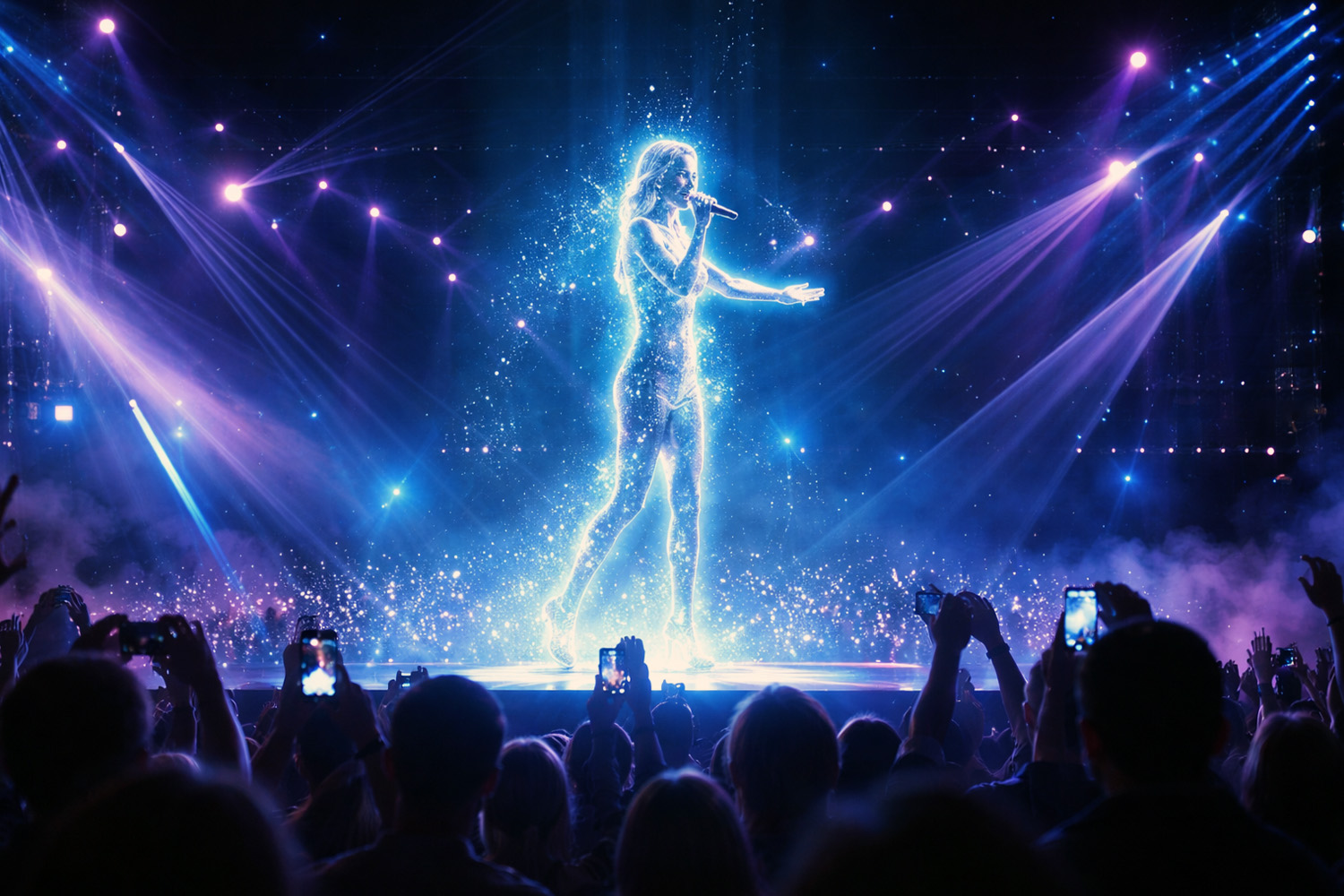
The live entertainment landscape is evolving rapidly as hologram technology moves from novelty to mainstream use in concerts, events and interactive experiences. What once seemed like futuristic spectacle is now reshaping how audiences experience performances – from virtual pop stars to elevated hybrid shows.
At its core, hologram performances rely on advanced projection systems and visual illusions that create three-dimensional figures on stage. Early examples include iconic digital appearances – such as the hologram of Tupac Shakur at Coachella in 2012 – which helped spark interest in blending real and virtual entertainment. Today, modern hologram events use techniques that can make performers appear to float or move realistically before a live audience.
Why It Matters
Hologram technology matters because it expands the possibilities of live performance beyond physical limitations. For artists who are unavailable due to scheduling, health, or even those who have passed away, holograms offer a way to preserve and present their legacy. Recent tours and shows have spotlighted this trend: hologram concerts have drawn crowds to see beloved performers brought “back to life,” proving the commercial and emotional potential of the medium.
In addition to musical performances, holograms are being used for keynotes, corporate events and product showcases, enabling speakers or hosts to “appear” in multiple locations at once. This can save travel time, reduce costs, and create shared moments across global audiences without physical presence.
Trend Impact
The trajectory of hologram technology suggests a hybrid future of live and digital experiences. As AI, motion capture, and volumetric displays improve, we may soon see systems that generate holographic performers in real time, responding dynamically to audiences.
However, skeptics point out that hologram concerts can lack the spontaneity and emotional connection of traditional live shows, because performers aren’t physically interacting with the crowd. Still, many fans embrace them as a new chapter in entertainment, especially when artists tour digitally across continents or when holograms deliver interactive elements that weren’t possible before.
Beyond entertainment, this technology is influencing education, corporate communication, and virtual collaboration – hinting that holograms could become a common feature in various aspects of live, hybrid and immersive experiences.
As costs fall and creative tools become more accessible, hologram performances are likely to proliferate in 2026 and beyond, offering audiences fresh ways to connect with culture, memory and innovation.