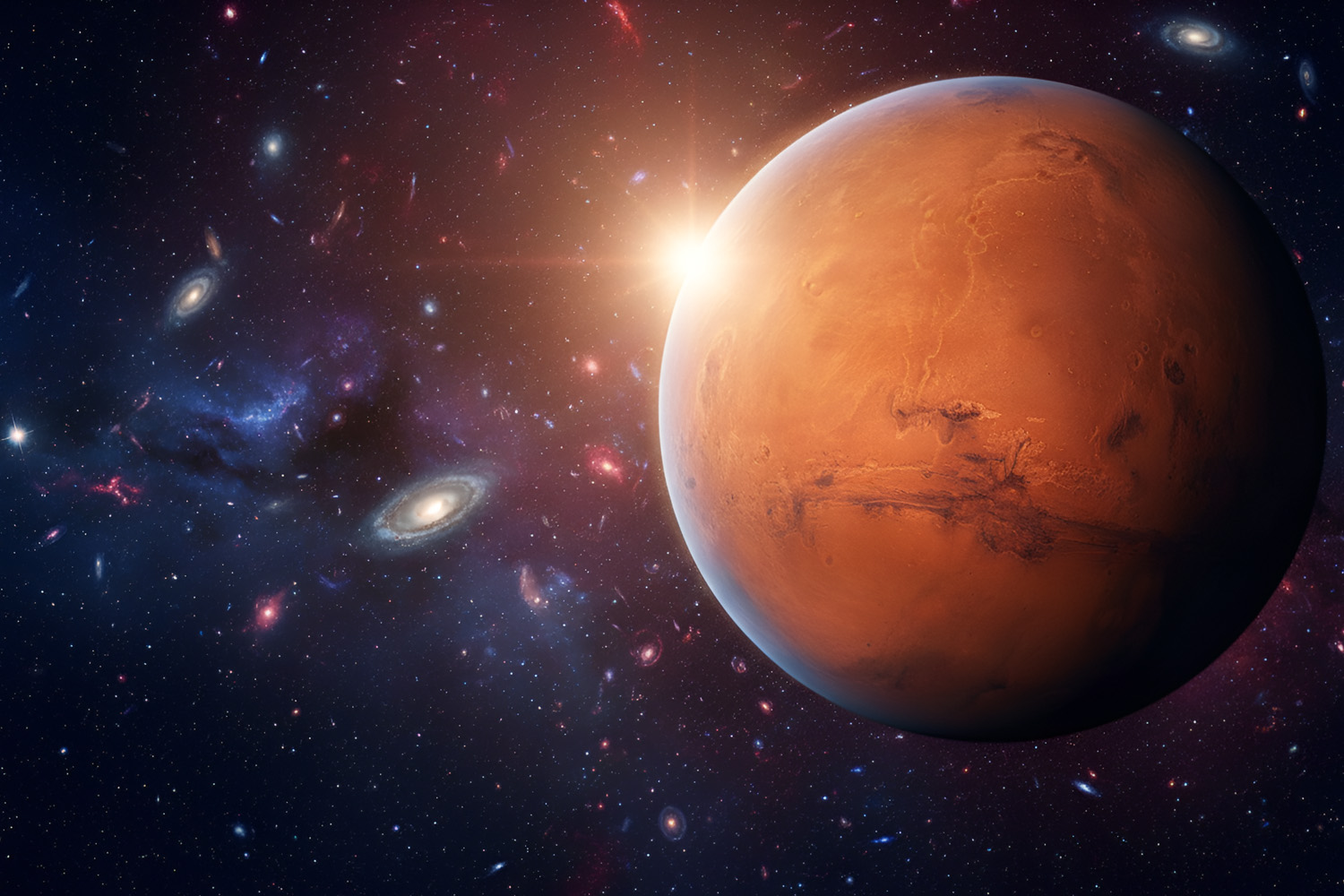
In 2025, space agencies and commercial partners continued an unprecedented wave of missions aimed at deepening human knowledge of the Moon and Mars, laying scientific groundwork and testing technologies for future exploration. These missions include lunar landings, orbiters, scientific payloads and preparations for crewed flights beyond low Earth orbit. Below is an overview of the most significant missions underway or planned as part of this renewed era of space exploration.
Moon Missions Advancing Science and Infrastructure
Intuitive Machines IM-2 – Lunar Landing Mission
One of the headline lunar missions of 2025 was IM-2 (Athena), part of NASA’s Commercial Lunar Payload Services (CLPS) program. Launched on February 27, 2025 aboard a SpaceX Falcon 9, Athena touched down near Mons Mouton on the Moon’s surface on March 6, 2025. The spacecraft carried scientific payloads designed to search for water ice and investigate volatiles in permanently shadowed regions. Although the lander encountered orientation and power challenges shortly after landing, the mission contributed valuable data for future lunar operations.
Blue Ghost Moonlander (Firefly Aerospace)
Earlier in the year, Firefly Aerospace’s Blue Ghost Mission 1 successfully landed on the Moon’s Mare Crisium on March 2, 2025, as part of the CLPS initiative. The mission delivered a suite of NASA-sponsored scientific investigations and commercial payloads to study lunar dust, electromagnetic fields and navigation signals.
Lunar Trailblazer and Resilience
Flying alongside IM-2, NASA’s Lunar Trailblazer orbiter joined science efforts to examine lunar water and surface conditions, while ispace’s Resilience lander aimed to deliver commercial payloads and regolith samples – highlighting cooperative efforts between national space agencies and private partners.
Artemis Program and Orion Preparations
Although the first crewed Artemis return to the Moon is scheduled for early 2026 with Artemis II, 2025 saw significant progress in spacecraft development and testing. NASA and Lockheed Martin completed assembly and testing of the Orion spacecraft for the mission, which will carry four astronauts around the Moon on a 10-day deep-space flight. This crucial test flight will pave the way for Artemis III, planned to land humans near the lunar South Pole later in the decade.
Blue Moon Pathfinder Mission (Upcoming)
Looking ahead, Blue Origin is preparing the Blue Moon Pathfinder Mission 1, a robotic lunar lander test flight targeted for early 2026. This mission will further support NASA payload delivery and technology demonstrations as part of the evolving lunar ecosystem.
Mars Exploration Missions and Observations
Ongoing Orbital and Surface Science
While no new Mars landers launched in 2025, a fleet of active Mars missions continues to operate, providing critical scientific data and preparatory insights for future missions. Among these:
- Mars Reconnaissance Orbiter (MRO) marked a major milestone in late 2025 by capturing its 100,000th image of the Martian surface, contributing to studies of geology, ice and potential landing sites for future missions.
Current Mars assets include orbiters and rovers from NASA, ESA, China’s CNSA and the UAE, offering a sustained presence at the Red Planet and enabling studies of atmosphere, surface conditions, and climate.
Blue Origin’s ESCAPADE Orbiters to Mars
In November 2025, Blue Origin’s New Glenn rocket successfully launched the twin Escapade orbiters – a NASA mission designed to reach Mars in 2027. Once in Martian orbit, these spacecraft will investigate the planet’s upper atmosphere and magnetic fields, enhancing understanding of atmospheric loss and environmental conditions that will inform future crewed missions.
Future Sample-Return and Exploration Planning
Looking beyond 2025, global agencies are developing missions such as China’s Tianwen-3, a planned Mars sample-return mission targeting launch in 2028. This mission will send an orbiter and a lander/ascent vehicle to collect and return Martian soil and rock samples to Earth for detailed analysis – a key scientific objective for understanding past life potential on Mars.
Additionally, international collaboration on Mars sample return architecture and future human missions is ongoing, with NASA and ESA working toward designs that could enable return of the first Martian rocks and inform long-duration crewed exploration.
Significance and the Future of Deep Space Exploration
The rapid pace of lunar and Martian mission activity in 2025 reflects a broader shift toward sustained exploration, scientific discovery and international cooperation. The cumulative efforts in robotic landings, orbital science, and preparatory work for crewed missions are part of a stepped strategy: the Moon serves as a proving ground for technologies and operations that will eventually support human missions to Mars and beyond.
As the decade progresses, these missions are expected to yield new discoveries about water sources, planetary history, atmospheric processes and preparation for long-duration human presence on other worlds – advancing humanity’s frontier in space exploration.