Robotics Is Entering a New Technological Phase
For decades, robotics in industry and medicine followed a relatively predictable trajectory. Industrial robots specialized in repetitive manufacturing tasks, while medical robots focused on precision assistance in operating rooms. That era is changing.
The current transformation in robotics is not primarily about stronger machines or more automation. It is about intelligence architecture. Advances in artificial intelligence, simulation systems, machine perception, sensors, and edge computing are shifting robotics from fixed programming toward adaptable behavior. This distinction matters because traditional robots succeeded only in controlled environments. Emerging systems are increasingly designed to operate under uncertainty.
What makes this shift significant is that robotics is gradually becoming a software problem as much as a mechanical one. Hardware still matters, but competitive advantage increasingly depends on perception models, decision systems, and integration into digital infrastructure. The important story is no longer whether robots exist-it is how robotics is evolving into a distributed computational system.
This evolution is occurring at a moment when industries face labor shortages, demographic pressures, rising productivity demands, and growing expectations for medical precision. These structural conditions help explain why robotics development is accelerating now rather than a decade earlier.
Factories Are Moving Beyond Traditional Automation
Most people associate industrial robotics with robotic arms assembling cars on production lines. While these systems remain essential, the latest advances are happening in areas that receive less public attention.
One of the most important developments is autonomous mobile manipulation. Traditional robots generally remain fixed in one position and perform highly repetitive motions. New robotic systems combine mobility with object interaction, allowing machines to navigate warehouses or production floors while identifying, picking, and transporting irregular items.
This capability depends on advances in multimodal sensing-combining cameras, force feedback, environmental mapping, and real-time object recognition. A robot no longer merely follows coordinates; it increasingly interprets surroundings dynamically.
The reason this matters is economic flexibility. Modern supply chains increasingly demand rapid reconfiguration, customized production, and shorter manufacturing cycles. Fixed robotic systems struggle under these conditions because they require expensive redesign and programming whenever production changes.
Factories are therefore shifting toward software-defined automation, where robots operate more like modular computing systems than isolated machines. Increasingly, robotic fleets communicate with industrial software platforms, predictive maintenance systems, and digital twins-virtual simulations of real environments that help optimize factory performance before changes occur physically.
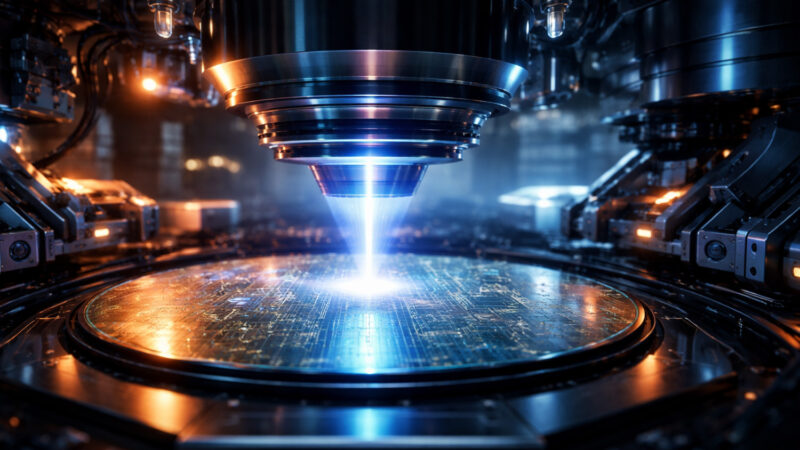
Yet one of the most discussed trends-so-called “dark factories,” or facilities capable of operating with minimal human presence-remains more limited than headlines suggest. Fully autonomous manufacturing environments work best in highly predictable settings such as semiconductor production or tightly standardized assembly.
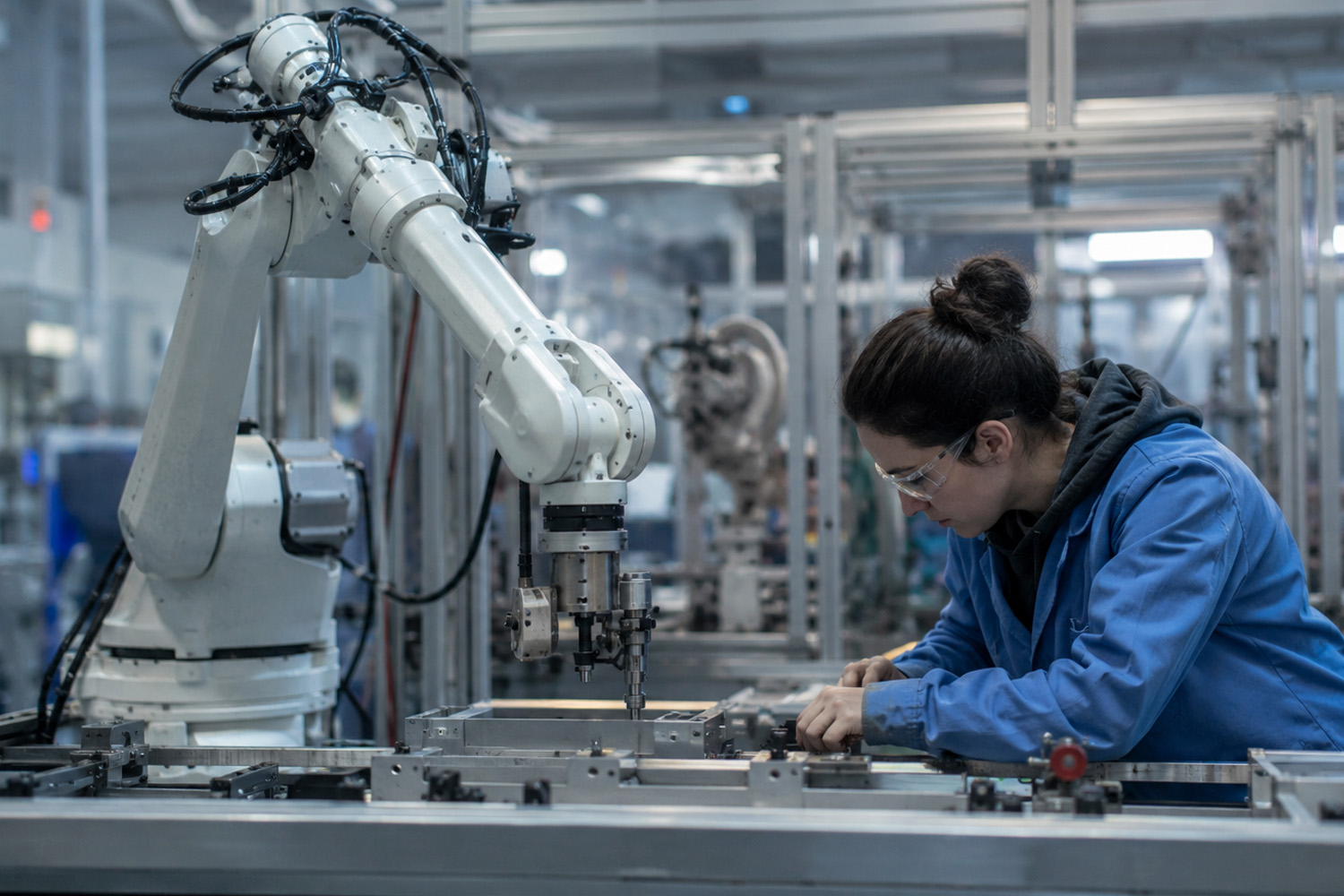
The engineering barrier is variability. Unexpected disruptions, changing materials, and unpredictable environmental conditions remain difficult for robots to handle reliably. This explains why collaborative robotics, or cobots, continues expanding faster than fully autonomous factories. Rather than replacing workers entirely, cobots augment human adaptability.
The Rise of Physical AI and General-Purpose Robotics
Perhaps the most consequential change in robotics is the emergence of what researchers increasingly describe as physical AI.
Historically, robots were programmed for narrow tasks. A warehouse robot stacked boxes. A surgical system assisted in a procedure. Flexibility was limited because behavior had to be explicitly defined.
The latest shift involves applying foundation-model approaches-similar to those used in language AI-to physical systems. Instead of programming every motion individually, robotic systems increasingly learn generalized behaviors through large-scale training environments and simulations.
This transition helps explain growing interest in humanoid robots. Public discussion often exaggerates their readiness, but the technological significance is real. Humanoid form factors are attractive not because they resemble humans, but because human infrastructure already exists. Warehouses, hospitals, factories, and logistics systems are designed around human movement.
A robot capable of climbing stairs, opening doors, or using existing tools may reduce infrastructure redesign costs.
However, the dominant challenge remains reliability. Unlike language systems that tolerate occasional mistakes, robotics exists in physical environments where errors can damage equipment or injure people. This makes deployment far slower than in software-only AI.
One increasingly important development addressing this challenge is simulation-based training, often called “sim-to-real” learning. Instead of training robots entirely in physical environments-which is expensive and slow-developers train robotic behaviors inside digital simulations before transferring them to real-world systems.
This dramatically reduces development costs while improving scalability. The long-term implication is that robotics increasingly resembles cloud software development, where virtual environments accelerate iteration before deployment.
Medical Robotics Is Becoming More Precise Rather Than More Autonomous
Healthcare robotics follows a fundamentally different engineering logic from industrial automation.
In factories, minor errors can slow production. In medicine, failures carry immediate patient consequences. As a result, robotics in healthcare advances more cautiously and prioritizes reliability over speed.
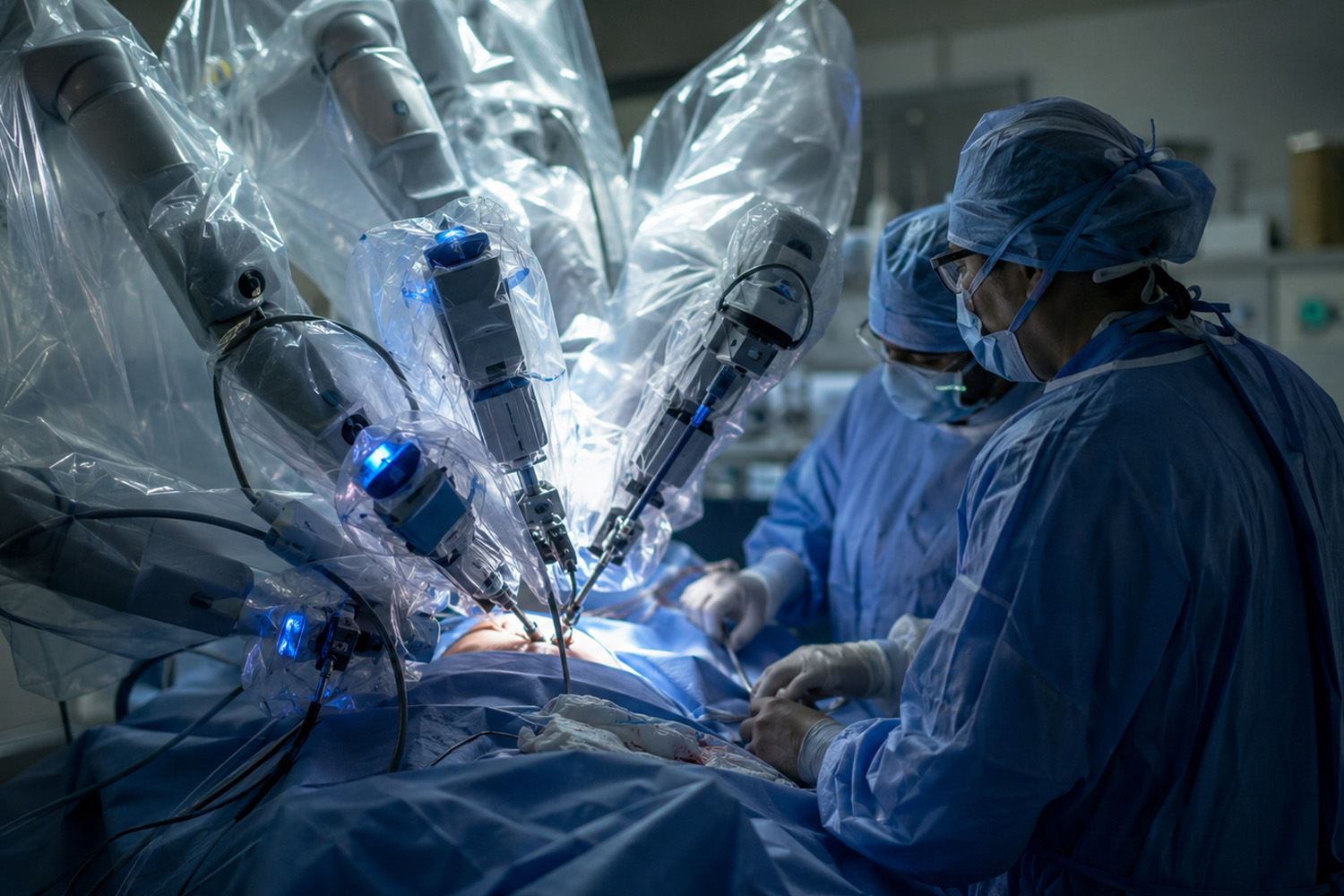
One misconception persists: robotic surgery systems are often portrayed as autonomous surgeons. In reality, most clinical robotic systems remain physician-controlled precision platforms.
However, important developments are emerging beneath the surface.
Microsurgical robotics is advancing rapidly in areas requiring ultra-fine precision beyond human motor capability. Experimental systems increasingly assist in eye surgery, vascular procedures, and microscale tissue manipulation where human tremor becomes a limiting factor.
The significance is not simply better surgery. It reflects a deeper architectural trend: robotic systems increasingly extend human physiological capability.
Soft robotics is another emerging area attracting attention. Traditional robots rely on rigid mechanical structures. Soft robotic systems instead use flexible materials designed to adapt safely to biological environments.
This approach matters for minimally invasive procedures where rigid instruments risk tissue damage. Flexible robotic tools may eventually improve navigation through delicate anatomical pathways, though widespread clinical implementation remains gradual.
Medical imaging is also becoming more tightly integrated with robotic systems. Newer robotic platforms increasingly combine imaging, real-time analytics, and intervention into unified workflows.
Instead of functioning as isolated surgical tools, robots increasingly operate as data-driven precision systems informed by continuous imaging and patient-specific information.
Yet full surgical autonomy remains unlikely in the near term. Technical limitations around interpretability, reliability, regulatory approval, and edge-case unpredictability strongly favor “human-in-the-loop” systems where clinicians retain oversight.
The near-term trajectory is therefore specialization, not replacement.
Rehabilitation Robotics May Quietly Become the Largest Healthcare Shift
One of the least discussed but potentially most important developments lies outside surgery.
Rehabilitation robotics is becoming increasingly adaptive through machine learning and biometric feedback systems. Instead of generic recovery programs, rehabilitation devices increasingly personalize therapy intensity and movement assistance based on patient response.
Robotic exoskeletons are also progressing, particularly for mobility assistance and neurological rehabilitation. Battery constraints, cost, and mechanical complexity still limit widespread deployment, but lighter materials and better movement prediction algorithms continue improving performance.
Hospitals are also adopting robotic logistics systems to transport medication, equipment, and supplies internally. While less dramatic than robotic surgery, these systems may have significant operational impact because hospitals increasingly face labor shortages and workflow inefficiencies.
In other words, some of the most important medical robotics changes may emerge through operational infrastructure rather than headline-grabbing procedures.
The Bottlenecks That Continue to Slow Robotics
Despite accelerating progress, several technical constraints still shape robotics development.
Power efficiency remains one of the largest limitations. Robots increasingly require sophisticated on-device AI processing for perception and decision-making, yet battery capacity remains limited.
This creates an important architectural trade-off between edge computing and cloud dependence. Robots require local intelligence for speed and reliability, especially in factories and medicine, but cloud systems remain valuable for coordination and large-scale optimization.
Data quality also limits progress. Physical environments are harder to model than digital systems. Unexpected edge cases-from unusual warehouse layouts to unpredictable biological variation-remain difficult to anticipate.
Cost remains another barrier. Robotics deployment often requires expensive infrastructure redesign, software integration, workforce retraining, and cybersecurity protections.
This explains why robotics adoption remains concentrated among large industrial firms and advanced healthcare systems.
Robotics Is Becoming Infrastructure
The most important long-term insight is that robotics is evolving from machinery into infrastructure.
Competitive advantage increasingly depends less on robotic hardware itself and more on ecosystems of software, sensors, semiconductor performance, cloud coordination, and interoperability.
This mirrors earlier transitions in computing, where value shifted away from standalone machines toward integrated digital systems.
The next stage of robotics will likely involve fleets of semi-autonomous machines coordinated through shared intelligence systems rather than isolated robots operating independently. In medicine, highly specialized robotic platforms will continue expanding, particularly where precision exceeds human limitations.
The defining pattern is already visible: robotics succeeds most effectively when it augments human capability rather than attempts total replacement.
The future of robotics is therefore not simply mechanical automation. It is the creation of intelligent physical systems embedded into industrial and medical infrastructure-systems that increasingly operate as extensions of broader computational networks rather than standalone machines.