In December 2025, Ford Motor Company announced a major strategic overhaul of its electric vehicle (EV) plans, taking a $19.5 billion pre-tax charge related to its EV business and radically reshaping its product roadmap. This move reflects changing market conditions, weaker EV demand, and evolving regulatory policy in the United States and globally.
Major Strategic Changes
1. Massive Write-Down and Financial Impact
Ford revealed it will record approximately $19.5 billion in special items tied to scaling back EV programs. Around $8.5 billion of this charge stems from cancelled EV models and assets, $6 billion relates to the dissolution of a battery joint venture, and the remainder covers other EV program expenses. Only about $5.5 billion of this total will directly impact cash flow across 2026 and 2027.
2. End of F-150 Lightning EV & EREV Pivot
Production of the all-electric F-150 Lightning has ended, with Ford discontinuing this model in its pure EV form due to lackluster demand and profitability challenges. The next iteration will be an extended-range EV (EREV) featuring a gasoline engine acting as a generator to boost range and utility.
3. Broad Shift to Hybrids and Combustion-Based Models
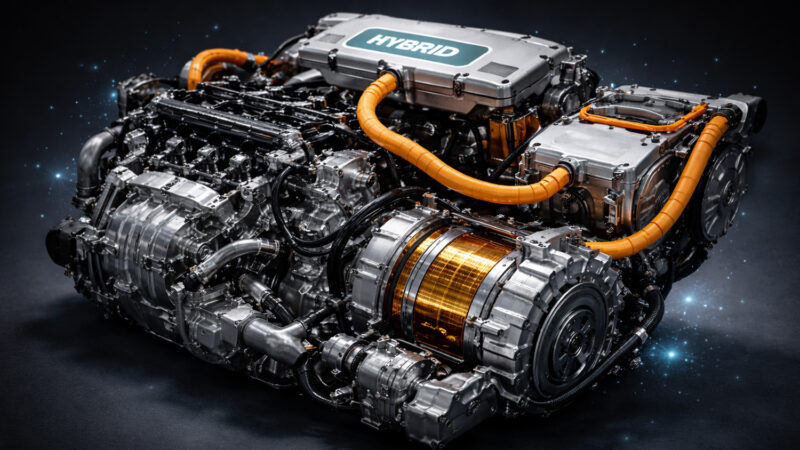
Instead of focusing solely on battery-electric vehicles (BEVs), Ford is redirecting investment toward hybrid and gas-powered trucks and vans, which remain highly profitable segments. This includes expanding hybrid options across its lineup and postponing or cancelling some large all-EV models that no longer make economic sense.
4. Continued EV Efforts on Smaller, Affordable Models
While scaling back costly large EVs, Ford plans to concentrate its EV development on a Universal EV Platform aimed at smaller, more affordable vehicles with better market viability. A midsize electric truck based on this platform is expected later in the decade.
Why the Shift?
Ford’s strategic pivot results from several converging pressures:
- Weak EV demand: Consumer interest in large, premium EVs like the F-150 Lightning has lagged expectations, leading to inventory buildups and production pauses earlier in 2025.
- Profitability challenges: Ford’s EV unit, Model e, has struggled to turn a profit, incurring billions in losses in prior years.
- Regulatory and policy changes: Shifts in U.S. federal EV incentives and emissions policy have altered the economics of EV investments and influenced automaker planning.
What Comes Next?
Despite the retreat from some electric programs, Ford is not abandoning electrification entirely. The company still aims for a balanced product mix by 2030, where hybrids, extended-range EVs (EREVs), and full EVs could represent a significant portion of its global sales. Ford also plans to enter new markets such as battery energy storage systems, leveraging its manufacturing and battery capabilities.
This recalibrated approach highlights an industry-wide recalibration where major automakers balance electrification goals with profitability, consumer preferences, and evolving policy landscapes.