The evolution of energy storage technology is accelerating – and 2025 is shaping up as a pivotal year for battery innovations that could reshape how we store and use power. From breakthroughs in solid-state and sodium-ion batteries to expanding grid-scale storage systems, recent developments are laying the foundation for a cleaner, more reliable energy future.
What’s New: Key Battery & Storage Innovations
Solid-State Batteries – Safer, More Powerful, Longer-Lasting
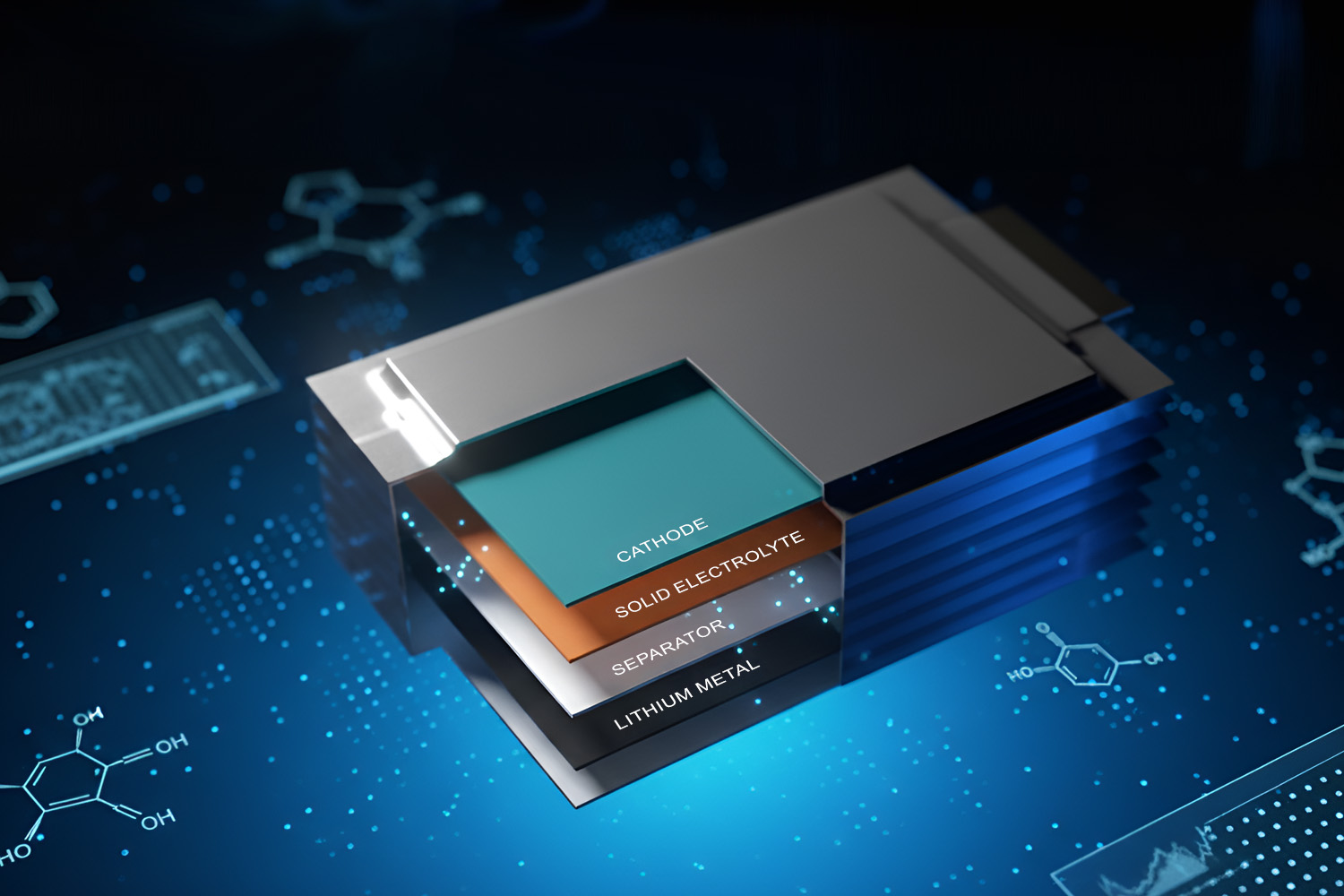
Solid-state batteries (SSBs) are among the most promising leaps forward. By replacing liquid electrolytes with solid ones, these batteries eliminate a major safety risk – reducing the chance of fires or “thermal runaway.”
In theory, solid-state designs can deliver much higher energy density (potentially over 500 Wh/kg), meaning more energy stored in a smaller, lighter package. They also support faster charging and could dramatically extend battery lifespan – a major plus for electric vehicles (EVs), portable electronics, and stationary storage alike.
However, scaling up SSB production remains a challenge. Issues such as high interfacial resistance and manufacturing complexity still need to be resolved before these batteries become mainstream.
Sodium-Ion Batteries – Affordable, Sustainable Alternative
One of the most significant developments in 2025 is the growing adoption of sodium-ion batteries (SIBs) as a lower-cost, sustainable alternative to lithium-ion systems. Sodium is far more abundant than lithium – which helps reduce raw material cost, lessen supply-chain pressure, and improve sustainability.
Recent advances have boosted sodium-ion energy density and performance. Some modern SIBs now offer energy densities and cycle lives that make them competitive for many applications. In early 2025, a breakthrough demonstrated how sodium-based solid-state cells could approach the stability and efficiency needed for practical use – a major step toward safer, more affordable batteries.
Because of their lower cost and simpler chemistry, sodium-ion batteries are especially suited for grid-scale energy storage, stationary backup systems, and renewable energy integration – areas where weight and size are less important than cost, safety, and longevity.
Grid-Scale Energy Storage – Stabilizing Renewable Power
As more solar and wind capacity comes online globally, the need for large-scale energy storage is growing. Grid-scale battery installations allow energy from intermittent sources (like wind or solar) to be stored and dispatched when needed, helping stabilize the electricity supply.
Emerging battery chemistries – whether solid-state or sodium-ion – offer new potential for large-scale storage at lower cost, greater safety, and longer service life. Technologies based on abundant materials (like sodium) or novel designs promise to lower costs per kWh, increasing feasibility for widespread grid adoption.
Why These Innovations Matter
- Accelerating the energy transition: Improved storage technologies make renewable energy – solar, wind – more reliable even when generation is intermittent, supporting decarbonization and reducing dependence on fossil fuels.
- Reducing environmental and supply-chain risk: By shifting away from scarce or geopolitically sensitive materials such as lithium, and using abundant elements like sodium, battery production becomes more sustainable and less vulnerable to market volatility.
- Enhancing safety and longevity: Solid-state and sodium-based batteries reduce risks associated with flammable electrolytes, and can offer longer lifespans – improving both consumer safety and environmental impact.
- Enabling broad access: Having lower-cost, durable battery options helps bring energy storage not just to developed markets, but also to emerging economies, rural areas, and communities seeking reliable power or off-grid solutions.
What’s Next – Challenges & Outlook
Despite promising advances, some hurdles remain:
- Solid-state batteries still face manufacturing and scaling challenges before mass commercialization.
- Sodium-ion batteries, while improving, generally offer lower energy density than the highest-end lithium-ion cells – limiting their use in some high-performance applications like long-range EVs.
- For grid-scale adoption, cost reductions, regulatory support, and robust recycling/sustainability frameworks will be critical to maximize benefit and minimize environmental footprint.
Nevertheless, the pace of innovation suggests that over the next few years – especially by 2027–2030 – we could see a marked shift in the energy storage landscape. Emerging battery technologies may become central to powering EVs, supporting renewable grids, and enabling new forms of clean energy infrastructure.
Battery & Energy Storage Technologies – Typical Characteristics (approx. 2025)
| Technology | Typical Charging Time | Energy Density (Wh/kg) | Cycle Life (cycles) | Typical Discharge Duration | Main Areas of Use | Strengths / Limitations |
|---|---|---|---|---|---|---|
| Lithium-ion (NMC / NCA) | 30 min – 2 hrs (fast charging capabilities vary) | 180 – 260 | 1,000 – 3,000 | Minutes – a few hours | Electric vehicles, home storage, short-duration grid services | High energy density, mature supply chain; cost & raw-material supply risk (Co, Ni) |
| Lithium-ion (LFP) | 30 min – 2 hrs | 100 – 160 | 2,000 – 6,000 | Minutes – a few hours | EVs (short/medium range), grid storage, residential batteries | Long life, safer, lower cost; lower energy density than NMC |
| Solid-State Batteries (lab → early commercial) | 10 min – 1 hr (potentially very fast in future designs) | 300 – 500 (future target ranges) | 1,000 – 5,000 (design dependent) | Minutes – a few hours | EVs, portable electronics, high-performance applications | Higher safety & energy density potential; manufacturing scale-up challenges |
| Sodium-Ion Batteries | 30 min – 3 hrs | 90 – 160 | 1,000 – 4,000 | Minutes – several hours | Grid storage, backup systems, some EV/micro-mobility use cases | Lower cost, abundant materials; lower energy density vs high-end Li-ion |
| Vanadium Redox Flow Batteries | Not applicable (charged by re-circulating electrolyte) | ~20 – 50 (system-level, volumetric energy density is low) | 10,000+ (long calendar/cycle life) | 4 – 12+ hours (designed for long duration) | Large-scale grid energy shifting, renewables firming, microgrids | Excellent long-duration performance and lifecycle; higher upfront cost and footprint |
| Sodium-Sulfur (NaS) | 1 – 6 hrs | 150 – 240 (system dependent) | 2,000 – 4,000 | 2 – 8 hours | Utility-scale storage, transmission support | High temperature operation, high energy density for grid; safety & containment needs |
| Pumped Hydro Storage (not a battery) | Not applicable | – (very high system energy capacity, measured in MWh–GWh) | 30+ years (depreciation basis) | Hours – days (long duration) | Large-scale grid balancing, seasonal storage | Very large capacity and low marginal cost; geography-dependent, high capital cost |
| Hydrogen (power-to-gas → fuel cells) | Hours (electrolysis charging) / refuel time variable | Gravimetric energy density high (fuel value), system efficiency lower | Dependent on fuel cell / electrolysis system | Hours – seasonal (long-term storage) | Long-duration energy storage, industrial feedstock, heavy transport | Good for seasonal/long-term storage and decarbonizing industry; round-trip efficiency and infrastructure are challenges |
Notes: Values are approximate 2025 ranges. “Charging time” refers to typical cell/system recharge to a usable state and will vary with charger power, specific cell chemistry, temperature and system design. “Energy density” values are cell or typical system ranges; packaged system energy density will be lower. Cycle life depends strongly on depth-of-discharge, temperature and management systems.