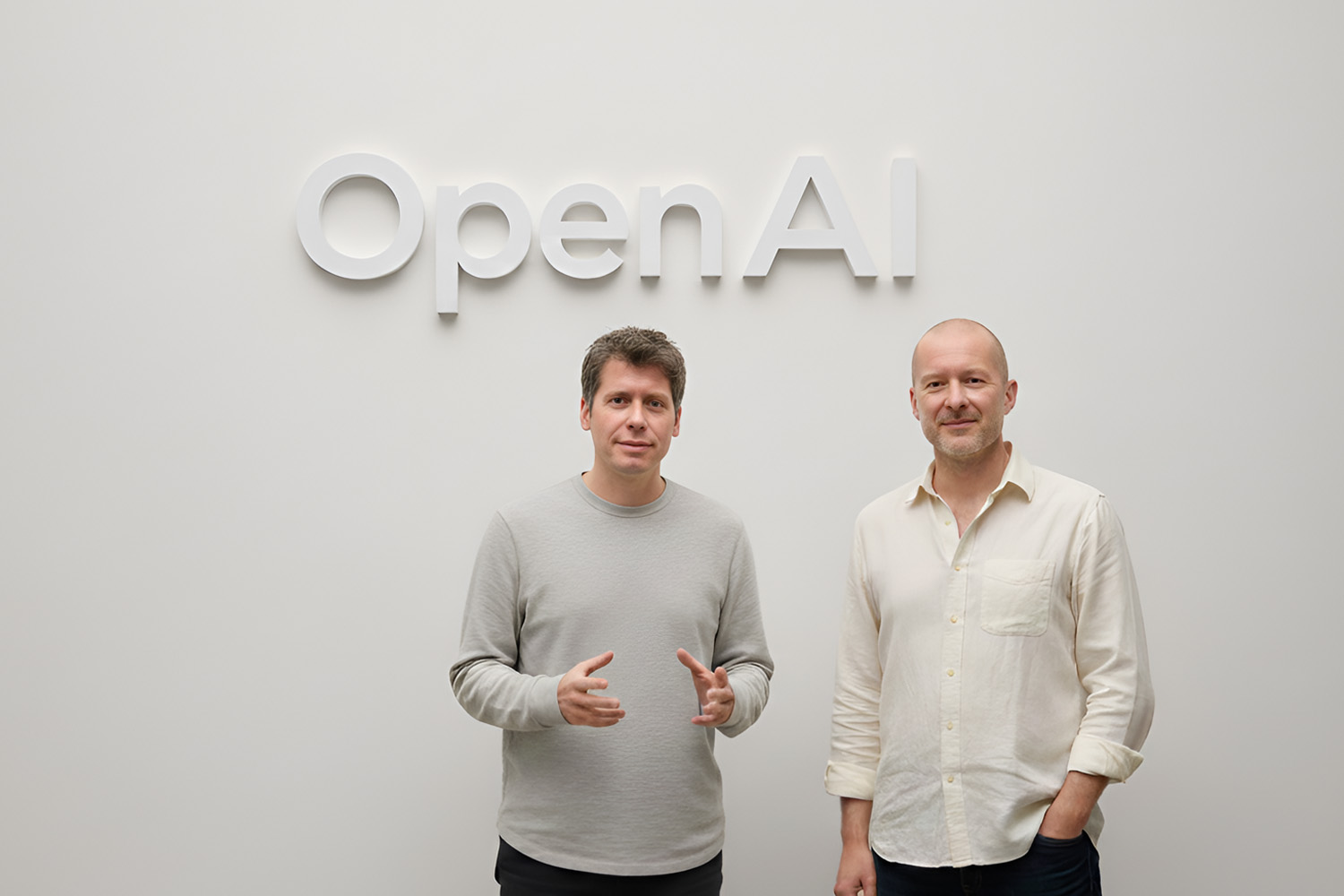
Tech leaders OpenAI and former Apple design chief Jony Ive are working together on a new, mysterious AI-powered hardware device – and recent updates show the project is further along than previously known.
Background: A Bold Acquisition and Collaboration
In mid-2025, OpenAI acquired Jony Ive’s startup io Products in a deal valued at around $6.5 billion. As part of that agreement, Ive and his design studio (LoveFrom) assumed creative leadership at OpenAI – tasked with reimagining what personal computing looks like in the AI era.
The joint aim: build a new “family of AI devices,” not just another smartphone or wearable, but something fundamentally different – built around intelligence, simplicity, and human-centered design.
What We Know So Far About the Device
- As of November 2025, Altman and Ive confirmed they have a working prototype of their first AI device.
- The gadget is described as pocket-sized and screen-free. It’s reportedly not a smartphone, not a wearable, and not headphones – but a third kind of device alongside phones and laptops.
- The design philosophy emphasizes simplicity, calm, and subtlety. The creators want the device to reduce digital overload and offer an ambient, easy way to access AI – rather than bombarding users with notifications like typical smartphones.
- According to Altman, the prototype gave him a visceral “jaw-dropping” reaction – a sign that the project has reached a meaningful milestone in design and functionality.
What It Could Mean – And What’s Still Unknown
Since few technical details have been released, much remains speculative. Some of the possible characteristics inferred by analysts and insiders:
- The device may rely heavily on AI and cloud-based processing (rather than local computing power), using microphones or sensors for voice or context-aware interaction.
- It could act as an “AI companion”: a subtle assistant always ready to help, rather than a full computing device with a screen.
- The goal seems to be to make AI interaction as natural and effortless as possible – something that fades into daily life rather than demanding full attention.
Still, critical questions remain unresolved: what exactly the interface will be (voice? gesture? new UI?), what features it will offer, how privacy and data-handling will be managed, and when – if ever – it will be released. Ive and Altman themselves have given no concrete launch date, though they suggested the device could reach the market within two years.
Why This Matters
If successful, this device could mark a major shift in how people interact with AI. Rather than opening an app or typing at a keyboard, users could have an always-ready, intelligent assistant – reducing reliance on screens, changing workflows, and transforming daily digital habits.
For OpenAI, this represents a strategic pivot from purely software-based AI (like chatbots or models) to hardware – potentially reshaping competition with traditional tech giants.
For consumers, it could mean a new type of personal computing: one designed around convenience, ambient intelligence, and minimalism – not complexity.