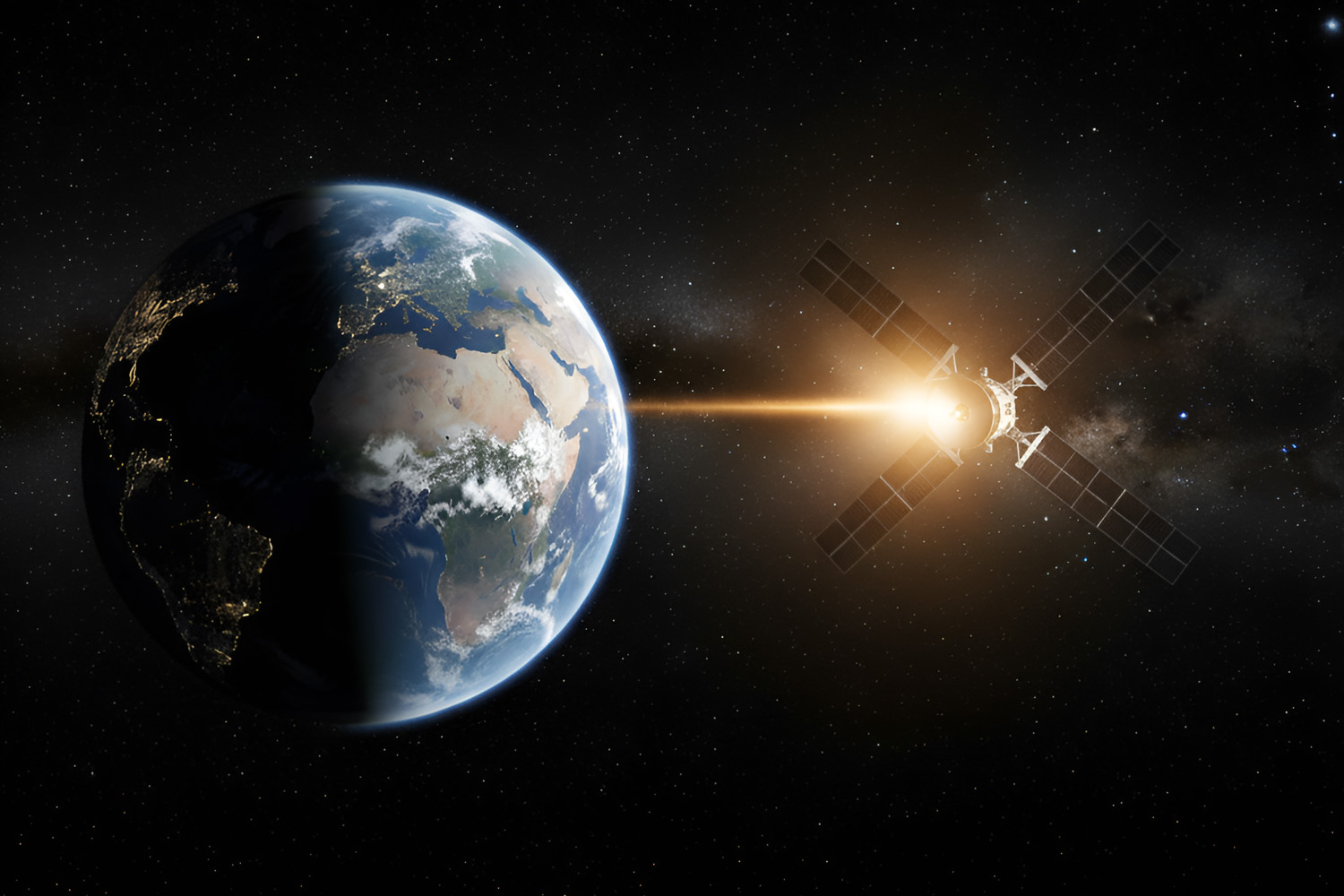
Japan is on the verge of turning science-fiction into reality. Through its OHISAMA (On-orbit experiment of HIgh-precision beam control using small SAtellite for MicrowAve power transmission) initiative, Japan Space Systems (JSS) plans to launch a compact satellite that collects sunlight in orbit, converts it into microwaves, and beams roughly 1 kilowatt of power to a ground station on Earth.
How OHISAMA Works
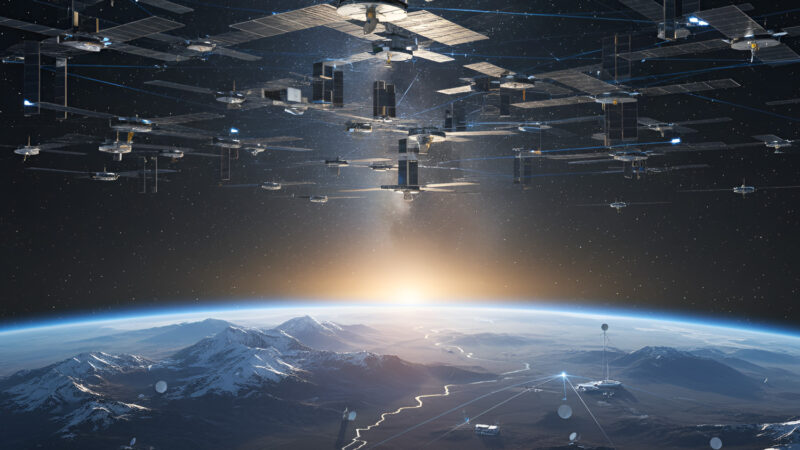
- The satellite, weighing about 180 kg, will operate in low Earth orbit, approximately 400 km above the planet.
- It carries a solar panel of around 2 square meters (22 ft²) to harvest solar energy constantly — a key advantage over earthly solar farms, which are hampered by night and clouds.
- Energy is stored in an onboard battery and then converted into microwaves. These microwaves are precisely directed toward a ground-based “rectenna” (receiver antenna) that turns them back into usable electricity.
- The receiving station in Suwa, Japan, consists of an array of antennas roughly 600 m² in total, carefully spaced to capture the microwave beam.
- Because the satellite travels extremely fast (about 17,400 mph / 28,000 km/h), the system needs very fine beam-control: even tiny errors could misalign the microwave transmission.
Why It Matters
- If OHISAMA succeeds, it will prove that continuous, weather-independent solar power can be harvested from space — even above cloud cover, dusk, or nighttime.
- Though 1 kW is a modest output (roughly enough to power a household appliance for an hour), the mission is fundamentally a proof-of-concept, not a commercial power plant — but it could pave the way for much larger orbital solar farms in the future.
- An essential technical breakthrough is the rectenna, a device combining antenna and rectifier to convert microwaves back into electricity. Researchers from Kanazawa Institute of Technology have worked with JAXA to build a lightweight, deployable version for the OHISAMA mission.
- On the power-transmission side, beam precision is critical: OHISAMA’s technology aims for angular precision better than 0.001 degrees, a remarkable feat to ensure the microwaves hit the ground receiver safely.
Challenges — and the Big Picture
- Scaling up: To become commercially viable, future systems would need much bigger satellites and receiving fields — possibly kilometers wide — to deliver gigawatts of power.
- Efficiency and safety: While the technology is promising, engineers must balance conversion efficiency, beam strength, and health/safety risks of microwave transmission.
- Cost: Launching, building, and operating orbital solar-power infrastructure remains expensive.
Still, if OHISAMA works, it could mark a paradigm shift: rather than relying only on Earth-bound grids, the future of renewable energy could be in orbit, with clean solar power streamed down from space, day and night, rain or shine.