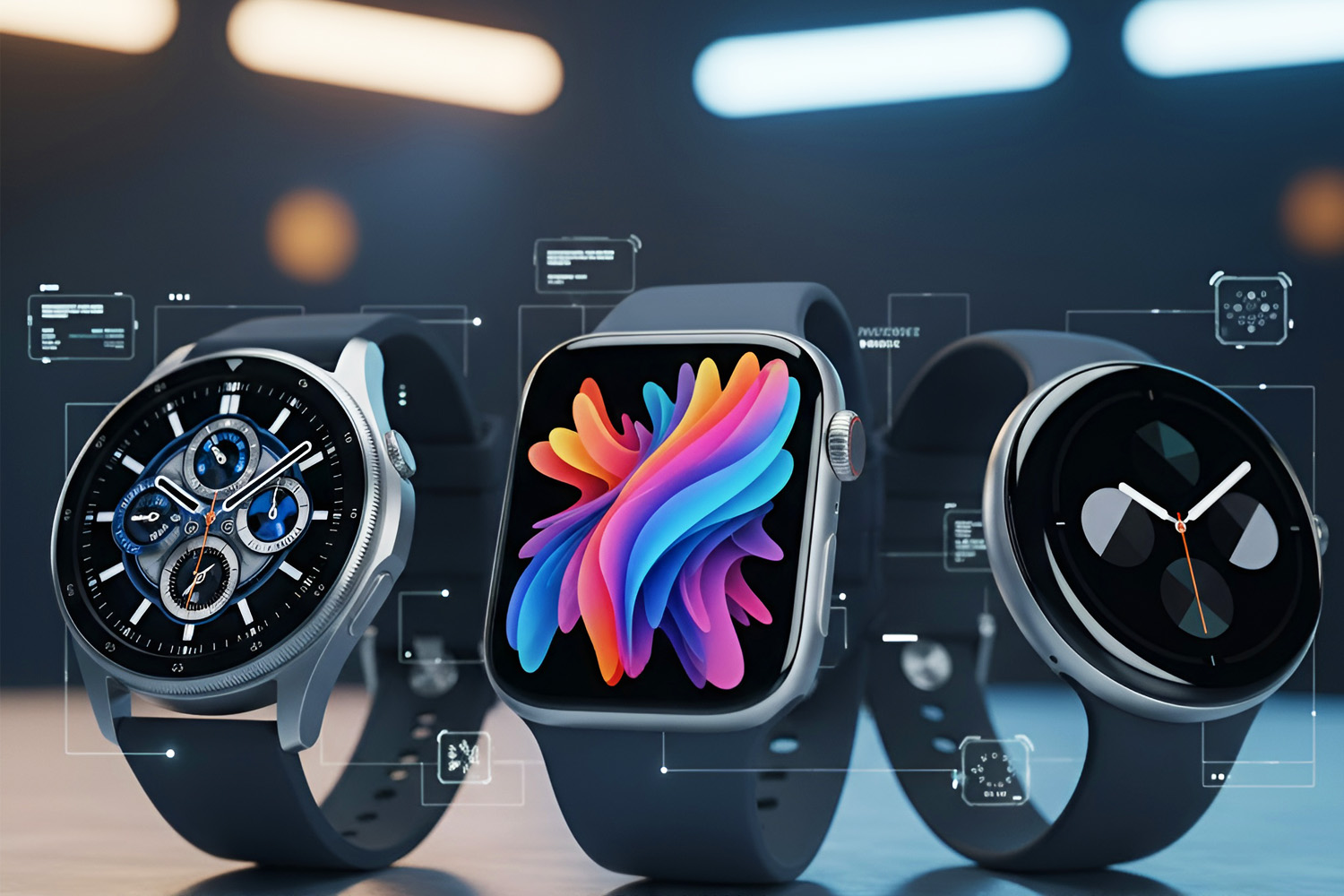
Apple Watch Series 11 — Best for iPhone users and health features
Quick summary: Apple’s 2025 flagship continues to lead for seamless iPhone integration, advanced health sensors and a polished app ecosystem. Official battery guidance and new Apple Intelligence features are central to this update.
Battery: Up to 24 hours of regular use; up to 38 hours in Low Power Mode (Apple spec).
Practicality: Excellent daily experience for iPhone owners — calls, texts, Apple Pay, Maps and rich third-party apps work flawlessly. Sleep tracking and new AI workout coaching improve day-to-day utility.
Customization: Wide range of watch faces, straps and cases; backward compatible with many older Apple Watch bands. watchOS offers deep personalization.
Health & Safety: ECG, heart rate, blood-pressure alerts, improved sleep scoring and new hypertension notifications and AI-driven Workout Buddy.
Pros: Tight iPhone integration, best app support, top health features, polished UI.
Cons: Limited battery compared with multisport watches, iPhone-only full functionality, premium price.
Samsung Galaxy Watch7 — Best for Android users who want Galaxy ecosystem perks
Quick summary: Samsung’s Galaxy Watch7 blends Wear OS with Samsung’s health suite and Galaxy AI features for strong fitness tracking and good day-to-day smart features.
Battery: Varies by model and usage (typical real-world life is usually 1–3 days depending on size, features and AOD).
Practicality: Excellent for call/text control, Samsung Pay and Galaxy integration (phones, Buds). Strong sleep and fitness tracking with Galaxy AI tips.
Customization: Plenty of watch faces, strap options, and a Classic variant for a more traditional look. Wear OS allows many third-party apps.
Health & Safety: Improved heart-rate tracking and sleep insights with Galaxy AI filtering to reduce motion artifacts.
Pros: Great Android integration (especially Samsung phones), strong fitness features, many hardware options.
Cons: Battery life lags behind Garmin; best features favor Galaxy phones; some users prefer a purer Wear OS experience.
Google Pixel Watch 3 — Best for Pixel owners and AI features on the wrist
Quick summary: Pixel Watch 3 focuses on a refined Wear OS experience, closer Fitbit integration and new AI/safety features; the 45mm model improves battery capacity.
Battery: Up to 24 hours with Always-On Display; up to 36 hours in Battery Saver for larger variant (Google spec). Real-world testing often shows 24–36 hours depending on use.
Practicality: Smooth Wear OS, tight Fitbit analytics and features like emergency detection (loss of pulse). Fast charging is an advantage for users who want overnight charging flexibility.
Customization: Good selection of faces and straps; deep Fitbit watch-face and exercise integrations. Wear OS apps available through Google Play.
Health & Safety: Enhanced safety features (e.g., loss-of-pulse detection that can summon emergency services) and robust running insights via Fitbit tech.
Pros: Polished Android experience, Fitbit insights, improved battery vs earlier Pixels, best choice for Pixel phone owners.
Cons: Battery still trails long-endurance wearables; some advanced features need Android phone; fewer premium sport features than Garmin.
Garmin Fenix / Epix Pro (latest models) — Best for endurance athletes & long battery life
Quick summary: Garmin’s high-end GPS watches remain the gold standard for serious athletes: multi-week battery life, elite GPS and advanced training/route/navigation tools.
Battery: Exceptional — many Garmin multisport models deliver days to weeks (examples: 16–23 days in smartwatch mode, tens of hours in GPS modes with multi-GNSS). Ranges by model and settings.
Practicality: Designed for long training blocks, ultra-endurance events and outdoor navigation; maps, turn-by-turn routing and survival features are best-in-class. Not as slick for everyday smartphone-style interactions.
Customization: Strong data fields, widgets and watch face options for athletes; metal and premium finishes on top models.
Health & Safety: Advanced recovery metrics, sleep and HRV, detailed training load and performance analytics.
Pros: Unmatched battery, GPS accuracy, training features and durability.
Cons: Bulkier design, higher price, less polished app ecosystem and fewer mainstream smart features.
Fitbit Sense 2 — Best budget/pure health tracker with multi-day battery
Quick summary: Fitbit Sense 2 targets health-first users who want multi-day battery life and stress/sleep tools in a relatively affordable package. It remains a solid Fitbit option in 2025.
Battery: 6+ days typical (Fitbit-branded spec), though real-world results vary and some firmware updates have affected battery performance for some users.
Practicality: Excellent for sleep, stress and daily activity tracking; lighter on smartwatch features than Apple/Samsung but strong on battery and simplicity.
Customization: Basic watch faces and strap options; Fitbit ecosystem is focused on health journeys and insights.
Health & Safety: ECG, SpO2, continuous HR, cEDA stress sensor and guided tools for sleep and mindfulness.
Pros: Long battery, dependable health tracking, good value.
Cons: Fewer third-party apps, some users report occasional battery degradation after updates.
How to choose — a short buyer’s guide
- You own an iPhone: Buy Apple Watch Series 11 for the best ecosystem fit, apps and health features.
- You want the best battery & sports features: Pick a Garmin Fenix/Epix model.
- You use a Pixel / want an Android watch with Fitbit insights: Pixel Watch 3 balances smart features with health tracking.
- You want value, long battery & sleep/stress tools: Fitbit Sense 2 is the balanced choice.
- You want a stylish all-rounder for Android (esp. Samsung phones): Galaxy Watch7 offers strong features and customization.