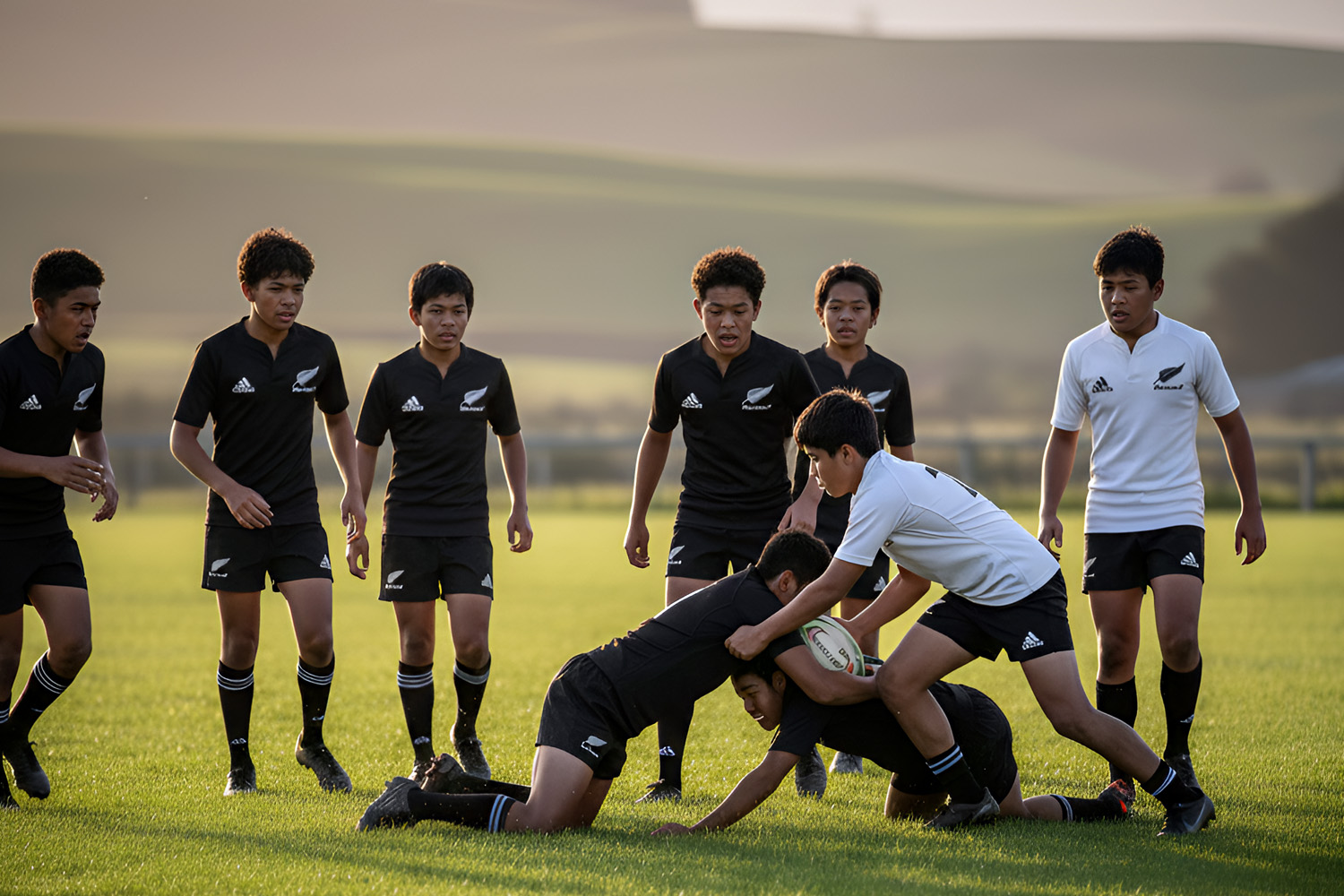
New Zealand’s long-standing dominance in rugby is widely attributed to a carefully structured youth development system that identifies talent early, nurtures skills consistently, and embeds the sport deeply within society. Rather than relying solely on elite academies, the country has built a comprehensive pathway that connects schools, clubs, and professional teams into a unified framework.
Grassroots Foundations
Rugby in New Zealand begins at the grassroots level. Most players are introduced to the sport through school and community clubs, where participation is encouraged regardless of background. This broad base ensures a large talent pool and emphasizes enjoyment, teamwork, and fundamental skills before competitive pressure becomes intense.
Strong School Rugby Structure
Schools play a central role in player development. Competitive school rugby is well-organized and closely aligned with regional unions. Coaches at this level focus not only on performance but also on technical fundamentals, game understanding, and physical development, ensuring players are prepared for long-term progression rather than short-term results.
Clear Player Pathways
One of the strengths of New Zealand’s system is the clarity of its development pathway. Talented players can progress from school and club rugby to provincial teams, age-grade national sides, and professional franchises. This pathway is transparent, consistent nationwide, and supported by shared coaching standards.
Coaching Education and Philosophy
New Zealand invests heavily in coach education, ensuring that training methods are consistent across age groups. Coaches are encouraged to develop decision-making skills, adaptability, and creativity in young players rather than rigid, overly structured play. This approach produces athletes who can read the game effectively at higher levels.
Cultural Integration of Rugby
Rugby in New Zealand is more than a sport; it is part of the national identity. This cultural integration reinforces values such as discipline, humility, and respect. Young players grow up surrounded by role models and community support, which strengthens motivation and long-term commitment to the sport.
Can the Model Be Replicated?
While many countries attempt to replicate New Zealand’s success, full duplication is challenging. The system relies not only on infrastructure but also on culture, population engagement, and long-term planning. However, key elements—such as coach education, aligned development pathways, and grassroots investment—can be adapted to different national contexts.
Lessons for Other Rugby Nations
Other rugby-playing nations can learn from New Zealand by prioritizing youth participation, aligning school and club systems, and focusing on player development rather than early specialization. Success may not come quickly, but sustained investment in youth structures can produce lasting results.
New Zealand’s youth development blueprint shows that sustained excellence is built over decades, not seasons. While no system can be copied exactly, its principles offer valuable guidance for countries seeking long-term success in rugby.