Data and artificial intelligence (AI) are reshaping basketball at every level. From automated player-tracking that feeds machine-learning models, to predictive systems that inform rotations, load-management and scouting, teams now rely on a growing stack of analytics tools to gain competitive edges. This article explains how AI is used in coaching and performance, the concrete benefits and limits, and real-world examples of teams and leagues already deploying AI-based analytics.
How AI fits into the basketball analytics stack
Modern basketball analytics typically combine three layers:
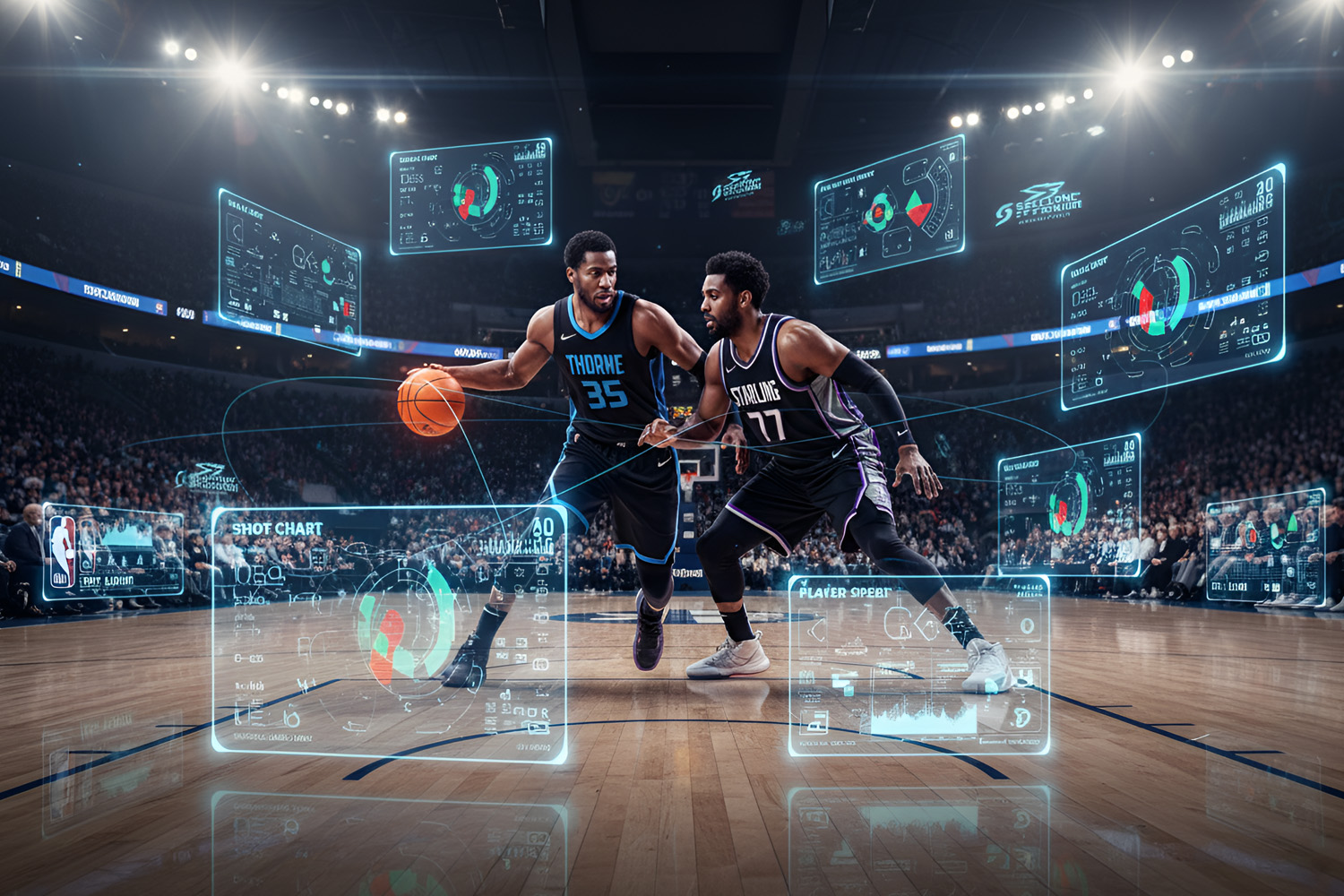
- Raw tracking and event data — optical camera systems capture player and ball positions many times per second (location, speed, pose). This is the substrate for AI.
- Feature extraction & modeling — machine-learning models transform raw trajectories into higher-level metrics (shot quality, defensive pressure, predicted points added, play classification).
- Decision tools & interfaces — dashboards, lineup optimizers, and real-time alerts that coaches and performance staff use during practices and games. These systems deliver actionable recommendations rather than raw numbers.
What teams use AI & analytics for (key applications)
- Tactical preparation & scouting: AI identifies opponent tendencies (favoured plays in certain situations), enabling coaches to prepare targeted defensive or offensive plans.
- In-game strategy & substitutions: Real-time analytics help coaches judge matchup advantages and optimal substitution timing using probabilistic win-expectancy and fatigue models.
- Player development & biomechanics: Pose-aware tracking and ML detect subtle inefficiencies in shooting mechanics, movement patterns and load exposure, allowing individualized training programs.
- Load management & injury prevention: Predictive models synthesize tracking, biometric and workload data to flag injury risk and tailor recovery plans.
- Roster construction & scouting: Machine-learning tools analyze historical performance, scouting video and contextual data to recommend fits and trade targets.
League-level infrastructure that enables AI
The NBA (and increasingly other leagues) provides league-wide tracking data that serves as the foundation for AI analytics. The league moved from SportVU to Second Spectrum as its optical tracking and analytics partner, and in recent seasons has integrated new providers (e.g., Hawk-Eye) to improve pose and ball tracking — upgrades that multiply the types of AI models teams can run. These provider partnerships make high-fidelity, frame-by-frame data available for both broadcast enhancements and team analytics.
Real-world examples (who’s doing what)
Golden State Warriors — cloud ML + analytics for coaching & ops
The Warriors have publicly partnered with Google Cloud to apply machine-learning and analytics across coaching, player performance, and fan experience — illustrating how an elite franchise integrates cloud AI into decision-making and operations.
Toronto Raptors — machine learning in scouting & roster analysis
The Raptors have used advanced analytics and AI platforms (historically including IBM Watson in public reports) to enrich scouting, player evaluation and roster decision processes — an example of combining video, stats and external data for talent decisions.
Houston Rockets / “Moreyball” culture — analytics-driven strategy
The Rockets under Daryl Morey popularized analytics-first decision making (shot selection, spacing, and statistical optimization). While that era precedes today’s deep-learning tools, the Rockets’ model created an organizational culture that readily adopts AI systems for strategy and evaluation.
NBA & WNBA league programs — optical tracking + AI insights
The NBA’s official optical tracking partnerships (Second Spectrum, Genius Sports; and more recently Hawk-Eye for enhanced pose tracking) plus the WNBA’s 2024 deal to deploy league-wide optical tracking show how leagues are standardizing high-fidelity data that enables team-level AI work (shot-quality, movement efficiency, defensive impact). Those league investments expand access to the data necessary for AI models to run reliably.
Milwaukee Bucks — analytics community & innovation
The Bucks host analytics hackathons and publicly engage in analytics research and data science programs, emphasizing applied data science in team contexts (player development, fan analytics). This demonstrates the broader trend of teams investing in analytics talent and community innovation.
Case study snapshot: how an AI-driven workflow works in practice
- Capture: Optical cameras record a practice/game and produce tracking feeds (x,y coordinates, velocities, pose).
- Process: Automated pipelines clean the data and compute features (distance from nearest defender, shot clock context, player speed).
- Model: Supervised ML models estimate shot success probability (expected points), predict injury risk from workload, or classify play types using spatio-temporal patterns.
- Action: Coaches receive an actionable insight (e.g., “defensive rotations on pick-and-roll are conceding high-quality corner threes vs. Team X; consider switching coverage in Q3”), while performance staff adjust training load for specific players.
Benefits observed so far
- Faster, evidence-based adjustments during games and practice.
- More precise player development by isolating mechanical issues and tracking progress objectively.
- Smarter roster choices and matchups from predictive analytics and opponent modeling.
Limitations and ethical considerations
- Data quality & interpretation: Garbage in, garbage out — models depend heavily on accurate tracking and correct contextual labels. Even high-quality tracking can miss subtle context (intent, psychological state).
- Overreliance on models: AI should augment, not replace, coaching instincts; models can be biased by historical data and changing stylistic trends.
- Privacy & player consent: Use of biometric and tracking data raises player-privacy and labor questions; teams and leagues must manage data governance responsibly.
The near future: what to expect
More pose-aware models: With providers like Hawk-Eye and Second Spectrum delivering pose data, expect ML that assesses biomechanics and joint stress in greater detail.
Real-time AI assistance: Faster pipelines will let coaches get near-instant, context-aware suggestions during games (play probability, mismatch warnings).
Cross-league adoption: The WNBA’s league-wide tracking rollout and similar moves indicate that AI analytics will expand beyond the NBA, improving talent evaluation and broadcasting across leagues.
Conclusion
AI and analytics are no longer optional tools for elite basketball organizations — they are core components of modern coaching, scouting and player performance systems. The combination of league-level tracking infrastructure (Second Spectrum, Hawk-Eye), team investments in cloud ML and analytics staff (Warriors, Raptors, Bucks, Rockets culture), and academic advances in sports AI is turning raw motion data into practical, game-day decisions. As the technology matures, teams that best integrate AI insights with coaching judgement and responsible data practices will hold the strategic edge.