A renewed push for enlargement
The European Union (EU) is again placing expansion at the centre of its strategy—not only as an economic tool, but as a geopolitical instrument to promote security, democracy and shared values. According to the European Commission’s latest briefing, enlargement remains a key driver of long-term peace, stability and prosperity in Europe.
In March 2025 the European Parliament’s briefing outlined three scenarios for enlargement between 2024 and 2035, estimating GDP increases of 8 % in a modest scenario and up to 24 % in an ambitious one if new members integrate effectively.
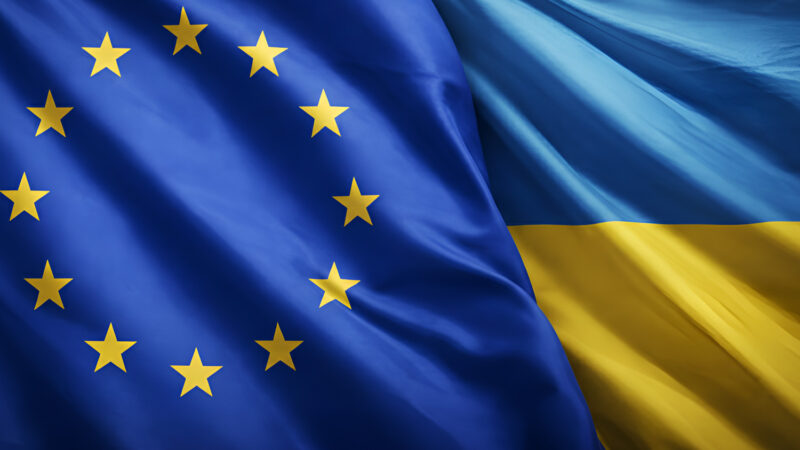
On 30 October 2024 the Commission published the 2024 Enlargement Package, assessing the accession prospects of Albania, Bosnia & Herzegovina, Kosovo, Montenegro, North Macedonia, Serbia, Georgia, Moldova, Ukraine and Türkiye.
Where candidate countries stand
- The EU currently recognises several candidate and potential candidate countries. For example, the Commission lists them under its enlargement policy and migration/justice-area criteria.
- For the Western Balkans, progress is visible but uneven: the six countries (Albania, Bosnia & Herzegovina, Kosovo, Montenegro, North Macedonia and Serbia) remain in various accession stages. In May 2024 the EU Council approved a €6 billion package to accelerate reforms in the region for the period 2024-2027.
- In October 2025, Western Balkan leaders reaffirmed their “shared vision toward a European perspective” during a summit in Albania, signalling political will amid reform efforts.
Key challenges: political unity & migration
Political unity
Expanding the EU brings questions about how to maintain decision-making efficiency, institutional coherence and solidarity among a larger union. Analysts argue that enlargement may increase internal friction and dilute influence of current members.
One specific area of reform centres on the unanimous decision-making model for enlargement and major policy choices—some call for new voting structures to handle a larger membership effectively.
Migration and security
The EU’s future also hinges on how it manages free movement, asylum, border control and migration integration—especially as enlargement brings in states with differing migration experiences and external pressures. Under its home affairs policy, the EU requires candidate countries to adopt the entire body of law (acquis) including migration, border and asylum rules.
Given the external migration pressures from neighbouring regions, enlargement countries may face heightened demands for infrastructure, border control and asylum systems—testing both local capacity and EU support frameworks.
Institutional and infrastructural readiness
For enlargement to succeed in a meaningful way, the EU must ensure internal reforms—such as enhancing its institutional capacity, managing budgetary impacts, integrating new economies and preserving democratic standards. One key document noted that a “smart enlargement” could boost overall living standards, environmental outcomes and defence readiness—but only if backed by institutional adaptation.
Economically, the EU’s single market and regulatory framework must be extended, and candidate countries must align with EU rules (the acquis) across many chapters: internal market regulation, justice and home affairs, customs, environmental law and more.
Why this matters
- Enlargement strengthens the EU’s geopolitical weight: expanding membership means greater global influence, a larger market, and enhanced strategic capacity.
- It presents an economic opportunity: modelling indicates that under the right conditions, GDP gains could be significant (8-24 %) by 2035 compared to no enlargement.
- It challenges the EU to maintain cohesion and values: as the bloc grows, preserving democratic standards, rule of law and common identity becomes more complex.
- It intersects with migration and security policy: Enlargement brings new border regions, new migration flows and increased integration needs—demanding preparedness on multiple fronts.
The road ahead
Looking forward, the EU’s path will likely include:
- Incremental accession: Some proposals suggest ‘gradual, reversible’ integration where candidate countries adopt many membership rights and obligations in phases.
- Focused reform support: The EU’s pre-accession funds and growth plans (for example in the Western Balkans, Eastern neighbourhoods) will remain critical in helping candidate countries meet benchmarks.
- Institutional adaptation: The EU may need to update internal governance (voting rules, decision-making structures, budget arrangements) to absorb new members without loss of agility.
- Balancing migration and solidarity: As the bloc expands, ensuring migrant integration, border management and labour mobility will be key to maintaining public support and social cohesion.
Conclusion
The future of the European Union is being shaped by a dual challenge: expanding to include new members while preserving unity, governance capacity and migration resilience. Enlargement holds promise—greater economic growth, increased stability and stronger democratic norms—but only if the EU and applicant countries move together, with reform, institutional readiness and shared values. The next decade will test whether the EU can manage enlargement smartly, responsibly and sustainably.