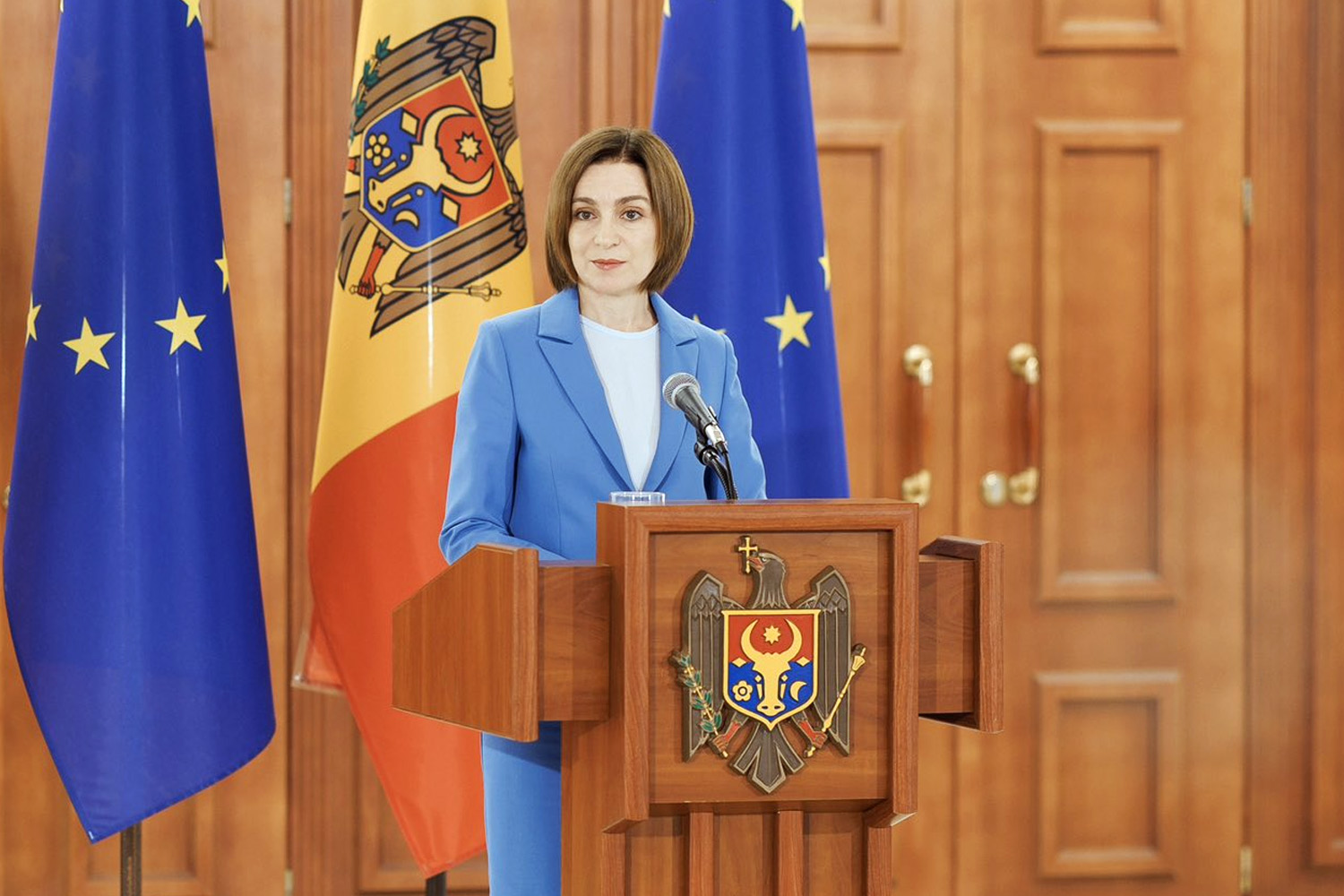
On 28 September 2025, Moldova held parliamentary elections that many viewed as pivotal in determining the country’s geopolitical orientation. In those elections, the Action and Solidarity Party (PAS) led by President Maia Sandu achieved a clear victory, securing a majority in parliament.
Election Results: Numbers & Outcome
- PAS obtained 50.20 % of the vote, translating into 55 seats out of 101 in the Moldovan Parliament.
- The main pro-Russian bloc, the Patriotic Electoral Bloc (led by former President Igor Dodon), received about 24.17 % of the vote and won 26 seats.
- Smaller parties also entered parliament: Alternative won 8 seats (≈ 7.96 %), Our Party obtained 6 seats (≈ 6.20 %), and Democracy at Home Party acquired 6 seats (≈ 5.62 %).
- Voter turnout was approximately 52.21 %, surpassing the required threshold for the election to be valid.
Because PAS now holds more than half the seats, it is able to form a government without needing a coalition partner.
Political Significance & Implications
Strengthened EU Path
- The victory strengthens Sandu’s mandate to push ahead with reforms necessary for European Union accession. EU officials welcomed the result as a positive sign for Moldova’s Western trajectory.
- Sandu and PAS have long advocated aligning Moldova’s institutions, judiciary, and governance standards with EU norms. This majority gives them greater room to act.
Pushback Against Pro-Russian Influence
- Throughout the campaign, Moldovan authorities and observers accused Russia of active interference — including disinformation campaigns, attempted vote buying, cyberattacks, bomb threats, and pressure to destabilize the election.
- Sandu has characterized the results as a rejection by voters of external coercion or manipulation.
Challenges Ahead
While the victory is significant, several obstacles remain:
- Economic & social pressures: Moldova continues to face inflation, energy security issues, public service pressures, and the need for investment.
- Implementing reforms: Liberalizing institutions, combating corruption, strengthening the legal system — these are complex tasks and likely face resistance from entrenched interests.
- Territorial / regional divisions: Regions like Transnistria and Gagauzia remain skeptical of EU orientation, and controlling or influencing these areas remains a delicate challenge.
- Diplomatic balance: Even as Moldova turns more toward the EU, it must manage relations with Russia, including energy dependencies and regional security tensions.
What Comes Next
PAS is expected to form the next government. President Sandu may maintain her collaboration with Prime Minister Dorin Recean, who has already served in key government roles.
Parliament will soon begin passing legislation to support the new mandate, including constitutional or institutional reforms and adjustments required for EU integration.
International attention will remain high: observers, donor countries, and the EU will closely monitor implementation and legitimacy.
Opposition groups have already raised allegations of irregularities and called for protests; how these evolve will affect political stability.
This election is widely seen not just as a domestic event but as a geopolitical marker in Eastern Europe: Moldova’s choice between East and West remains under high scrutiny.