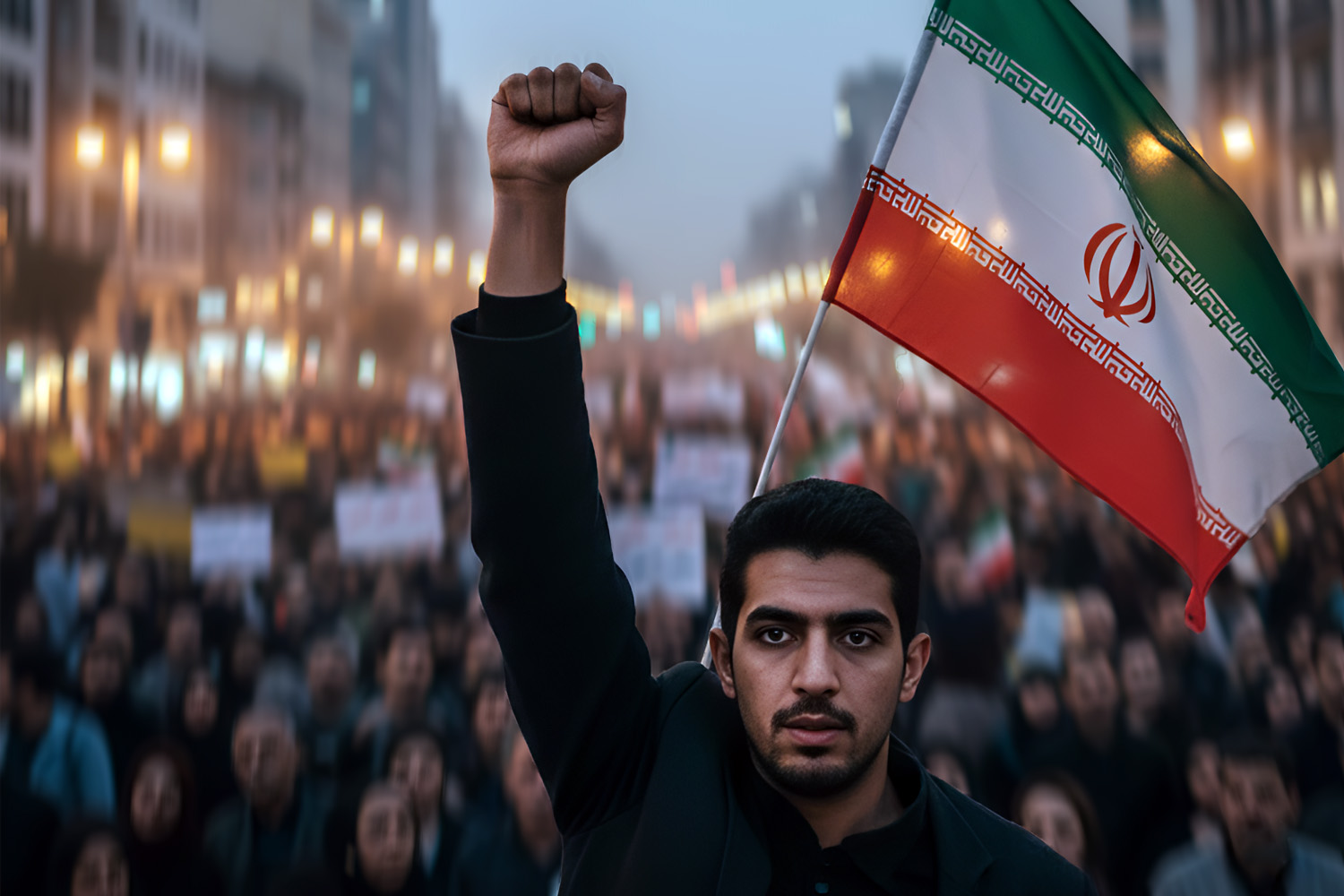
In January 2026, Iran remains in the grip of one of the most severe waves of unrest in its recent history. Massive protests, which began on December 28, 2025, initially sparked by economic hardship and rising prices, have evolved into broad anti-government demonstrations across all 31 provinces, despite brutal crackdowns by state security forces.
Scale of the Unrest
The demonstrations — involving people from diverse social and regional backgrounds — continued into January and have been met with extensive force from the Iranian government, including the Islamic Revolutionary Guard Corps (IRGC), Basij militia and law enforcement. Authorities have imposed a near-total internet and communications blackout since January 8, severely restricting access to information and complicating external reporting on events within the country.
While the intensity of street protests has decreased in some areas following the blackout and heightened repression, reports indicate that acts of dissent and small demonstrations still occur, though often out of public view due to communication restrictions.
Casualties and Detentions
Accurate casualty and detention figures are extremely difficult to verify due to restricted access and disrupted communications. However, a range of estimates from rights groups and independent monitors provide the best available insight:
- Death Toll:
- The Norway-based Iran Human Rights organization estimates around 3,428 deaths related to the crackdown.
- The U.S.-based Human Rights Activists News Agency (HRANA) reports at least 3,919 confirmed deaths as of mid-January.
- Iranian officials have publicly acknowledged “several thousand deaths,” with one report citing at least 5,000 fatalities, including security personnel.
- Arrests and Detentions:
- HRANA figures suggest that around 26,015 people linked to the protests have been arrested since late December.
- Other independent reports and rights groups indicate that tens of thousands more may have been detained, with some estimates surpassing 24,000 arrests overall.
These figures represent the deadliest unrest in Iran in decades, eclipsing even the large-scale protests of 2022 both in fatalities and in arrests.
Crackdown and Legal Repression
Iranian authorities have declared an intensified campaign against protesters, describing them as “rioters” and pledging to pursue punitive measures against those arrested. There have been reports of trials, harsh sentences, and at least one documented death sentence for a detained demonstrator, though Iranian state media and official sources often frame these actions in terms of national security enforcement rather than political repression.
Human rights organizations have condemned mass killings, arbitrary detentions, and reported abuses, calling for international investigation under universal jurisdiction and highlighting the breadth of repression against largely peaceful demonstrators.
Internet Shutdown and Information Blackout
Since January 8, 2026, Iran has enforced a near-total internet and phone blackout, aimed at suppressing protest coordination and restricting domestic and international awareness of events. The domestic National Information Network remains largely disconnected, and access to independent or global platforms has been effectively blocked.
Authorities have suggested a gradual restoration of connectivity in limited phases, but widespread access remains curbed. This blackout has made independent verification of casualty and protest figures difficult, meaning available numbers should be viewed as estimates.
International Reaction and UN Response
The United Nations Human Rights Council announced an emergency session to address the alarming violence and crackdown in Iran, with multiple countries calling for scrutiny of rights violations against protesters. U.N. human rights leadership has condemned the level of force used and stressed the importance of accountability and protection for civilians.
International human rights groups, including Amnesty International, Human Rights Watch, and bar associations, have also urged governments to consider investigations and accountability mechanisms, citing credible evidence of unlawful killings and repression.
Context and Causes of the Unrest
The protests began in late 2025 amid economic hardship, marked by high inflation, currency devaluation, and rising living costs. Early demonstrations by workers and traders expanded into broader calls for political change, encompassing students, women’s rights activists, and ordinary citizens frustrated with systemic governance issues.
Although the government initially attempted to characterize the unrest as limited or localized, the spread of protests across major cities and smaller towns underlined deep discontent. The regime’s forceful response and internet blockade have further galvanized international focus on human rights conditions inside Iran.