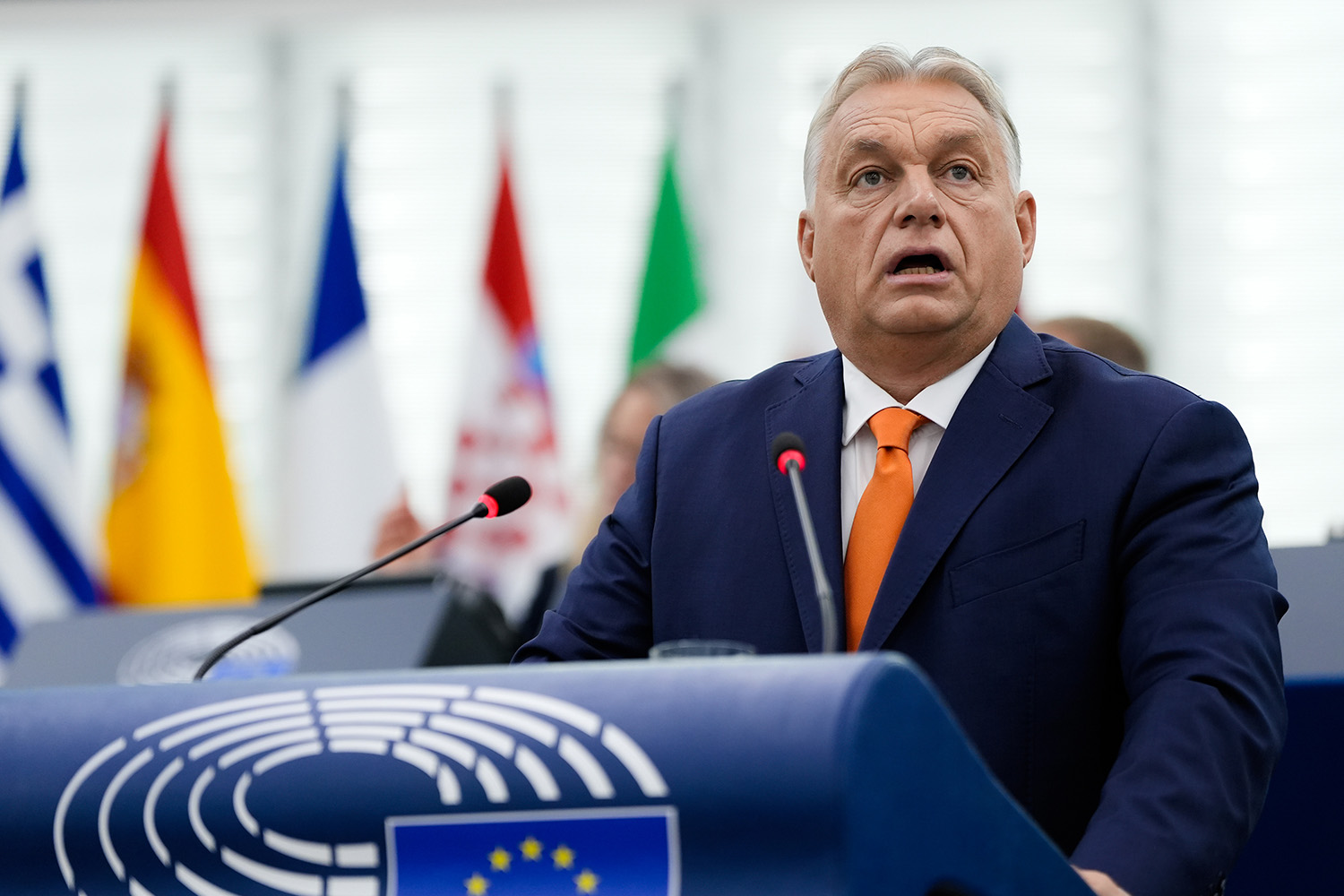
Hungarian Prime Minister Viktor Orbán has officially confirmed that Hungary will not adopt the euro as its national currency, reaffirming the country’s commitment to maintaining the forint (HUF).
Speaking at a press conference in Budapest, Orbán stated that joining the eurozone is not in Hungary’s economic interest at this time, emphasizing that retaining monetary sovereignty allows the government greater flexibility in managing inflation, interest rates, and fiscal policy.
“We believe that the Hungarian economy must remain independent in its financial decisions,” “The forint serves our national interests better than the euro would under current conditions.” Orbán said.
Hungary joined the European Union in 2004, and while all new EU members are theoretically expected to adopt the euro once they meet the necessary criteria, Budapest has repeatedly postponed plans to join the eurozone.
Economists note that Hungary’s stance contrasts with several neighboring countries — including Slovakia, Slovenia, and Croatia, which have already transitioned to the euro. However, supporters of Orbán’s decision argue that maintaining the forint provides more control over domestic policy, especially during periods of economic uncertainty.
The European Commission has previously encouraged Hungary to work toward euro adoption, but the Orbán government maintains that the timing and circumstances must first align with the nation’s economic goals.
As of 2025, the forint remains stable, though inflation and interest rates continue to pose challenges. The Hungarian government’s decision reflects a broader policy of economic sovereignty and cautious engagement with EU financial integration.