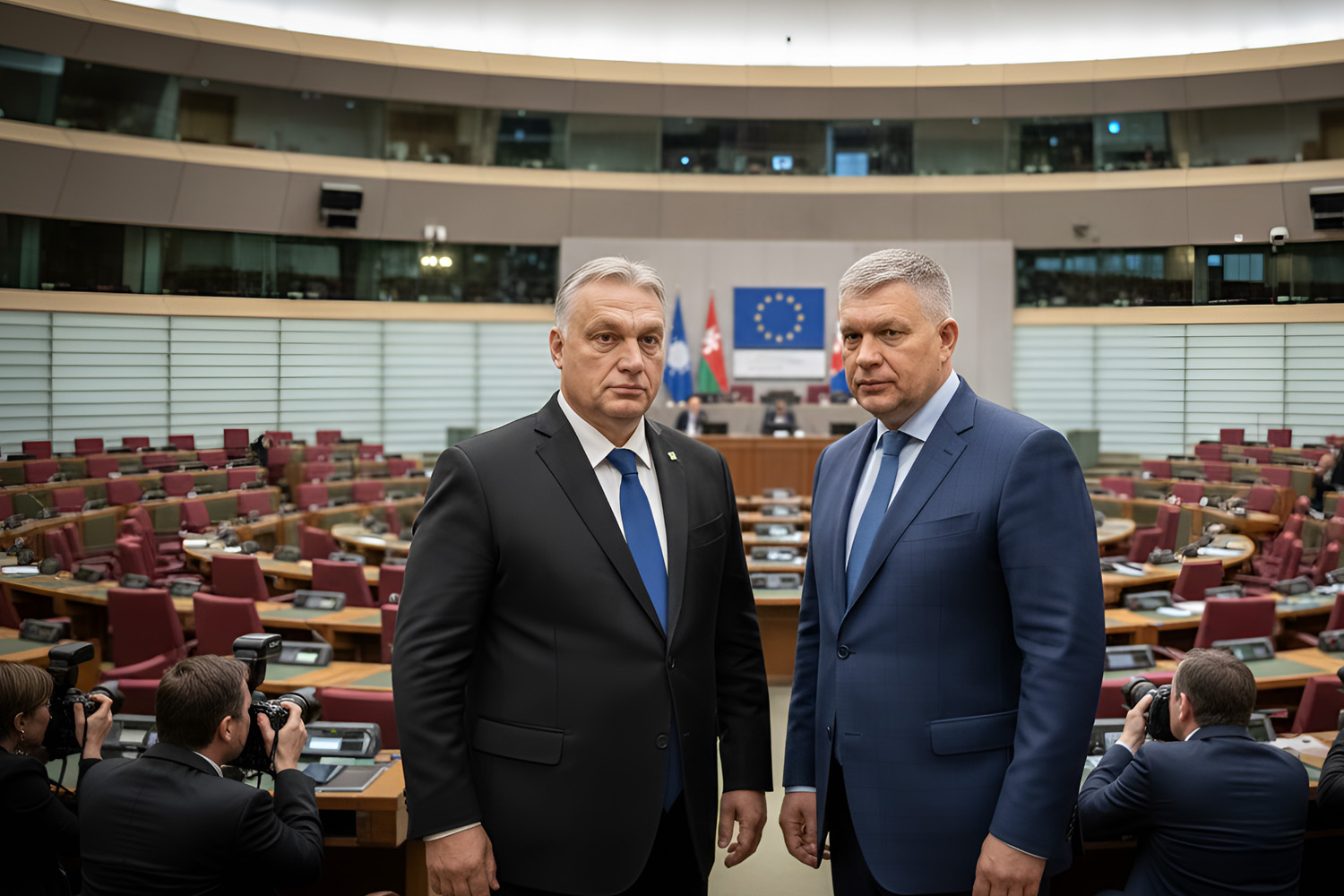
Hungary and Slovakia have announced plans to file a joint lawsuit against the European Union at the Court of Justice of the European Union (CJEU, commonly known as the EU Court). The legal action challenges a recent decision by EU member states to fully ban imports of Russian oil and natural gas by the end of 2027.
According to statements from officials in Budapest and Bratislava, the two governments argue that the decision was adopted without sufficient consideration of the economic and energy realities facing landlocked Central European states that remain heavily dependent on Russian pipeline supplies. The lawsuit is expected to focus on whether the EU exceeded its legal authority and violated the principles of proportionality and energy solidarity enshrined in EU treaties.
The ban, agreed upon by EU governments only days ago, is intended to accelerate the bloc’s efforts to eliminate its reliance on Russian energy following Moscow’s actions in Ukraine. While many EU countries have already sharply reduced imports of Russian oil and gas, Hungary and Slovakia have repeatedly warned that replacing these supplies will require more time, infrastructure investment, and financial support.
Why It Matters
The legal challenge underscores growing internal tensions within the European Union over how quickly and uniformly member states can decouple from Russian energy. Hungary and Slovakia have both received temporary exemptions in earlier sanction packages, citing a lack of alternative supply routes and refining constraints. A ruling by the EU Court could clarify the limits of Brussels’ power in enforcing energy policy decisions that carry significant national economic consequences.
The case could also delay or complicate the implementation of the 2027 ban if interim measures or political negotiations follow. Even if the lawsuit does not suspend the policy, it may increase pressure on the European Commission to offer additional financial aid, infrastructure funding, or extended transition periods for the most affected countries.
Trend Impact
This move reflects a broader trend of legal and political pushback within the EU as the bloc pursues deeper strategic autonomy in energy, defense, and industrial policy. As energy security becomes a central pillar of EU strategy, disputes between national governments and EU institutions are likely to intensify, particularly when policies impose uneven costs across member states.
The outcome of the Hungary–Slovakia case could set an important precedent for future EU-wide sanctions and energy transition measures, influencing how consensus is built—and challenged—inside the Union.