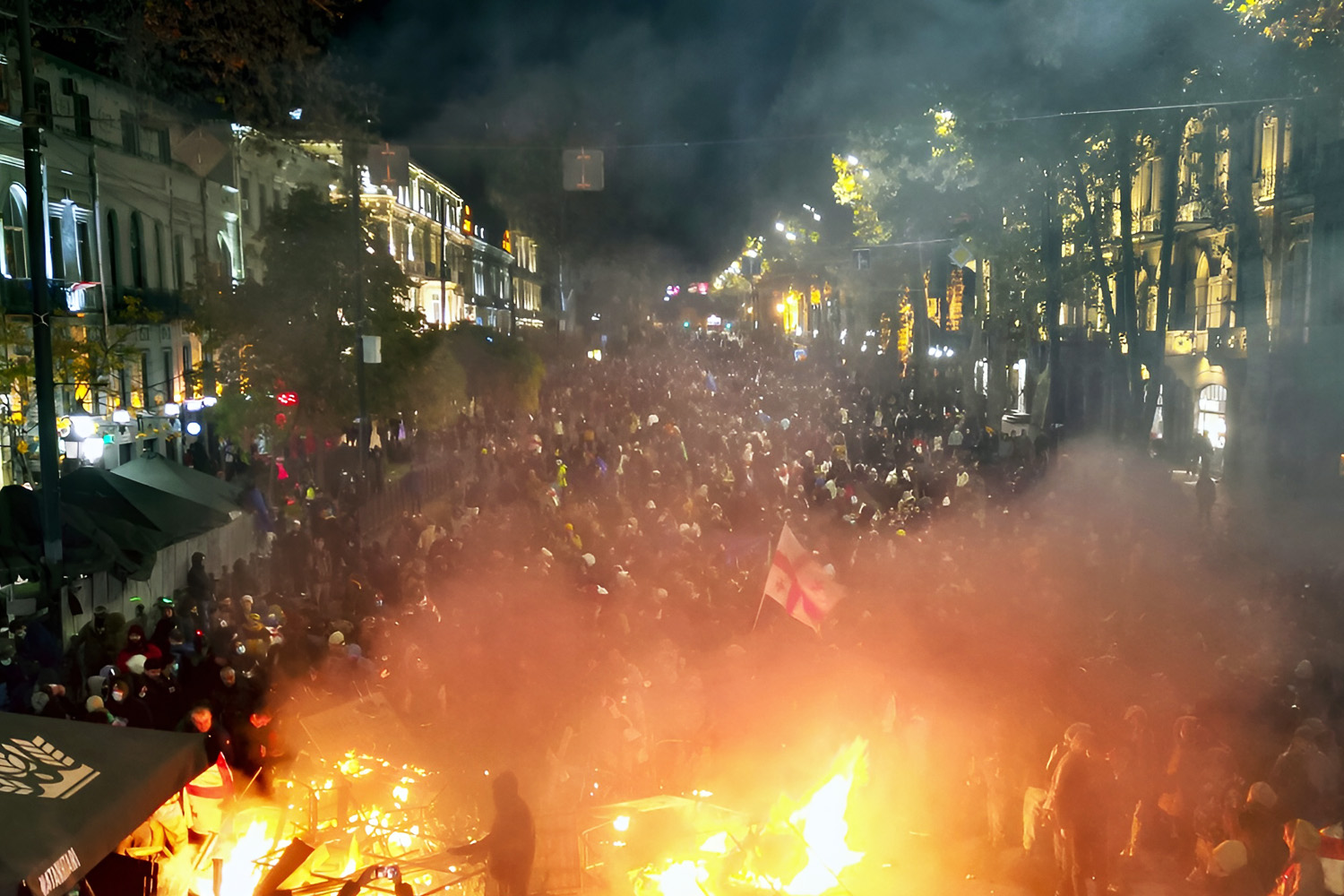
Tbilisi has once again become the epicenter of political turmoil as widespread protests broke out following disputed local elections. The demonstrations, which drew tens of thousands of citizens into the streets, reflect mounting public frustration with the ruling Georgian Dream party and its leadership.
Prime Minister Irakli Kobakhidze responded with a sweeping crackdown on opposition groups, accusing them of plotting a coup and alleging direct interference from the European Union. The government announced new restrictions on opposition activity, further heightening tensions in a country already polarized by debates over democracy, sovereignty, and its European future.
International observers have expressed concern over the government’s measures. The EU and several Western partners have urged Georgia to respect democratic norms and allow space for political pluralism, warning that escalating repression could further derail the country’s EU accession process.
The opposition, for its part, insists that the elections were manipulated and that the crackdown represents an attempt to silence dissent. Civil society groups have also raised alarms about the shrinking democratic space and the risks of authoritarian consolidation.
Georgia’s current crisis underscores the fragile state of its democratic institutions and the difficult balance the country faces between domestic political struggles and its international commitments. How this confrontation unfolds will likely shape not only Georgia’s internal political trajectory but also its long-term relationship with Europe and the wider international community.