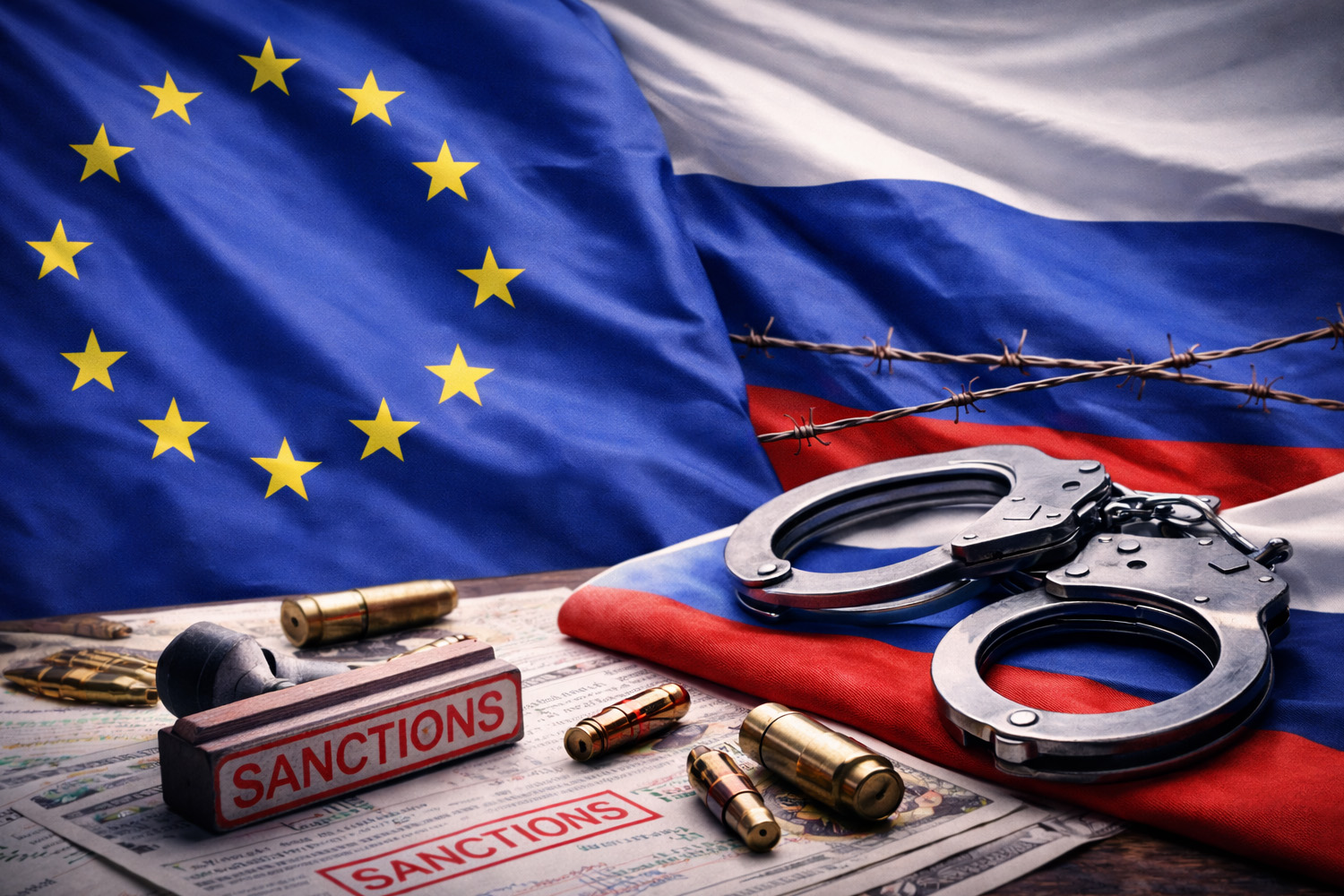
On 15 December 2025, the Council of the European Union adopted a new set of restrictive measures targeting 12 additional individuals and two legal entities in response to ongoing Russian hybrid activities, including propaganda, disinformation and cyberattacks affecting the EU and its partners.
These actions are part of the bloc’s broader strategy to counter foreign information manipulation, interference and other destabilising efforts linked to Russia’s continued aggression against Ukraine and threats to European security. The measures reinforce the EU’s commitment to defending democratic values, public order and the territorial integrity of its member states.
Who Is Targeted?
The latest sanctions list focuses on individuals and groups involved in spreading Kremlin-aligned narratives that promote anti-Ukrainian and anti-NATO sentiments. Those sanctioned include analysts, commentators and former military or security personnel accused of amplifying pro-Russian propaganda. Among them is former Florida Sheriff’s Deputy John Duggan, a dual U.S. and Russian citizen, sanctioned for disseminating narratives supportive of Moscow’s positions.
The two listed legal entities are organisations identified as platforms or networks for information manipulation and destabilising messaging, which the EU says contribute to hybrid threats that undermine unity within the Union and its partners.
Sanctions Measures
The EU’s restrictive measures include:
- Asset freezes: Any funds or economic resources belonging to the sanctioned individuals and entities within EU jurisdictions are frozen.
- Travel bans: Designated individuals are prohibited from entering or transiting through the territory of EU member states.
- Prohibition of economic engagement: EU citizens and companies are forbidden from making funds or economic resources available to those on the sanctions list.
- These tools are consistent with the Union’s longstanding sanctions framework, which has expanded since February 2022 in response to Russia’s full-scale invasion of Ukraine and subsequent hybrid and cyber threats.
Why the Sanctions?
The EU has repeatedly highlighted the danger posed by foreign information manipulation and interference, viewing these tactics as part of a wider set of hybrid threats that include:
- Propaganda and disinformation campaigns, aimed at influencing public opinion in EU member states.
- Cyberattacks against critical infrastructure and government networks.
- Narratives that undermine support for Ukraine and weaken NATO unity.
By targeting individuals and entities at the nexus of these activities, the European Union seeks to increase the political and economic costs of engaging in campaigns that erode democratic resilience within Europe.